Time: Popularity:0times
The Bundesmann Test is primarily used to simulate natural rain conditions to measure the water adhesion, wet state, and penetration through the fabric or related textile surfaces, assessing its waterproofing performance. It evaluates the fabric’s water repellency under motion and during rain showers after specific finishing processes.
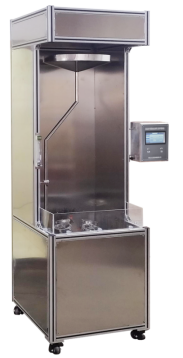
Water repellency is a frequently mentioned concept in related tests. It refers to the fabric’s ability to resist absorbing rainwater under a specified artificial rainmaker for a designated time. It also evaluates the fabric’s water absorption and the flow-through quantity.
GB/T 14577-1993
ISO 9865-1991
JIS L1092-1998 Section 6.3
Testing the Bundesmann Water Repellency
GB/T 14577-1993
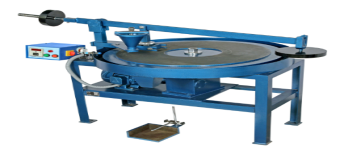
Bundesmann Water Repellency Test Tools:
Rainshower device: Consists of about 300 identical drippers evenly distributed over a diameter of 406mm (area ≈1300cm²).
Centrifuge: Composed of a 700r/min horizontal sample plate.
Reference samples.
A device that can produce an environment of GB 6529, temperature: 20±2℃, relative humidity: 65%±2%.
A precision balance with 0.01g accuracy up to 100g.
Cut or carve flat, wrinkle-free circular samples of 140mm diameter from the material, at least four pieces, each at least 100mm from the edge of the fabric and taken from more than 2m from the fabric end. Samples should meet the GB 6529 environmental conditions before the rain test, with a temperature of 20±2℃ and a relative humidity of 65%±2%.
Method One:
First, calibrate the flow rate.
Identify the test side of the sample, then place it flat and without tension on the test cup.
Secure the sample with a suitable sample ring.
Open the rain shield so the sample is exposed to rain for 10 minutes.
Visually evaluate the water repellency of the wet sample with reference samples.
Method Two: (The first three steps are identical to Method One)
Evaluate water repellency after the sample is exposed to rain for 1 and 5 minutes.
Observe the wetness of the unexposed side of the sample, then centrifuge to remove water.
Visually evaluate the sample’s water repellency with reference samples.
Flow calibration: Before testing, activate the rain shower for 15 minutes to ensure consistent flow and temperature across all drippers, then measure the water collected in the sample cup. Adjust the rain shower device to collect 200±10mL of water in each cup after 2.5 minutes.
Long-term testing: If there are many tests in a short period, calibrate at least twice daily and regularly check and maintain the drippers.
Centrifuge dehydration: Dehydrate for 15 seconds, then immediately weigh to an accuracy of 0.01g. If immediate weighing is not possible, weigh in a weighing bottle.
Besides measuring the sample’s water absorption during the rain test, the water passing through the sample can also be measured by the water collected in the sample cup in milliliters.

Company Phone
+86-21-6420 0566
Working hours
Monday to Friday
Mobile phone:
13816217984
Email:
info@qinsun-lab.com