Time: Popularity:0times
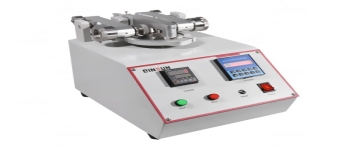
The Wyzenbeek Wear Resistance Tester, also known as the Oscillatory Wear Resistance Tester, is designed to evaluate the abrasion resistance of fabrics against standard friction media or metal mesh surfaces. It is particularly suitable for automotive interior textiles, furniture fabrics, and other decorative fabrics.
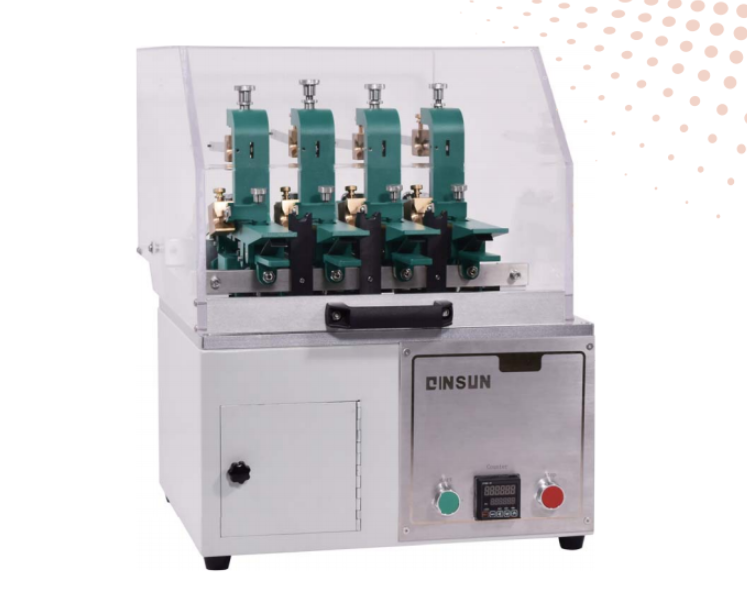
This instrument operates under American standard testing regulations and features four friction heads along with an electronic counter to precisely control the number of abrasion cycles.
The tester is ideal for assessing wear resistance of:
Automotive interior fabrics (seat covers, headliners, door panels)
Furniture and upholstery textiles
Decorative fabrics and home textiles
Industrial fabrics and woven or knitted materials
It is widely used in R&D laboratories, quality control, and textile manufacturing facilities to ensure long-term durability and compliance with industry standards.
The Wyzenbeek Abrasion Tester meets numerous international and automotive standards:
ASTM D3597 – Standard Test Method for Abrasion Resistance of Woven Fabrics
ASTM D4157 – Standard Test Method for Abrasion Resistance of Textile Fabrics (Wyzenbeek Method)
CFFA-1A
FED-STD-191/5304
GM2756M
LP-463KB-06-01 / LP-463KC-04-01
SAE J948 / SAE J1530
Toyota TSL 5101G 3.9.4
Mount the long strip of fabric sample on the front and rear clamps of the friction head.
Apply the specified tension force to the sample.
Install the friction medium (metal mesh, abrasive, or cotton canvas) on the arc-shaped friction table.
Apply the designated load to the sample.
The friction table swings back and forth, rubbing the fabric in a controlled oscillatory motion.
After a predetermined number of cycles, evaluate the fabric’s breaking strength, surface wear, or visual changes to determine abrasion resistance.
Four friction heads for simultaneous testing, improving efficiency
Precision electronic digital counter for easy cycle control
Protective cover for operator safety
Ergonomic modern design with quiet operation
Vacuum suction system for debris removal
Standard Configuration
Main Machine: 1 set
Imported Rubber Pads: 8 pcs/pack
Imported Metal Mesh: 4 pcs/pack
Imported Standard Abrasive No. 10 Cotton Canvas: 60 inches × 5 yards
Power Cable: 1 pcs
User Manual: 1 pcs
Modern ergonomic design with sealed transmission for quiet operation
Test positions: 4 heads
Friction table: curved surface, R100 mm, length 400 mm
Swing radian: 76 ± 2 mm
Friction rate: 90 ± 1/min (double friction)
Tension adjustment weight: 340 g (8.9–22.25 N)
Load adjustment weight: 150 g (8.9–17.8 N)
Sample tension: 17.8 N (adjustable)
Sample load: 13.4 N (adjustable)
Sponge rubber pressure pad: 50 × 50 mm (±1 mm)
Instrument material: stainless steel
Surface finishing: painted
Sample dimension: 245 × 73 mm
Product dimension: 50 × 50 × 60 cm (L × W × H)
What is the Wyzenbeek Tester used for?
It measures the abrasion resistance of fabrics, especially for automotive interiors, furniture, and decorative textiles.
How many samples can be tested simultaneously?
Four samples can be tested at once using the four friction heads.
What types of friction media are used?
Standard metal mesh, rubber pads, or No. 10 cotton canvas are used depending on the test requirement.
Can tension and load be adjusted?
Yes, the tension and load are fully adjustable to meet specific standard requirements.
Which standards does it comply with?
ASTM D3597, ASTM D4157, CFFA-1A, GM2756M, SAE J948, Toyota TSL 5101G, and other automotive/textile standards.

Company Phone
+86-21-6420 0566
Working hours
Monday to Friday
Mobile phone:
13816217984
Email:
info@qinsun-lab.com