Time: Popularity:0times
In modern textile testing laboratories, ISO 105 X12 is used as a standardized benchmark to evaluate surface dye adhesion under frictional forces. With the help of this testing method, we can optimize processes during dyeing, printing, and finishing operations, ensuring the reproducibility of results worldwide. A person who can understand this method can diagnose dye-fiber bonding issues, optimize curing parameters, and prevent the rejection of customer dye to poor-quality crocking grades.
1. Fabric will not Bleed or transfer color onto other fabric or surfaces.
2. Fabric will not Fade excessively due to friction or abrasion.
3. Fabric will not cause staining or discoloration of adjacent material.
The results of this test also assist R&D and QA departments to determine preferred curing temperature, selection of binder and dye fixation percentage. This test is acts as diagnostic tool to detect insufficient soaping, migration during stenter drying. ISO 105 X12 is not only a quality control test but also a process-optimization indicator.
ISO (International Organization for Standardization) has a series of standards for testing various color fastness, like color fastness to washing, color fastness to water, perspiration, color fastness to light, and many more. For color fastness to rubbing test ISO 105 X12, it includes the type of rubbing action, pressure applied, and assessment of the color transferred onto the standard fabric.
ISO 105 X12 emphasizes the controlled testing conditions to decrease the operator bias. Different parameters, such as pressure (9 ± 0.1 N), rubbing track length (104 mm), and cycle count, are fixed to maintain global comparability. Calibration of the Crock Meter and conditioning of the test specimen under 21 ± 2 °C and 65 ± 5 % RH are very necessary to achieve accuracy.
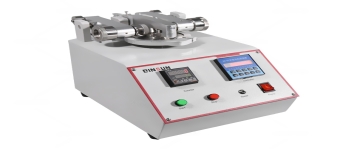
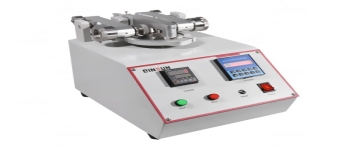
The international testing method ISO 105-X12 is performed to evaluate the rating of color transfer from dyed or printed textile articles to the surface of other materials, whether colored, printed, or white. This method provides guidance to recheck our processes and make necessary adjustments to the dye recipes or auxiliaries used. By following ISO 105-X12, we can ensure better color fastness and improve the quality and durability of textile products, reducing the risk of color transfer and maintaining customer satisfaction. ISO 105-X12 is a method in which both dry and wet tests are performed using a crock meter and an adjacent referenced white fabric. The color fastness is evaluated with the help of a grey scale. This method helps determine the resistance of the fabric’s color to rubbing off onto other materials, ensuring the quality and durability of textile products. ISO 105 X12 includes the type of rubbing action, pressure applied, and assessment of the color transferred onto the standard fabric.
Dry rubbing evaluates the mechanical anchorage of dyes and pigments while wet rubbing evaluates the dye solubility and the effect of moisture on color transfer. Due to the analyzation of both dry and wet conditions, we get a complete understanding of surface color stability.
Color fastness to Rubbing means when fabric touches or contacts with another surface by friction or rubbing, if the fabric bleeds color on another surface or self-stains, we need to test the rate of color fastness to rubbing. It is also known as colorfastness to crocking.
There are two common methods of Rubbing. One is the American (AATCC 8) method, and the other is the ISO method. This article is about the ISO standard of rubbing: ISO 105 X12.
Rubbing fastness test simulates the stress of abrasion, a fabric faces during wear, laundering, or handling. Fibers with protruding ends, high hairiness & rough texture, such as open-end cotton yarn or regenerated cellulose such as viscose, exhibit lower rubbing fastness due to enhanced surface fractional area and potential of dye migration.
Color fastness is a very important factor for textile materials, including towels, bedding, apparel, and garments. The color of any dyed or printed article must be strong enough not to transfer from the surface of the fabric to another material. To achieve the best color fastness, a special selection of dyes or pigments is required. This ensures that the colors remain vibrant and do not fade or bleed, maintaining the quality and durability of the textile products. Proper testing and selection of materials are essential to meet the high standards of color fastness in the textile industry. Crocking or rubbing is a common issue in textiles.
From a technical point of view, colorfastness represents the efficiency of chemical fixation on the dye molecules within the fiber matrix. Reactive dye forms a covalent bond with the cotton fibers, and disperse dyes diffuse into the amorphous zone of polyester.
Preparation of the testing specimen
Cut six dyed or printed specimens having a size of 50mm x 140 mm for both dry and wet rubbing.
If the specimen is a yarn or thread, then it knits at least 50mmx140 mm
Keep the crocking cloth and testing specimen for 4 hours in a standard atmosphere having 21 2 degrees centigrade temperature and 655 degrees relative humidity.
Testing must be performed under a standard atmosphere to achieve the best results.
Lab technicians should ensure that the testing specimen represents the actual production batch and includes all finishing treatments, such as softener, coating, or resins that can alter surface friction.
A crock meter is already ready to use, and no need for any external metal wire.
Dry Rubbing
As a lab technician, for testing, you will need to:
lay the Sample on abrasive paper
fix the Rubbing cloth on rubbing machine finger and put on fabric.
Avoid using selvage of fabric
Press the starting button and observe the to and fro motion without touching anything other.
When the machine stops, take out the Rubbing cloth and keep it in air-dry condition.
Asses the rubbing cloth by using a grey scale of Staining ISO 105-A03 under suitable D-65 light.
Rubbing should be done in both directions: warp and weft direction.
Wet Rubbing
Lay the sample on abrasive paper.
Weight the Conditioned rubbing cloth, then soak in Distilled water by drop or soak by petri dish and reweight to get the pick up 95% to 100% with the help of blotting paper.
Fix the Rubbing cloth on the rubbing fastness tester finger and put it on the fabric.
start the machine and observe the to and fro motion
After the machine stops, take out the Rubbing cloth and fabric
Dry the Rubbing cloth in air dry condition.
Assessment is the same as Dry Rubbing Assessment.
Rubbing should be done in both directions: warp and weft direction.
While performing the wet rubbing, controlling the moisture pickup between 95-100% is very critical, because oversaturation will cause dripping and non-uniform transfer, while under-wetting will reduce dye mobility. Always perform more than 1 test in both warp and weft directions for reliable data symmetry. Recording testing conditions alongside test results helps correlate unexpected grade deviation with environmental factors.
There are several methods to improve color fastness to rubbing:
1. Fixer Application: after the dyeing or Printing process, we apply a fixer to improve the color fastness property of the fabric.
2. Dye Selection: it is also a very important technique by which we can save time and maintain customer quality.
3. Washing and finishing: Use good washing and finishing techniques to remove excess dye and fix the color.
4. Heat treatment: Apply heat to fix the dye on the fabric and improve fastness.
1. Rubbing direction: The AATCC method is the diagonally rub of the fabric while the ISO method mentions the direction of warp straight and weft straight, not diagonally.
2. AATCC method recommended in wet rubbing; pick-up should be 65% ± 5 %. ISO recommended pick-up should be 95 % to 100 %.

Company Phone
+86-21-6420 0566
Working hours
Monday to Friday
Mobile phone:
13816217984
Email:
info@qinsun-lab.com