Time: Popularity:0times
A xenon arc aging test chamber is an artificial accelerated weathering testing instrument using xenon arc lamp as core light source.It simulates full-spectrum sunlight, and integrates temperature, humidity, water spray and condensation multiple environmental factors.
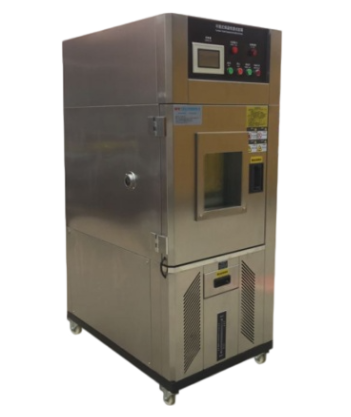
The equipment can reproduce several years of natural outdoor aging within days or weeks.
It is the key testing equipment for evaluating material weather resistance and predicting service life.
The chamber accurately simulates ultraviolet, visible and infrared spectra of natural sunlight, combined with high temperature, high humidity and rain erosion.
It quickly triggers typical aging defects of materials: discoloration, yellowing, gloss loss, chalking, cracking, blistering and mechanical property decline.
Compared with natural outdoor exposure, it shortens test cycles greatly and ensures stable, repeatable test data.
It is widely used in automotive, coating, plastic, textile, construction and photovoltaic industries for R&D, incoming inspection and product certification.
The complete chamber consists of five core modules: light source system, environmental control system, sample carrier system, spray condensation system and PLC safety control system.
Its core principle is full-spectrum light simulation and multi-factor synergistic accelerated aging.
The light source adopts 1.8–7 kW long-arc xenon lamps, which output continuous spectrum covering 290–2500 nm.
Two matching optical filters are optional: daylight filter for outdoor sunlight simulation, window glass filter for indoor and automotive interior test.
Irradiance sensors perform closed-loop real-time monitoring at 340 nm or 420 nm.
The system automatically compensates light attenuation caused by lamp aging to keep stable irradiance output.
Heating, refrigeration, humidification and dehumidification modules work with black panel thermometer to detect real surface temperature of samples.
Deionized water spray simulates rainfall, and high-humidity environment in dark cycle reproduces night dew.
Rotary drum or flat sample holders guarantee uniform light exposure for all specimens.
Programmable PLC supports customized circulation of light, temperature, humidity and spray to generate photo-oxidation, thermal degradation and hydrolysis effects.
All technical parameters comply with international mainstream standards including GB, ISO, ASTM and SAE, which are the basis of accurate and comparable test results.
Adjustable irradiance ranges from 0.3 to 1.2 W/m² at 340 nm; 0.51 W/m² is the most common standard setting.
Irradiance adopts closed-loop real-time calibration, and the overall uniformity is controlled within ±5%.
Black panel temperature is 40–102 °C under light and 25–85 °C in dark period, with control accuracy ±1 °C.
Internal cabinet temperature ranges from RT+10 °C to 85 °C.
Relative humidity is 20%–60% RH during light exposure and 30%–98% RH in dark cycles, with precision ±5% RH.
Air-cooled xenon lamp service life is about 1000 hours, while water-cooled lamp can reach 1200–1600 hours.
Optical filters need regular replacement to prevent spectrum deviation caused by aging and scratch.
Spray system operates under 0.05–0.15 MPa, and deionized water is mandatory to avoid nozzle limescale blockage.
Standard test cycle is 102 min light plus 18 min water spray, and multi-stage self-defined programs are available.
The device is equipped with full safety interlocks for over-temperature, water leakage, lamp failure and cabinet door lock, supporting long-time unattended continuous operation.
This test chamber covers various test objects such as polymer, coating, textile and auto parts, matching a complete set of international standard specifications.
Plastics, rubbers and thin films adopt GB/T 16422.2 and ISO 4892-2 as testing standards.
Coatings, printing inks and varnishes are tested in accordance with GB/T 1865 and ISO 11341.
Textiles and synthetic leather refer to GB/T 8427 and ISO 105-B02 to test color fastness and anti-aging performance.
Automotive industry puts forward strict test requirements.
Exterior components follow SAE J2527 and GB/T 32088; interior materials use window glass filter according to SAE J2412.
Tested auto products include vehicle paint, bumpers, sealing strips, interior fabrics and lamp housings.
Photovoltaic backsheets, waterproof rolls, aluminum composite panels and adhesives for outdoor use adopt ASTM G155.
All standards unify the requirements of spectrum, irradiance, temperature, humidity and circulation procedure.
It ensures traceable and comparable test data, providing authoritative basis for product certification and quality grading.
Model selection needs to comprehensively judge test scene, material type and precision requirement.
Standardized daily maintenance directly affects equipment service life and test data stability.
In terms of cooling mode, air-cooled type is suitable for conventional batch inspection with low cost and simple maintenance.
Water-cooled chamber has better irradiance uniformity, which is preferred for long-term continuous test in automotive R&D labs.
Filters shall be selected according to actual service environment.
Daylight filter matches outdoor products; window glass filter is for indoor and automotive interior samples.
Rotary drum large-capacity chamber is used for mass simultaneous testing.
Flat-panel style is specially designed for large-size sheet samples such as plates and backsheets.
Enterprises shall establish complete maintenance records.
Clean optical filters, reflectors and spray pipelines every month to remove dust and limescale deposits.
Replace xenon lamps once reaching rated life or when irradiance attenuation exceeds 10%; renew optical filters every year.
Calibrate irradiance, black panel temperature and temperature & humidity sensors every quarter.
Carry out third-party metrology calibration once a year.
Avoid frequent startup and shutdown of xenon lamps during operation to extend lamp service life.
Only deionized water can be connected to the spray pipeline.
Keep sufficient ventilation in the laboratory for heat dissipation, and complete overheating and anti-ultraviolet protection to maintain stable test performance.

Company Phone
+86-21-6420 0566
Working hours
Monday to Friday
Mobile phone:
13816217984
Email:
info@qinsun-lab.com