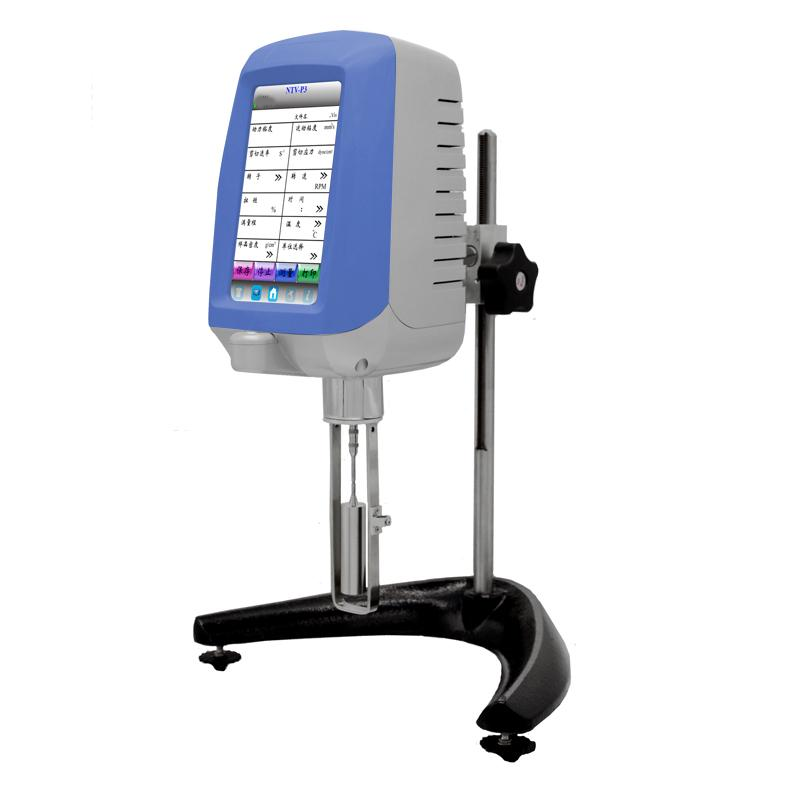
The liquid and solid components flow in a specific manner and it has an impact on our day-to-day liv
WhatsApp : +86 15601902607
Email : info@qinsun-lab.com

A rheometer is a laboratory instrument used to measure the way a liquid, suspension, or slurry flows in response to an applied force. It is used for fluids that cannot be defined by a single viscosity value, thus requiring more parameters to be set and measured.
Rheometers have wide and varied applications in materials science and the chemical industry for materials such as oils, asphalt, plastics, waxes, paints, coatings and adhesives. They are also used in food and beverages and personal care products such as cosmetics, shampoos and toothpaste.
1. A rheometer is a device used to measure the rheological properties of polymer melts, polymer solutions, suspensions, emulsions, coatings, inks and foods.
2. The types of rheometers include rotational rheometers, capillary rheometers, extensional rheometers, torque rheometers and interfacial rheometers.
3. The rheometer can measure the rheological properties, the internal flow resistance of the fluid and the flow properties of the liquid.
4. Rheometers are used for fluids that cannot be defined by a single viscosity value, so more parameters need to be set and measured.
5. Rheometer can measure viscosity in a wide range of shear rate.
6. The rheometer can be used as a viscometer.
7. The rheometer can measure the properties of the fluid under any conditions, for example, whether the fluid obeys Newton's law of viscosity. Fluids that obey Newton's law of viscosity are called Newtonian fluids, and fluids that do not obey Newtonian fluids are called non-Newtonian fluids.
8. Rheometers are used in industry to monitor batch consistency and quality control.
Capillary rheometer
Extension Rheometer
Torque Rheometer
Interface Rheometer
A viscometer is an instrument used to measure the viscosity of liquids and the flow characteristics of liquids. Viscosity is a measure of a fluid's resistance to flow (shear stress) at a given temperature. Viscometers can only measure under one flow condition. Either the fluid remains stationary and an object moves through it, or the object is stationary and the fluid passes through it. The drag caused by the relative motion of a fluid and a surface is a measure of viscosity. The flow conditions need to have a Reynolds number small enough to ensure laminar flow.
Measure oil flow under different temperature conditions.
Analyze the flow characteristics of milk to design suitable piping systems.
Check the viscosity of jams and syrups to ensure batch consistency.
1. A viscometer is an instrument used to measure fluid viscosity and liquid flow characteristics.
2. There are several types of viscometers. They include Rotational Viscometer, vibratory viscometer, oscillating viscometer, falling piston viscometer, falling ball viscometer, Saybolt viscometer, capillary viscometer, orifice type viscometer, mahogany viscometer, etc.
3. The viscometer can only measure the viscosity of the liquid.
4. Viscometers are used to measure those fluids that can be defined by a single viscosity value.
5. The viscometer can measure the viscosity within a limited range of shear rate.
6. The viscometer cannot be used as a rheometer.
7. The viscometer can only measure the viscosity of the fluid under certain conditions, that is, the fluid that follows Newton's law of viscosity.
8. Viscometers are used in industry to monitor batch consistency and quality control.
Rotational Viscometer
Vibration Viscometer
Oscillating viscometer
Falling Piston Viscometer
Falling Ball Viscometer
Saybolt viscometer
Capillary Viscometer
Orifice Viscometer
mahogany viscometer etc.
| benchmark | Rheometer | Viscometer |
| describe | A rheometer is a device used to determine the rheological properties of polymer melts, polymer solutions, suspensions, emulsions, coatings, inks and foods. | A viscometer is an instrument used to measure the viscosity of fluids and the flow characteristics of liquids. |
| type | Capillary rheometer Extensional rheometer Torque rheometer Interface rheometer. | Rotary Viscometer Vibrating Viscometer Oscillating Viscometer Piston Drop Viscometer Falling Ball Viscometer, Saybolt Viscometer Capillary Viscometer Orifice Viscometer Rosewood Viscometer etc. |
| Function | It measures rheological properties, the internal flow resistance of fluids and the flow properties of liquids. | It only measures the viscosity of a liquid. |
| Feature | It is used for fluids that cannot be defined by a single viscosity value, thus requiring more parameters to be set and measured. | It is used to measure those fluids that can be defined by a single viscosity value. |
| Shear rate range | It measures viscosity over a wide range of shear rates. | It measures viscosity over a limited range of shear rates. |
| ability | It can be used as a viscometer. | It cannot be used as a rheometer. |
| Measurement conditions | It can measure the properties of the fluid under any conditions, that is, whether the fluid obeys Newton's law of viscosity. | It can only measure the viscosity of fluids under certain conditions, that is, fluids that obey Newton's law of viscosity. |
| application | They are used in industry to monitor batch consistency and quality control. | They are used in industry to monitor batch consistency and quality control. |
Now that you have an understanding of the different types of rheometers and viscometers, it’s time to consider the factors that will influence your choice of instrument.
The type of material you will be testing is the primary factor to consider. Some instruments are better suited for specific materials, so it’s crucial to match the instrument to the material’s properties.
The desired measurement range and accuracy are also essential factors. Rheometers and viscometers come with varying levels of sensitivity, and you should choose an instrument that can accurately measure the viscosity or rheological properties within the range you require.
Many rheological properties are temperature-dependent, so it’s vital to consider whether your instrument requires temperature control capabilities. Some rheometers and viscometers come with built-in temperature control systems such as the Peltier Plate system, while others may require external temperature control units like a circulating water bath or thermosel.
As with any laboratory equipment, budget constraints play a role in selecting the right rheometer or viscometer. Viscometers are generally more affordable than rheometers, but they also have limited capabilities. If you only require viscosity measurements, a viscometer may suffice. However, if you need a more comprehensive analysis of the material’s rheological properties, investing in a rheometer may be necessary.
Another important factor is the instrument’s ease of use and maintenance. Some rheometers and viscometers are more user-friendly than others, and it’s essential to choose an instrument that your lab personnel can operate efficiently. Additionally, consider the maintenance requirements, as some instruments may need more frequent calibration or servicing. Selecting an instrument that is locally supported is important to prevent downtimes.
Viscometers help to measure the viscosity of fluids, demonstrating their resistance to flow.
Rheometers evaluate both viscosity and viscoelastic characteristics, delivering an additional comprehensive characterization of substances.
Viscometers utilize different methods such as rotational, capillary, or falling ball techniques.
Rheometers tend to apply controlled stress or strain to examine material behaviour under distinct conditions.
These instruments are important in industries like food, pharmaceuticals, and manufacturing to ensure product quality and process control.
Qinsun Instruments Co., LTD is a professional laboratory testing instrument manufacturer in China,Have been focusing on laboratory instrument R&D more than 30 years and have rich industry experience,Based on international testing standards,We are also the instrument supplier for BV SGS laboratory,We provide one-stop solutions for lab instruments,Free Training and Turn-Key Service,Products exported all over the world,Offer 36 month warranty and are a trustworthy partner.

Company Phone
+86-21-6420 0566
Working hours
Monday to Friday
Mobile phone:
13816217984
Email:
info@qinsun-lab.com