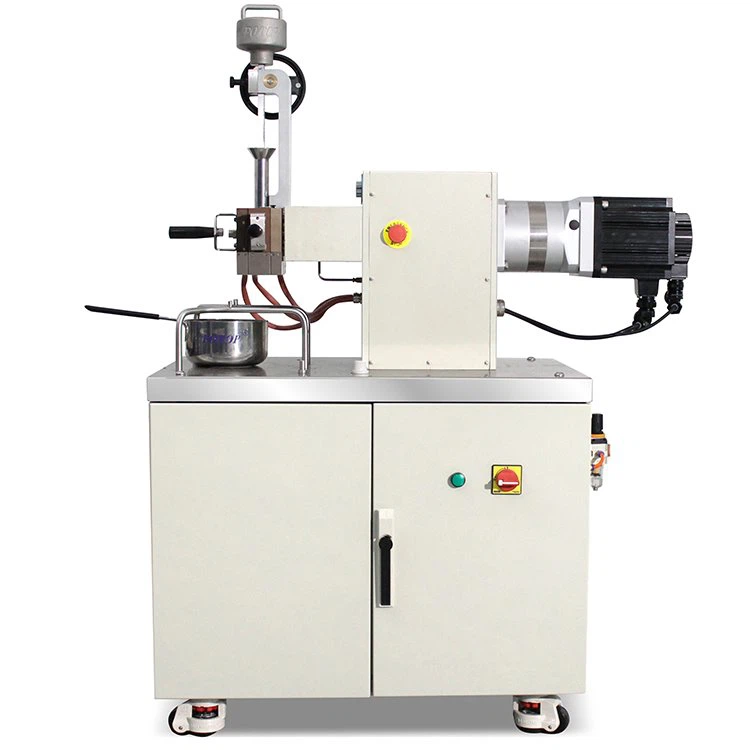
UPVC processing performance research and material development
WhatsApp : +86 15601902607
Email : info@qinsun-lab.com

Torque rheometer is ideal for studying polymer flow, deformation, plasticization, thermal shear stability, and dynamic rheology. It presents results via torque-time and torque-temperature graphs, and is useful for multi-component mixing, thermoset curing, and elastomer vulcanization. It aids scientific research and production by simulating real processes, providing data to guide formula research, and measuring material rheology continuously and reliably.
1.UPVC processing performance research and material development
2. Development and processing properties of thermoplastic materials
3. Research on curing properties of crosslinking and thermosetting resins
4. Application of teaching and research
KR-803B: KR-803B Explosion-proof Torque Sensor
ASTM E2510-20: Standard Test Method for Torque Calibration or Conformance of Rheometers
IS0 11357: Plastics - Differential scanning calorimetry (applicable in thermal behavior analysis during rheological testing)
IS0 6721: Plastics - Determination of dynamic mechanical properties
ASTM D4440: Standard Test Method for Plastics - Torque Rheometer Evaluation of Processability
DIN 53014: For general torque and shear testing
ASTM D2538. ASTM D2230: Specific to PVC processing behavior analysis
With modular design and ready-to-use function: the host is the control center, with the function of driving and controlling the measurement unit; Controlled auxilaries, such as mixing units and extrusion units, are intelligent application-specific measurement units that transmit measurement data to the host via a bus system. It can be equipped with various auxiliary machines to complete laboratory simulation experiments for different purposes.
| Feature/Specification | Details |
|---|---|
| Motor Power (Panasonic Motor, Controller) | 3.0 kW |
| Motor Speed | 2000 r/min |
| Reduction Ratio (Hubei Kefeng Reducer) | 15:1 |
| Speed Range | 0.1 - 150 rpm |
| Speed Control Accuracy | ±0.2% F.S. |
| Torque Measurement Range | 0 - 200 Nm (Rated Torque 300 Nm) |
| Torque Measurement Accuracy | ±0.3% F.S. |
| Melt Pressure Measurement Range | 0.1 - 100 MPa |
| Pressure Measurement Accuracy | ±0.3% F.S. |
| Temperature Control Range (Five-way Temperature Control) | Room Temperature - 350℃ |
| Temperature Control Accuracy | ±0.5℃ |
| Graphic Display | Speed, Torque, Temperature, Pressure |
| Voltage | AC 380 V, 7.5 kW |
Preparation: Ensure the laboratory environment meets the requirements, prepare the samples to be tested, and ensure their condition is suitable for testing.
Parameter Setting: Turn on the equipment power, and set the specific parameters required for the test, including temperature, rotation speed, and pressurization method.
Sample Loading: Carefully place the sample into the selected mold, close the mold, and lock it securely.
Starting the Experiment: Start the testing process according to the predetermined procedure, monitor data changes, and record any anomalies.
Data Analysis and Report Writing: Analyze the data using specialized software, write an experimental report, and summarize the problems found and their possible causes.
(1)Die and Mold Sets
Plate molds, cap molds, or cavity molds depending on the material type.
Used to shape the sample and control geometry during testing.
(2)Mixing and Dispersion Tools
Rotor/stator assemblies for mixing compounds before testing.
Helps ensure uniformity in viscous or rubber compounds.
(3)Temperature Control Units
Heating or cooling plates for precise thermal conditions.
Includes thermostats, heating jackets, or oil baths.
(4)Clamps and Sample Holders
To securely hold rubber, plastic, or composite samples during rotation.
Some rheometers include interchangeable clamps for different sample sizes.
(5)Torque Sensors and Load Cells
High-precision sensors to measure torque accurately.
Can be integrated or modular for replacements.
(6)Protective Covers and Safety Guards
Shields against hot surfaces or spinning parts for operator safety.
(7)Data Acquisition Systems / Software
Computer interface, software for recording torque vs. time/temperature curves.
Some include automated data analysis modules.
(8)Optional Add-ons
Oxygen or inert gas chambers for testing materials sensitive to oxidation.
Humidity chambers for testing moisture-sensitive materials.
High-speed rotors or specialized mixing blades for advanced compounding studies.
1. What is this product?
A Torque Rheometer is a precision laboratory instrument used to measure the viscoelastic properties, curing behavior, and processability of polymers, rubbers, plastics, and other compound materials. It evaluates how a material responds to shear and torque under controlled temperature and mixing conditions, providing essential information for material characterization and quality control.
2. What is this product used for?
The Torque Rheometer is primarily used to:
Measure curing kinetics and vulcanization behavior of rubber compounds.
Evaluate mixing, dispersing, and flow characteristics of polymers and elastomers.
Determine torque vs. time or temperature curves, which reflect material viscosity, stiffness, and processability.
Support R&D, quality control, and production optimization for polymer and rubber products.
3. How does this product work?
The operation principle involves:
Preparing a sample (rubber, plastic, or other compound) and placing it between the rheometer’s mixing or test plates.
Applying controlled shear or rotation, while the instrument measures the torque required to deform or mix the sample.
Controlling temperature precisely via heating/cooling units to simulate processing or curing conditions.
Recording torque, temperature, and time data to produce curves that describe the material’s behavior.
Analyzing the curves to determine curing time, maximum torque, viscosity, and elasticity properties.
4. Why is this product important?
The Torque Rheometer is critical because:
It provides accurate data on material processability, essential for manufacturing consistency.
Helps predict curing behavior and final mechanical properties, ensuring product performance.
Supports R&D and formulation optimization for new polymer and rubber compounds.
Enhances quality control, reducing defective batches and improving production efficiency.
Allows simulation of real processing conditions, giving reliable predictions for industrial-scale production.
5. Which industries is this product suitable for?
The Torque Rheometer is widely used in industries that work with polymers, elastomers, and thermoplastics, including:
Rubber Industry: for tires, seals, gaskets, hoses, and other vulcanized products.
Plastics & Polymer Manufacturing: for films, sheets, and molded components.
Automotive & Aerospace: testing materials for durability, sealing, and vibration damping.
Chemical & Materials R&D: developing new compounds and formulations.
Electronics & Consumer Goods: evaluating flexible materials, coatings, and adhesives.
Medical Devices: for testing polymeric and elastomeric components used in medical applications.
Similar recommendations:
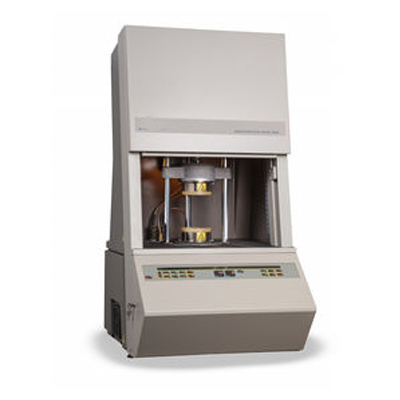
1、Oscillating / Automatic Disc Rheometer (ODR)
Qinsun Instruments Co., LTD is a professional laboratory testing instrument manufacturer in China,Have been focusing on laboratory instrument R&D more than 30 years and have rich industry experience,Based on international testing standards,We are also the instrument supplier for BV SGS laboratory,We provide one-stop solutions for lab instruments,Free Training and Turn-Key Service,Products exported all over the world,Offer 36 month warranty and are a trustworthy partner.

Company Phone
+86-21-6420 0566
Working hours
Monday to Friday
Mobile phone:
13816217984
Email:
info@qinsun-lab.com