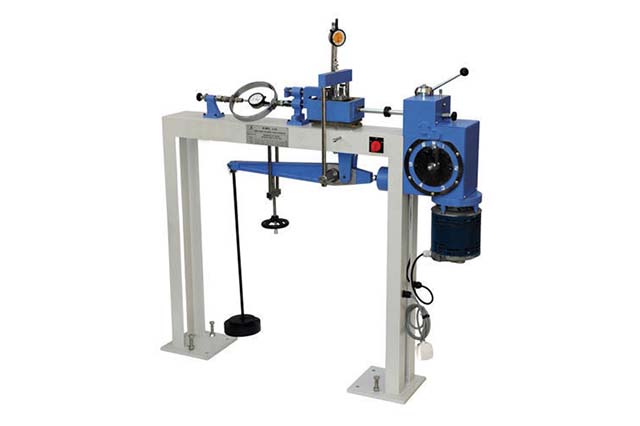
This machine is designed for all kinds of geotextile and its relative products frictional characteri
WhatsApp : +86 15601902607
Email : info@qinsun-lab.com

The Digital Direct Residual Shear Box is a sophisticated geotechnical testing instrument designed to measure the residual shear strength of soils and other granular materials. This advanced devide is essential for evaluating the long-term stability of slopes, embankments and foundations, particularly in landslide-prone areas or critical infrastructure projects. The control panel features an LCD screen and a 16-key membrane keypad for manual settings and operation. The large liquid crystal display ensures clear visibility, while the intuitive keypad allows for easy adjustments.
This machine is designed for all kinds of geotextile and its relative products frictional characteristic.
ISO 12957.1, GB/T 17635.1, ASTM D5321, JTGE50T1129, SL/T235-1999
| ITEM | Parts and Specifications | QTY |
| 1 | Shear Base Unit | 1 |
| including: | ||
| Computer controlled Shear frame, Max. Travel ranges: 30mm. | ||
| Lever ration: 11:1, 10:1, 9:1. | ||
| Digital control and display of speed. Reversible stepper. | ||
| Motor for residual strength test. Infinitely variable speed drive from 0.00001 to 9.99999mm/min. | ||
| Power supply: 220VAC / 110VAC (50HZ or 60HZ) | ||
| 2 | Shear Box Assembly(Material:SUS304 ) | 1 |
| 60*60 and 100*100mm | ||
| 3 | One embedded controller for horizontal controls, including: | 1 |
| One front panel LCD and Keypad for manual controls, 240*128 liquid crystal display and a 16 key membrane, reciprocating shear capability and times are settable Built-in 16 bit Data Acquisition and Control, two analog and two digital channels with signal conditioning and power supplies built-in. | ||
| Micro-switch mechanism to prevent ram over travel. | ||
| 4 | Load Sensor Assembly: | 1 |
| 5KN capacity, fitted with 4 pin DIN plug. | ||
| 5 | Vertical Displacement Transducer Assembly: | 1 |
| 12.7mm travel, | ||
| Accuracy:0.003mm, | ||
| Resolution:0.001mm, with 4pin DIN plug, mounting pillar and bracket for shear box. | ||
| 6 | Horizontal Displacement Transducer Assembly: | 1 |
| 25.4mm travel, | ||
| Accuracy:0.003mm, | ||
| Resolution:0.001mm, 4 pin DIN plug, mounting pillar and bracket for shear box. | ||
| 7 | Set of Weights: 50kg in total . | 1 |
| 8 | software in Windows : | 1 |
| digital control of speed and data acquisition via control system. | ||
1) Digital Control & Display - Features a user-friendly digital interface with an LCD or touchscreen display for real-time monitoring and adjustments.
2) High Precision Sensors - Equipped with high-accuracy load cells and displacement sensors for precise shear force measurement.
3) Automated Testing - Supports programmable test parameters, allowing automated test cycles for consistency and efficiency.
4) Robust Construction - Made from durable materials to ensure long-term stability and minimal maintenance.
Test Procedure of Direct Shear Testing Machine
Obtain a representative soil sample from the site or use a prepared sample.
Prepare the soil sample to the desired moisture content and density if necessary.
Trim the sample to fit the dimensions of the shear box, ensuring it fills the box uniformly.
Assembly of Test Setup:
Set up the Direct Shear Testing Machine according to the manufacturer's instructions.
Install the shear box with the prepared soil sample in the upper compartment.
Ensure proper alignment and seating of the shear box within the machine.
Application of Normal Stress:
Apply the desired normal stress (vertical load) to the soil sample using the loading system of the machine.
The normal stress should be applied gradually to achieve the desired confining pressure.
Consolidation Phase:
Apply a constant normal stress and allow the soil sample to consolidate under this stress for a predetermined period.
Consolidation ensures that the soil sample settles and reaches a stable state before shearing begins.
Shearing Phase:
Initiate the shearing phase by activating the horizontal shear load application system.
Apply horizontal shear force to the soil sample at the desired rate of displacement.
Monitor and record the shear force and horizontal displacement continuously or at specified intervals during shearing.
Data Collection:
Record the shear force readings obtained from the proving ring at specified intervals of horizontal displacement.
Optionally, monitor other parameters such as pore water pressure, if applicable.
Continuously monitor and record any changes in sample behavior during shearing, such as deformation and failure.
Completion of Test:
Continue sharing until the desired displacement or failure criterion is reached.
Record the maximum shear force attained during the test.
If performing residual shear testing, continue shearing until post-failure conditions stabilize.
Data Analysis:
Analyze the collected data to determine key parameters such as shear strength, cohesion, and internal friction angle.
Interpret the results in relation to the engineering properties of the soil and the specific project requirements.
Does the Automatic Shear Testing Machine comply with the ASTM D3080 standard?
Yes, the Automatic Shear Testing Machine is fully compliant with the ASTM D3080 standard. This particular standard is important for determining the consolidated drained shear strength of soil materials through direct shear tests. The NG-Shear DGEN is adept at executing these tests, owing to its advanced microprocessor control system. This system not only reads and processes the crucial measurements of horizontal force and displacement but also adeptly manages the motor and safety controls through a closed-loop system.
ASTM D3080 compliance ensures that the Automatic Shear Testing Machine can provide precise, reliable data essential for geotechnical analysis and construction project planning. This capability is particularly helpful for assessing soil stability and predicting potential shifts or failures in earth structures. By adhering to this standard, the supports civil engineers and geotechnical professionals, offering a solid foundation for designing safe, stable structures that accommodate natural soil behaviors under various load conditions.
Does the Automatic Shear Testing Machine meet the requirements of BS 1377:7 standard?
The Automatic Shear Testing Machine is designed to meet the requirements of BS 1377:7, which is a part of the British Standards focusing on methods of testing soils for civil engineering purposes, specifically addressing shear strength tests. The equipped with an advanced microprocessor control system that accurately conducts and manages direct shear tests, guaranteeing compliance with this essential standard.
Meeting the BS 1377:7 standard underscores the Automatic Shear Testing Machine's capability to perform reliable and precise shear strength assessments of soil samples. This is crucial for a range of civil engineering projects, from the construction of foundations and retaining structures to the evaluation of landslide risks and the design of earthworks. By adhering to the rigorous protocols outlined in BS 1377:7, the provides engineers and geotechnical specialists with the necessary data to make informed decisions regarding soil behavior under stress, thereby contributing to the construction of safer and more resilient infrastructure.
Is the Automatic Shear Testing Machine compliant with the AASHTO T236 standard?
Yes, the Automatic Shear Testing Machine, also known as the NG-Shear DGEN, complies with AASHTO T236. This standard is critical for determining the shear strength of soil and rock in highway construction, providing a methodology for the direct shear test of soils under consolidated and drained conditions. Compliance with AASHTO T236 ensures that the Automatic Shear Testing Machine can accurately assess the mechanical properties of soil samples. This is a necessity for the design and analysis of highway foundations, embankments, and other related structures.
ability to adhere to AASHTO T236 standards highlights its utility in the field of transportation engineering. Understanding the shear strength of soils is paramount for ensuring roadway safety and durability. The machine's precision and reliability in conducting these tests make it an invaluable tool for civil engineers and geotechnical professionals involved in highway infrastructure planning, design, and maintenance.
Can the Automatic Shear Testing Machine perform tests that follow the CEN-ISO/TS 17892-10 standard?
Yes, the Automatic Shear Testing Machine performs tests according to CEN-ISO/TS 17892-10. This technical specification outlines the method for determining soil shear strength using the direct shear test under consolidated and drained conditions. Its compatibility with CEN-ISO/TS 17892-10 ensures that the machine can provide essential data for evaluating soil shear resistance, which is a crucial factor in the design and assessment of geotechnical engineering projects across Europe and internationally.
The compliance with this standard demonstrates its capability to support critical analyses required in the construction of stable and safe infrastructure projects, including foundations, slopes, and retaining structures. By conducting tests that comply with CEN-ISO/TS 17892-10, the Automatic Shear Testing Machine aids in the accurate prediction of soil behavior under various loading conditions, offering a reliable basis for engineering decisions and contributing significantly to geotechnical research and practice.
Is the Automatic Shear Testing Machine in compliance with NF P94-071 standard?
Yes, the Automatic Shear Testing Machine, conforms to the NF P94-071 standard. This French standard specifies procedures for determining soil shear strength through direct shear tests. It emphasizes the importance of accurate soil analysis in construction and geotechnical engineering. The compliance with NF P94-071 ensures its capability to accurately evaluate soil samples' shear properties, providing crucial data for the design, analysis, and safety assessment of construction projects in France and in regions that adopt similar testing standards.
The machine's adherence to NF P94-071 highlights its usefulness in many types of geotechnical investigations. This includes the assessment of soil stability on embankments, slopes, and foundation systems. By offering precise and reliable testing results according to this standard, the Automatic Shear Testing Machine supports the engineering community in developing safer, more effective soil management and construction practices.
What is the main type of test the Automatic Shear Testing Machine conducts?
The Automatic Shear Testing Machine is specifically designed to conduct tests that cover the determination of the consolidated drained shear strength of soil materials under direct shear. This testing process is crucial for understanding how soil behaves under various conditions of stress and strain, particularly in scenarios where the soil's ability to resist shearing forces is a critical factor in engineering projects' stability and safety.
By evaluating the consolidated drained shear strength,provides essential data for geotechnical engineers and construction professionals. This information is vital for the design and analysis of foundations, retaining walls, slopes, and other structures where soil integrity and behavior under load are of primary importance. The Automatic Shear Testing Machine's ability to accurately assess these properties helps in predicting potential soil movement. It also helps in designing structures that can withstand environmental and man-made forces, ensuring their longevity and safety.
How does the automatic test-running feature benefit users of the Automatic Shear Testing Machine?
The automatic test running feature of the Automatic Shear Testing Machine significantly enhances the user experience by streamlining the testing process. This advanced functionality allows the entire test, from consolidation to failure, to be conducted with minimal manual intervention. Once the test parameters have been set, the automatically controls the execution of the test, including the application of shear force and the measurement of displacement, guaranteeing precise compliance with the predefined conditions.
This feature saves time and increases test accuracy and repeatability by reducing human error. It enables users to focus on analyzing the results rather than managing the operational aspects of the test. This improves efficiency and productivity in the laboratory. The automatic test-running capability is particularly beneficial in busy testing environments or in applications where a high volume of tests is conducted, making the Automatic Shear Testing Machine an indispensable tool for geotechnical, civil engineering, and construction professionals.
How does the test speed closed-loop control feature benefit the Automatic Shear Testing Machine's operation?
A closed-loop control feature significantly enhances the operation of the Automatic Shear Testing Machine. This is done by applying precise and consistent control over test speed throughout the testing process. This advanced control system continuously monitors and adjusts the speed to match the pre-set parameters, effectively eliminating variations that could impact the accuracy of the test results.
This level of precision is particularly beneficial for direct shear tests, where strain rate can influence soil's shear strength measurements. By maintaining a constant test speed, provides reliable data critical for assessing the consolidated draining shear strength of soil materials.
Furthermore, the closed-loop control system improves the efficiency and reproducibility of tests, making the Automatic Shear Testing Machine an invaluable tool for geotechnical laboratories conducting soil analysis for construction and engineering projects. This feature underscores the machine's capability to meet professional standards, ensuring high-quality testing outcomes.
How does the large graphic display on the Automatic Shear Testing Machine benefit the user experience?
With a large monochromatic graphic display, which measures 240x128 pixels in resolution, on the Automatic Shear Testing Machine, the user experience is greatly enhanced. This is done by providing a clear and intuitive interface for viewing test data in real time. This feature allows operators to monitor shear tests closely, including force and displacement readings as they occur.
There is a good deal of information available on the display that is readily accessible due to its clarity and size. This allows immediate adjustments to be made to the test parameters as a result. Having this level of interaction throughout the testing process is crucial for ensuring accuracy throughout the testing process as well as for making informed decisions based on the observed data throughout the process. Additionally, the display's user-friendly interface simplifies test setup and execution, reducing user error and increasing testing efficiency.
What advantages do the different calibration functions offer in the Automatic Shear Testing Machine?
The inclusion of different calibration functions, such as linear and polynomial, in the Automatic Shear Testing Machine offers substantial advantages for precision and versatility in testing. These calibration options allow the machine to be finely tuned to match the specific characteristics of the material being tested, ensuring that the force and displacement measurements are accurate and reliable.
Linear calibration is ideal for materials and test conditions that exhibit a direct relationship between applied force and the resultant displacement. This provides simplicity and ease of use for standard testing scenarios. On the other hand, polynomial calibration can accommodate more complex relationships, where the material response may not be linear across the range of applied forces. This is particularly useful for advanced geotechnical testing where soil behavior under shear stress may exhibit non-linear characteristics due to varying moisture content, particle size distribution, or other factors.
Qinsun Instruments Co., LTD is a professional laboratory testing instrument manufacturer in China,Have been focusing on laboratory instrument R&D more than 30 years and have rich industry experience,Based on international testing standards,We are also the instrument supplier for BV SGS laboratory,We provide one-stop solutions for lab instruments,Free Training and Turn-Key Service,Products exported all over the world,Offer 36 month warranty and are a trustworthy partner.

Company Phone
+86-21-6420 0566
Working hours
Monday to Friday
Mobile phone:
13816217984
Email:
info@qinsun-lab.com