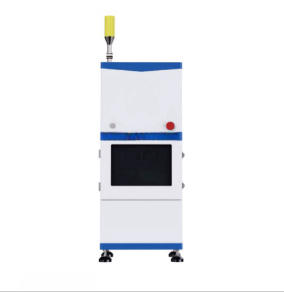
System overview:The in situ expansion analysis system is usually equipped with high-precision contro
WhatsApp : +86 15601902607
Email : info@qinsun-lab.com

The In-situ Expansion Analysis System is designed for high-precision measurement of dimensional and volumetric changes in electrochemical cells and related materials during charge/discharge, storage, and abuse testing. The system enables real-time, non-destructive monitoring of cell expansion behavior under controlled temperature, pressure, and environmental conditions. It is widely used in lithium-ion, solid-state battery R&D, safety evaluation, and reliability testing.
(1) In-situ expansion and swelling analysis of lithium-ion pouch, prismatic, and coin cells during charge/discharge cycles.
(2) Dimensional change monitoring of solid-state batteries and solid electrolytes under electrochemical loading.
(3) Thermal expansion and contraction testing under wide temperature ranges for battery reliability studies.
(4) Pressure-coupled expansion analysis for pouch cell fatigue and mechanical stability evaluation.
(5) Correlation analysis between expansion, voltage, cycle life, and degradation mechanisms.
(6) Abuse and reliability testing including overcharge, fast charging, and thermal stress conditions.
(1) ASTM E83 – Standard Test Method for Verification of Linear Displacement Measuring Systems.
(2) ISO 12417-1 – Mechanical Testing of Metals – Dilation Test.
(3) IEC 62660-2 – Secondary lithium-ion cells for propulsion of electric road vehicles – Reliability and abuse testing.
(4) DIN 51221 – Testing of adhesives – Determination of tensile shear strength (dimensional deformation reference).
(5) CE Certification – Conformité Européenne.
(1) Sub-micron displacement resolution down to 0.01 μm for precise expansion measurement.
(2) Non-contact laser displacement sensors eliminate mechanical interference and measurement hysteresis.
(3) Multi-environment testing with integrated temperature chamber covering –40°C to 200°C.
(4) Dynamic pressure loading up to 50 bar for pouch cell fatigue and mechanical stress testing.
(5) Real-time 3D deformation imaging with structured light scanning technology.
(6) AI-assisted deformation analysis for quantification of anisotropic and localized swelling.
(7) Multi-channel architecture supporting up to 8 cells tested simultaneously.
(8) Automatic test sequencing with preloaded protocols for common battery test scenarios.
(9) Open data interface for synchronization with EIS, gas analysis, and thermal imaging systems.
| Parameter | Specification |
|---|---|
| Displacement Range | ±500 μm (linear), ±1° (angular) |
| Measurement Accuracy | ±0.1 μm (linear), ±0.01° (angular) |
| Resolution | 0.01 μm |
| Temperature Range | –40°C to 200°C |
| Temperature Ramp Rate | Up to 1°C/min |
| Pressure Range | 0–50 bar (dynamic loading) |
| Channel Capacity | Up to 8 channels |
| Data Acquisition Rate | 10,000 points/s per channel |
| Power Supply | 100–240 V AC, 50/60 Hz |
| Dimensions (W×D×H) | 800 × 600 × 1200 mm |
| Weight | 220 kg (net) / 280 kg (gross) |
(1) Non-magnetic sample holders for coin cells, pouch cells, and prismatic cells.
(2) Disposable strain gauges (optional auxiliary measurement).
(3) Laser displacement sensor calibration standards (NIST-traceable).
(4) Integrated temperature and pressure control modules.
(5) Data acquisition and analysis software package.
(6) Inert gas purification cartridge and environmental monitoring sensors.
(7) User manual and maintenance documentation.
(1) Install the test cell into the appropriate sample holder and align using the laser positioning system.
(2) Configure test parameters including temperature profile, pressure loading, channel selection, and data acquisition rate.
(3) Connect the system to external electrochemical testers if synchronized testing is required.
(4) Start the test sequence; the system records displacement, temperature, pressure, and auxiliary signals in real time.
(5) Monitor expansion behavior during testing and export data for further analysis and reporting.
(1) Regularly inspect laser sensors, optical components, and mechanical fixtures for contamination or misalignment.
(2) Perform periodic calibration using certified displacement standards.
(3) Check temperature chamber seals, pressure components, and safety interlocks routinely.
(4) Keep optical windows and sensor surfaces clean to maintain measurement accuracy.
(5) Update software and back up data according to laboratory quality management requirements.
1. What is an In-Situ Expansion Analysis System used for?
It monitors and analyzes the dimensional changes or expansion of materials under real-time operating conditions.
2. How does the system operate?
Sensors or imaging devices measure expansion continuously while the sample is exposed to temperature, pressure, chemical, or mechanical stimuli.
3. What types of materials can be tested?
Polymers, composites, metals, ceramics, and other materials where thermal, chemical, or mechanical expansion behavior is critical.
4. How is test data recorded and analyzed?
Expansion data, strain, and dimensional changes are captured digitally, displayed on the interface, and can be exported for further analysis.
5. What maintenance is required for the system?
Regular cleaning of sensors and sample holders, calibration checks, inspection of mechanical and electronic components, and periodic software updates.
Qinsun Instruments Co., LTD is a professional laboratory testing instrument manufacturer in China,Have been focusing on laboratory instrument R&D more than 30 years and have rich industry experience,Based on international testing standards,We are also the instrument supplier for BV SGS laboratory,We provide one-stop solutions for lab instruments,Free Training and Turn-Key Service,Products exported all over the world,Offer 36 month warranty and are a trustworthy partner.

Company Phone
+86-21-6420 0566
Working hours
Monday to Friday
Mobile phone:
13816217984
Email:
info@qinsun-lab.com