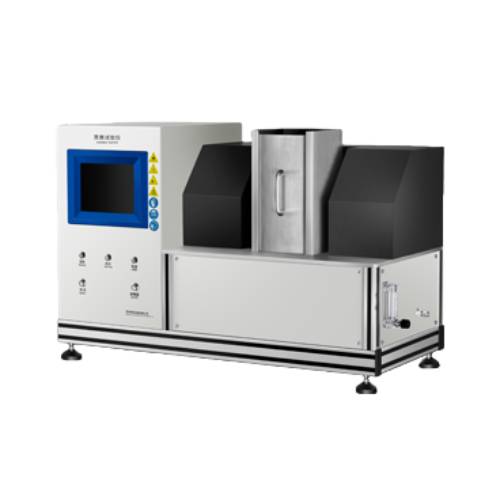
The Kernel Test Instrument (also known as the Koenen Test Apparatus) is a specialized safety diagnos
WhatsApp : +86 15601902607
Email : info@qinsun-lab.com

The Kernel Test Instrument (also known as the Koenen Test Apparatus) is a specialized safety diagnostic system used to determine the sensitivity of solid and liquid substances to the effects of intense heat under high confinement. By subjecting a substance to a controlled thermal load within a steel tube fitted with various orifice plates, you can assess its potential for explosive decomposition. This instrument is essential for the identification, classification, and safety assessment of energetic materials, ensuring they are handled and transported in compliance with global hazardous goods regulations.
The Kernel Test Instrument is used to assess the sensitivity of solid and liquid substances to high thermal effects under highly confined conditions, facilitating material identification, classification, and safe transport evaluation.
UN *Recommendations on the Transport of Dangerous Goods: Manual of Tests and Criteria*, 11.5.1 Test 1(b): Koenen test
European Commission Directive 92/69/EEC, Method A14: Explosive Properties
GB/T 21578-2008 Dangerous Goods—Koenen Test Method
GB/T 21848-2008 Determination of Explosive Hazard of Industrial Chemicals
GB 5085.5 Hazardous Waste Identification Criteria - Reactivity Identification
NY/T 1860.6-2010 Guidelines for Determining Physicochemical Properties of Pesticides - Part 6: Explosivity
1) Embedded processor with Windows CE operating system;
2) 8-inch LCD touchscreen for real-time display of test status;
3) Integrated “Standard Mode” and “Calibration Mode” to meet user testing requirements;
4) Automatic ignition heating system with camera monitoring to ensure successful ignition and enhance operator safety;
5) 80N constant-pressure automatic sample preparation unit for precise specimen formation and improved test outcomes;
6) Heating rate controllable via flowmeter;
7) Integrated heating and timing systems for streamlined test operations;
8) Heating chamber equipped with an openable front door for easy inspection of test results and rapid cleaning;
9) Video monitoring system records the test process, enabling remote monitoring and evaluation through playback of final results;
10) Remote ignition control;
11) Fully automated testing process requiring no manual intervention, supporting parameter settings, data storage, and report viewing functions.
| Item | Specifications |
| Operating Environment | (-5 ~ 45)°C, <95% RH |
| Thermocouple Temperature Measurement Range | (-40 ~ 1000)°C |
| Temperature Measurement Accuracy | ±1.5°C or ≤±0.004|t|, Response time: 0.5s |
| Pellet Preparation Pressure | 80N |
| Accuracy Class of Pellet Preparation Pressure Weight | F2 |
| Heating Rate | (3.3±0.3) k/s |
| Steel Tube Weight | (26.5±1.5) g |
| Steel Tube Wall Thickness | (0.5±0.05) mm |
| Orifice Plate Hole Diameter | 1.0mm, 1.5mm, 2.0mm, 2.5mm, 3.0mm, 5.0mm, 6.0mm, 8.0mm, 12.0mm, 20.0mm |
| Steel Tube Dimensions (Outer Diameter × Height) | 25mm × 75mm |
Standard Steel Tubes (1 set): Precision-walled tubes for sample containment.
Orifice Plate Set: Comprehensive range of plates from $1.0$ mm to $20.0$ mm.
Automatic $80$ N Sampler: For standardized sample compaction.
Video Surveillance Kit: High-definition camera and monitoring interface.
Remote Ignition Controller: For safe distance operation.
F2 Grade Calibration Weights: For ensuring sampler pressure accuracy.
1. Pre-Operation Preparation
Environmental Check: Ensure temperature is between -5°C and 45°C, humidity <95%, and adequate ventilation.
Equipment Self-Check: Verify heating components, ignition system, video monitoring, and safety devices are operational.
2. Operating Procedures
Mode Selection:
Standard Mode: One-button start for automatic test completion.
Calibration Mode: Manually record heating times from 135°C to 285°C to calculate heating rates.
Test Procedure:
Sample Loading: Layer solid/liquid substances in designated compartments.
Orifice Plate Replacement: Gradually adjust orifice diameters (1.0–20.0 mm) for burst testing.
Automatic Ignition: Initiated via wireless remote control; electronic ignition ensures safety.
Result Evaluation:
Observe steel pipe rupture morphology; if ultimate diameter ≥ 1.0mm, determine explosive risk.
3. Post-Operation Procedures
Data Storage: Test results automatically generate reports and store data.
Equipment Cleaning: Monitor status through front access door and remove residues.
1.What is the significance of the "Limit Diameter" in a Koenen test?
The limit diameter is the largest orifice size at which the steel tube still ruptures or bursts during the test. A larger limit diameter indicates that the substance can generate high internal pressure even with a large vent, signifying a higher degree of explosive sensitivity.
2.Why is the 80 N pressure specifically required for sample preparation?
Standardized compaction is critical because the air gaps in a solid sample significantly affect heat transfer and pressure accumulation. The 80 N sampler ensures that every laboratory, regardless of the operator, produces a sample with the same density, making results globally comparable.
3.How does the system ensure the safety of the operator during a violent rupture?
The instrument is designed for remote operation. You perform the setup and then leave the room, controlling the heating and ignition via a wireless remote. The video monitoring system acts as your "eyes," providing a clear view of the test without exposing you to blast or fragment hazards.
4.Can this instrument be used for liquids that produce toxic fumes upon decomposition?
Yes, provided the test is conducted in a room equipped with a high-capacity exhaust system. The apparatus is designed to release gases safely, but your facility must be capable of filtering or venting the resulting smoke and toxic byproducts.
5.What happens if the heating rate falls outside the (3.3 ± 0.3) K/s range?
If the heating rate is too low, the substance may decompose slowly and vent without exploding; if it is too high, the test is overly aggressive. The system’s calibration mode allows you to fine-tune the gas flow to ensure you stay within the standard's precise thermal window.
Qinsun Instruments Co., LTD is a professional laboratory testing instrument manufacturer in China,Have been focusing on laboratory instrument R&D more than 30 years and have rich industry experience,Based on international testing standards,We are also the instrument supplier for BV SGS laboratory,We provide one-stop solutions for lab instruments,Free Training and Turn-Key Service,Products exported all over the world,Offer 36 month warranty and are a trustworthy partner.

Company Phone
+86-21-6420 0566
Working hours
Monday to Friday
Mobile phone:
13816217984
Email:
info@qinsun-lab.com