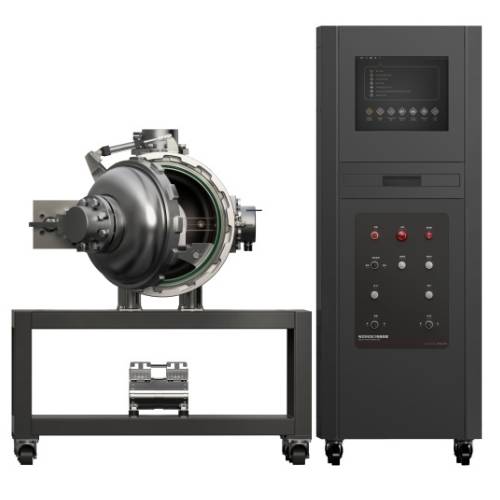
The Battery Cell Test Pressure Vessel is designed for thermal runaway testing of battery cells in co
WhatsApp : +86 15601902607
Email : info@qinsun-lab.com

The Battery Cell Test Pressure Vessel is designed for thermal runaway testing of battery cells in compliance with UL 9540A. The system provides a fully sealed test environment capable of vacuum extraction, nitrogen filling, and measurement of critical parameters including pressure, temperature, and oxygen concentration. The vessel is equipped with interfaces for film heating and overcurrent circuits, allowing flexible customization to meet the specific requirements of battery safety testing.
Battery Energy Storage Systems
Thermal runaway evaluation of commercial battery cells under controlled conditions, in accordance with UL 9540A standards.
Battery Research and Development
Testing of individual battery cells to monitor pressure, temperature, and oxygen concentration changes during abuse conditions.
Battery Certification and Safety Testing
For laboratories performing standardized fire propagation and thermal runaway tests on lithium-ion cells.
Material Testing
Integration with weighing platforms and temperature/voltage monitoring for material degradation analysis.
The pressure vessel complies with the following standards:
(1) UL 9540A:2025 – Standard for Testing Thermal Runaway Fire Propagation in Battery Energy Storage Systems
(2) PV8450 – Battery Thermal Runaway Test Method
| Item | Specification |
|---|---|
| Working Pressure | ≥ 3 MPa, equipped with safety valve for automatic pressure relief |
| Vessel Temperature Resistance | > 1200 °C |
| View Window | Diameter 5–25 cm |
| Thomas Sampling Pump | Adjustable manual exhaust, capable of achieving -90 kPa vacuum |
| Control Cabinet | Standard 19-inch touchscreen, metal frame |
| Environmental Configuration | External nitrogen achieves oxygen concentration <1% |
| Backup Gas Source | Nitrogen ≥ 99.99% purity |
| Power Supply | AC 220 V, 50/60 Hz, 10 A |
Customizable Stainless Steel Vessel
Sealed chamber made of 304 stainless steel; test volume and dimensions can be tailored to specific applications.
Multi-Functional Interfaces
Flanged connection plates with specialized fittings allow for temperature, voltage, heating, and overcurrent connections.
Vacuum and Nitrogen Filling Capability
Achieves oxygen concentration below 1% to simulate inert test environments.
Weighing Platform Integration
Optional platform with load sensors enables mass loss monitoring during thermal events.
Safe and Easy Cell Handling
Swing door with locking screws ensures airtight seal; movable metal cell holder allows stable sample placement.
Pressure Monitoring
Customizable range via high-precision sensors to capture vessel internal pressure dynamics.
Multi-Channel Data Acquisition
12 temperature channels (expandable), 2 voltage channels for real-time battery voltage monitoring.
Gas Flow Control
Manual ball valves and solenoid valves protect sensors and prevent gas leakage.
Advanced Control Cabinet
19-inch touchscreen in a metal frame with electrostatic spray coating, high-temperature baking process for durability, easy cleaning, and aesthetic appearance.
Automated Data Monitoring
Siemens PLC and analog modules, integrated with LabVIEW software, monitor temperature, pressure, and oxygen concentration in real time, and store data for later analysis.
Report Generation
Test data can be exported as Excel, Word, or PDF files for documentation and further analysis.
(1) Thomas sampling pump
(2) Safety valves and pressure sensors
(3) Temperature and voltage sensor interfaces
(4) Nitrogen filling system
(5) Weighing platform with load sensors
(6) Film heating interface
(7) Overcurrent protection interface
(8) Standard electrical control cabinet with touchscreen and PLC
Cell Installation: Place battery cells in the vessel on the movable holder and lock the chamber door.
System Preparation: Connect external nitrogen supply and set oxygen concentration below 1% if required.
Parameter Setup: Configure temperature, pressure, and voltage monitoring channels via the touchscreen.
Initiate Test: Activate PLC control system to begin thermal runaway simulation.
Data Monitoring: Record pressure, temperature, oxygen levels, and cell voltage in real time; optional mass loss measurement.
Data Storage and Report Generation: Export all test data and results in Excel, Word, or PDF format.
Post-Test Procedures: Vent the vessel, safely remove battery cells, and inspect the chamber and sensors for next use.
Regularly inspect all valves, fittings, and flanged connections for tightness and integrity.
Calibrate temperature and pressure sensors periodically to ensure accurate measurements.
Clean the interior vessel and viewing window to maintain visibility and prevent contamination.
Verify nitrogen supply system and vacuum pump operation before each test.
Backup all test data and system logs to secure storage for traceability and compliance verification.
The Battery Cell Test Pressure Vessel provides a safe, flexible, and fully controlled environment for thermal runaway testing of battery cells. With vacuum, nitrogen, multi-channel temperature and voltage monitoring, and comprehensive data acquisition, the system enables accurate testing in accordance with UL 9540A and other battery safety standards, supporting R&D, certification, and safety evaluation applications.
1. What is the primary purpose of the Battery Cell Test Pressure Vessel?
The vessel is designed for thermal runaway testing of battery cells in compliance with UL 9540A. It enables controlled monitoring of pressure, temperature, and oxygen concentration, while providing vacuum extraction, nitrogen filling, and optional interfaces for heating and overcurrent circuits.
2. How does the vessel maintain an oxygen concentration below 1%?
The vessel includes an external nitrogen supply interface. By connecting high-purity nitrogen (≥99.99%) and controlling the flow, the oxygen concentration inside the sealed chamber can be reduced to below 1%, creating an inert environment suitable for battery thermal testing.
3. How are pressure and temperature monitored during testing?
The vessel is equipped with high-precision pressure sensors and 12 temperature acquisition channels. Data is collected in real time through a PLC and LabVIEW software, ensuring accurate monitoring of internal pressure, temperature gradients, and other test parameters.
4. Can the system measure battery voltage during thermal runaway tests?
Yes, the system provides 2 voltage acquisition channels to monitor real-time battery voltage. This allows for evaluation of battery behavior during abuse conditions and accurate correlation with pressure and temperature data.
Qinsun Instruments Co., LTD is a professional laboratory testing instrument manufacturer in China,Have been focusing on laboratory instrument R&D more than 30 years and have rich industry experience,Based on international testing standards,We are also the instrument supplier for BV SGS laboratory,We provide one-stop solutions for lab instruments,Free Training and Turn-Key Service,Products exported all over the world,Offer 36 month warranty and are a trustworthy partner.

Company Phone
+86-21-6420 0566
Working hours
Monday to Friday
Mobile phone:
13816217984
Email:
info@qinsun-lab.com