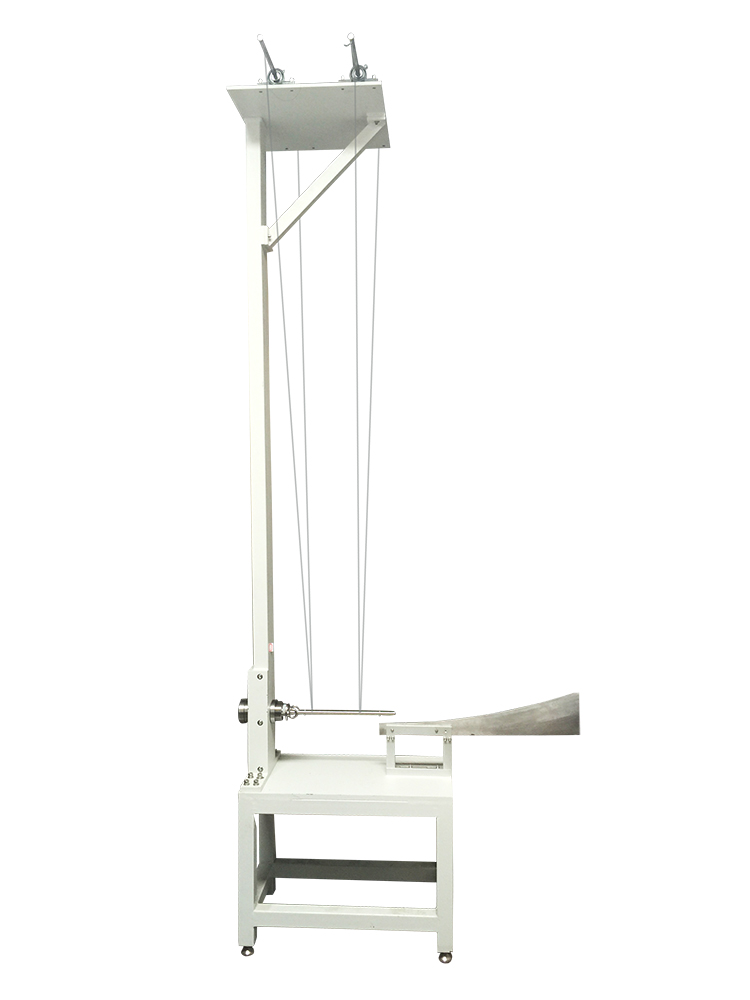
Brief Introduction:Rubber elasticity tester, Rubber strikes the resilience elasticity tester for tes
WhatsApp : +86 15601902607
Email : info@qinsun-lab.com

Rubber elasticity tester, Rubber strikes the resilience elasticity tester for testing vulcanized rubber, experiments, moving iron bars, iron bars so that the end position in the scale of 100. and then the iron bar to fall freely read the fourth, five or six times during the height of spring back against average.
Used for resilience testing of vulcanized rubber
ASTM D2632-15(2024):Standard Test Method for Rubber Property—Resilience by Vertical Rebound
Device Structure: column, specimen holder, frame, dropping, impact head, dials.
Rubber elasticity tester / Rubber impact resilience tester is mainly made by the base unit and which can read head impact rebound height device component, wherein the base unit sturdy, heavy impact to support the head and the test piece.
In order to adjust and test equipment inspection, the instrument will be able to stand the impact head and made into a detachable device.
The impact head: impact head is to use four lines hanging in places overhanging diameter 2000mm 12.50 ± 0.05mm, length 356mm, the quality of 0.35 ± 0.01kg iron rods. To fall from the high gravity at 100mm as impact energy, the fight against iron bars to end hemispherical surface.
Dial: In order to directly read resiliency, dial scale values are displayed (resilience straightforward reading scale). Interval scale using the horizontal direction of seeking to retrieve flexibility required conversion table or conversion formula.
| Parameter | Specification |
|---|---|
| Specimen diameter | 29.5mm |
| Impact head specifications | Diameter: 12.5mm; Length: 356mm; Weight: 350g |
| Horizontal length scale | 625 (L), 2000 (R) MM |
| Dropped Length | 2000mm (from front to back 250mm, about 900mm distance) |
| Scale vertical height | 100mm (divided into 100 equal parts) |
| Drop height | 100mm (vertical) |
| Volume (about) | 117cm × 92cm × 275cm |
| Weight (approximately) | 70kg |
The experimental setup mainly consists of a base and a device for reading the rebound height of the impact head. The base is sturdy and heavy to support the impact head and test piece. For adjustment and inspection of the setup, the impact head and base can be detached.
Impact Head: The impact head is an iron rod with a vertical diameter of 12.50 ± 0.05 mm, a length of approximately 356 mm, and a mass of 0.35 ± 0.01 kg, suspended at a height of 2000 mm by four suspension lines. The impact energy is the force of gravity falling from a height of 100 mm. The striking end of the iron rod is hemispherical.
Scale: To directly read the rebound height, the scale displays the value (direct reading of the rebound rate). When using horizontally spaced graduations to calculate the rebound height, a conversion table or a different calculation formula is required.
1. Sample Preparation
The sample surface should be flat and free of defects to ensure the accuracy of the test results.
2. Environmental Control
The temperature and humidity of the testing environment should meet the standard requirements to avoid the influence of environmental factors on the results.
3. Equipment Calibration
The equipment should be calibrated regularly to ensure testing accuracy.
4. Safe Operation
Equipment safety regulations should be followed during operation to avoid accidents.
1.What is a Rubber Rebound Elasticity Tester?
A Rubber Rebound Elasticity Tester is an instrument used to measure the elasticity of rubber materials. It evaluates how much energy is stored and released by the rubber when it undergoes deformation. This helps in determining the material's performance characteristics and suitability for various applications.
2.How does the Rubber Rebound Elasticity Tester work?
The tester typically works by dropping a specified weight from a fixed height onto a rubber sample. The rebound height is then measured. The ratio of the rebound height to the drop height is used to calculate the rebound elasticity, indicating how efficiently the rubber material can return to its original shape after deformation.
3.Why is rebound elasticity important for rubber?
Rebound elasticity is crucial because it affects the performance of rubber in applications like tires, seals, and gaskets. Higher rebound elasticity usually means better energy efficiency and resilience, reducing wear and extending the lifespan of rubber products.
4.What standards are Rubber Rebound Elasticity Testers based on?
Rubber Rebound Elasticity Testers typically adhere to international standards such as ASTM D1054 and ISO 4662. These standards outline the testing procedures and conditions to ensure consistent and reliable results across different materials and testing environments.
5.Who uses Rubber Rebound Elasticity Testers?
These testers are widely used by manufacturers, quality control laboratories, and research institutions involved in rubber production and testing. They are essential for ensuring that rubber products meet specific performance criteria and regulatory standards.
YouTube video introduction:https://www.youtube.com/watch?v=xEVLmLTGXqo
Qinsun Instruments Co., LTD is a professional laboratory testing instrument manufacturer in China,Have been focusing on laboratory instrument R&D more than 30 years and have rich industry experience,Based on international testing standards,We are also the instrument supplier for BV SGS laboratory,We provide one-stop solutions for lab instruments,Free Training and Turn-Key Service,Products exported all over the world,Offer 36 month warranty and are a trustworthy partner.

Company Phone
+86-21-6420 0566
Working hours
Monday to Friday
Mobile phone:
13816217984
Email:
info@qinsun-lab.com