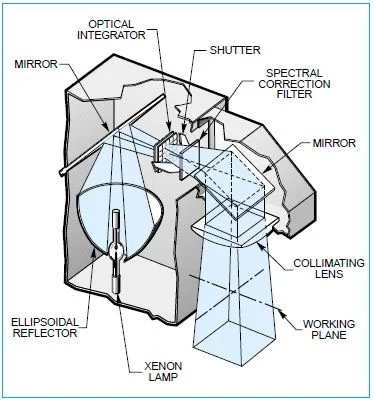
A solar simulator (also artificial sun or sunlight simulator) is a device that provides illumination
WhatsApp : +86 15601902607
Email : info@qinsun-lab.com

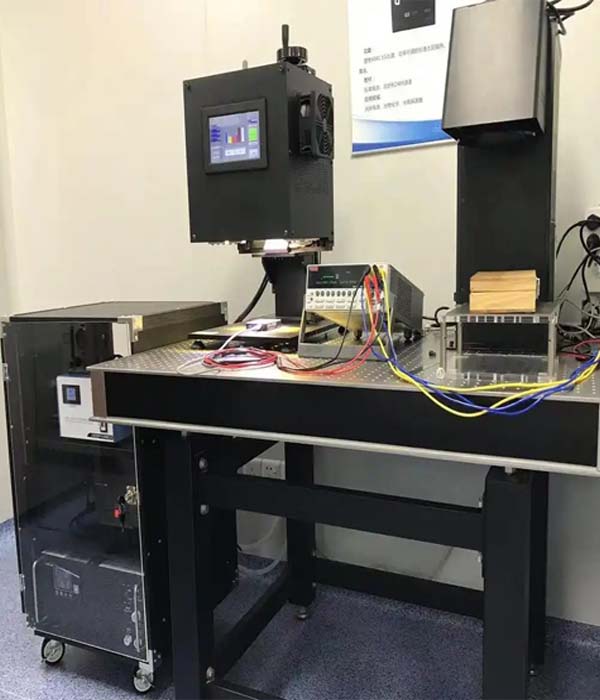
A solar simulator (also artificial sun or sunlight simulator) is a device that provides illumination approximating natural sunlight. The purpose of the solar simulator is to provide a controllable indoor test facility under laboratory conditions. It can be used for the testing of any processes or materials that are photosensitive, including solar cells,sun screen,cosmetics,plastics, aerospace materials,skin cancer,bioluminescence,photosynthesis,water treatment,crude-oil degradation,and free radical formation.Solar simulators are used in a wide range of research areas including photobiology,photo-oxidation,photodegradation,photovoltaics,and photocatalysis.
The purpose of a solar simulator is to provide a consistent, controllable source of illumination in a laboratory environment. It can be used for testing any materials or processes that are photosensitive. This may be relevant for many different applications in a wide range of fields (see Table 1 for a selection of solar simulator applications by field).The most commonly discussed three areas of similarity are: spectral match, spatial non-uniformity, and temporal instability.
The standards specifying performance requirements of solar simulators used in photovoltaic testing are IEC 60904-9,ASTM E927-19,and JIS C 8912.These standards specify the following dimensions of control for light from a solar simulator:
spectral content (quantified as spectral match)
spatial uniformity
temporal stability
Spectral Coverage (SPC) (IEC 60904-9:2020 only)
Spectral Deviation (SPD) (IEC 60904-9:2020 only)
A solar simulator is specified according to its performance in the first three of the above dimensions, each in one of three classes: A, B, or C. (A fourth classification, A+, was introduced by the 2020 edition of IEC 60904-9 and only applies for solar simulators evaluated in the spectral range of 300 nm to 1200 nm.) For ASTM E927-19, if a solar simulator falls outside the A, B, C criteria, it is considered Class U (unclassified).Although these standards were originally defined specifically for photovoltaic testing, the metrics they introduced have become a common way of specifying solar simulators more broadly in other applications and industries.
The ASTM E927-19 specifications required for each class and dimension are defined in Table 1 below. A solar simulator meeting class A specifications in all three dimensions is referred to as a Class AAA solar simulator (referring to the first three dimensions listed above).
| Classification | Spectral Match (all intervals) | Spatial Non-uniformity of irradiance | Temporal Instability of irradiance | Applicable Standards |
| Class A | 0.75–1.25 | 2% | 2% | IEC 60904-9, ASTM E927, JIS C 8912 |
| Class B | 0.6–1.4 | 5% | 5% | IEC 60904-9, ASTM E927, JIS C 8912 |
| Class C | 0.4–2.0 | 10% | 10% | IEC 60904-9, ASTM E927, JIS C 8912 |
Solar simulators can be divided into two broad categories based on the type of emission duration: steady state or flashed.
Steady state solar simulators are light sources that provide continuous illumination over time – they turn on and stay on. They may also be referred to as continuous solar simulators. The specifications discussed previously mostly apply to this type of solar simulator, and they are used mostly for testing at low intensities (less than one sun to several suns).
Pulsed solar simulators, also known as flashed solar simulators, use flash photography technology and rely on the use of flash tubes. These systems create a series of regular, very short, intense flashes of light. They typically have a duration of milliseconds.
These systems have the advantage of preventing heat buildup on the device under test, but have the drawback of having transient characteristics of the light output over the flash duration. This is unavoidable to a degree, as the lamp heats and cools extremely rapidly, and the characteristics must change. This makes reliable repeated measurements more technically challenging.
The standards provide specific guidelines for how to perform testing for pulsed systems to accurately classify them. Temporal instability, for example, must be treated differently that it would be in a continuous system.
There are different lamps used in solar simulators for constant illumination. These are:
Xenon: The xenon arc lamp is the most popular lamp used in continuous and flashing solar simulators. These lamps provide strong illumination with an unfiltered range that resembles natural sunlight.
Metal Halide: The metal halide arc lamp is mainly used in cinemas and television lighting systems. These lamps are used in gadgets that require temporal stability and a close match to daylight.
QTH: The quartz tungsten halogen (QTH) lamp produces wavelengths that can closely match the radiations produced by the black body. However, it normally has a lower colour temperature than the actual sun.
LED: Light-emitting diodes (LED) are one of the latest inventions in solar simulators. They can produce energy-efficient artificial sunlight radiation.
· Light sources (lamps) and power sources
· Optics and optical filters
· Control elements for operation
· What sunlight conditions am I simulating (e.g. AM1.5G or AM0)?
· What size is the target?
· How sensitive is the target in different spectral regions?
· On what time frame is my target sensitive to changes (e.g. very short for silicon photovoltaics, very long for some materials weathering testing)?
Continuous solar simulators feature lamps that offer consistent light for several hours, while pulsed solar simulators use electric arc lamps (like Xenon arc lamps).
A solar simulator is a device that produces light that closely resembles sunlight. Solar simulators evaluate solar cells in controlled indoor environments under controlled laboratory settings. In solar simulators, various lamps have been employed as light sources.
Qinsun Instruments Co., LTD is a professional laboratory testing instrument manufacturer in China,Have been focusing on laboratory instrument R&D more than 30 years and have rich industry experience,Based on international testing standards,We are also the instrument supplier for BV SGS laboratory,We provide one-stop solutions for lab instruments,Free Training and Turn-Key Service,Products exported all over the world,Offer 36 month warranty and are a trustworthy partner.
Company Phone
+86-21-6420 0566
Working hours
Monday to Friday
Mobile phone:
13816217984
Email:
info@qinsun-lab.com