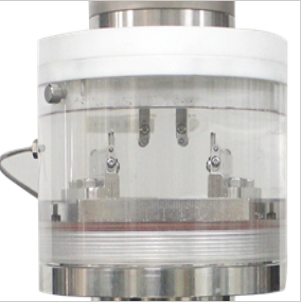
- Evaluating mechanical properties: By simulating the stress conditions of human bones, measure key
WhatsApp : +86 15601902607
Email : info@qinsun-lab.com

The Bio-absorbable Internal Fixation Plates and Screws Tester is a specialized mechanical testing device designed to evaluate the performance of bio-absorbable orthopedic implants. It measures properties such as bending strength, torsional stability, and pull-out resistance of plates and screws used in internal fixation. This tester simulates physiological loading conditions to ensure that implants can withstand mechanical stresses during healing, providing critical data for product development, quality control, and regulatory compliance in orthopedic applications.
(1)YY/T 0509-2009 (China): Specifies mechanical testing protocols for orthopedic plates/screws made of hydrolyzable polymers, including axial pull-out, torsion, and 4-point bending tests.
(2)ASTM F2502-17 (International): Defines methodologies for evaluating the structural integrity of bioabsorbable fixation devices under physiological loading.
(3)ISO 13779-4: Additional compliance for in vitro degradation testing of resorbable materials.
(1)Multi-Modal Testing: Single platform for axial pull-out, torsion, and 4-point bending tests.
(2)Biodegradation Simulation: 37±1°C pH-controlled water bath with real-time conductivity monitoring.
(3)High-Resolution Sensors: 0.001 N force/0.001 Nm torque resolution for fragile polymer testing.
(4)Modular Fixturing: Self-centering clamps accommodate plates (20–100 mm) and screws (2.0–4.5 mm).
(5)AI-Powered Analytics: Machine learning predicts degradation-induced strength loss over time.
(6)Regulatory Compliance: Pre-loaded YY/T 0509/ASTM F2502 protocols with automated reporting.
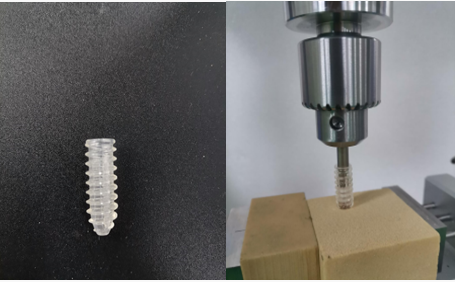
(1)Electromagnetic Servo Actuator: 5 kN axial/1 Nm torsional capacity with programmable load ratios (R=0.1–10).
(2)4-Point Bending Fixture: Anatomical curvature adapters replicate physiological stress patterns.
(3)Dynamic pH Control: 37±1°C water bath with pH 5.5–8.0 adjustment for degradation studies.
(4)High-Resolution Imaging: Built-in 5MP camera system for crack/corrosion analysis.
(5)Safety Suite: Emergency stop, chemical-resistant enclosure, and leak detection.
(6)Touchscreen Interface: Intuitive controls with pre-loaded ASTM/YY test sequences.
(1)Bioabsorbable Fixture Kit:
Self-centering plate clamps (20–100 mm compatibility)
Screw torque adapters (2.0–4.5 mm diameter)
(2)pH-Controlled Water Bath:
15L capacity with recirculating pump
Corrosion-resistant titanium interior
(3)BioTest Pro Software:
Automated degradation curve generation and strength retention analysis
21 CFR Part 11-compliant audit trail with blockchain timestamping
Remote monitoring via iOS/Android app
(4)Operator Kit:
Calibrated torque wrench set (0.1–1 Nm)
Implant alignment jigs (ASTM F2502 compliant)
(5)Calibration Bundle:
NIST-traceable force/torque calibration weights
pH electrode calibration solution
(6)Safety Kit:
Chemical-resistant gloves
Acoustic enclosure with 25 dB noise reduction
| Parameter | Specification |
|---|---|
| Max. Axial Force | ±5.000 N (0.001 N resolution) |
| Max. Torsional Moment | ±1 Nm (0.001 Nm resolution) |
| Bending Span | 40–120 mm (1 mm increments) |
| pH Control Range | 5.5–8.0 (0.1 resolution) |
| Temperature Control | 37±1°C (PT1000 sensor) |
| Data Sampling Rate | 10 kHz (synchronized across 8 channels) |
| Power Requirements | 220V/110V ±10%, 50/60Hz, 1.200W |
| Dimensions (W×D×H) | 500 × 450 × 750 mm |
| Weight | 75 kg (net) / 90 kg (with bath) |
| Noise Level | <50 dB (A-weighted) |
(1)Mount the bio-absorbable plate or screw securely on the testing fixture.
(2)Select the appropriate test mode (bending, torsion, or pull-out) according to standards.
(3)Apply load gradually and record force, displacement, or torque until failure occurs.
(4)Analyze the data to determine mechanical properties such as maximum strength, stiffness, and deformation behavior.
(1)Keep the testing machine clean and free from dust or debris after each use.
(2)Regularly check and calibrate load cells, torque sensors, and displacement transducers.
(3)Lubricate moving parts and ensure fixtures are in good condition to prevent wear.
(4)Inspect electrical connections, software settings, and safety components periodically to maintain accurate and safe operation.
1.What is the purpose of this tester?
It evaluates the mechanical performance of bio-absorbable plates and screws, including bending strength, torsion resistance, and pull-out strength, ensuring safety and compliance with medical standards.
2.What types of tests can be performed?
The tester supports four-point bending, torsion, and pull-out tests to measure maximum load, stiffness, deformation, and overall mechanical stability.
3.How are samples prepared for testing?
Plates and screws are mounted on the machine using the proper fixtures according to their size and geometry, ensuring alignment with load application points.
.4What safety precautions are needed?
Ensure the machine is calibrated, use proper personal protective equipment, and avoid contact with moving parts during operation.
5.How often should maintenance be performed?
Regular maintenance is recommended after each test session, including cleaning, lubrication, calibration, and inspection of sensors and fixtures to maintain accuracy and longevity.
Qinsun Instruments Co., LTD is a professional laboratory testing instrument manufacturer in China,Have been focusing on laboratory instrument R&D more than 30 years and have rich industry experience,Based on international testing standards,We are also the instrument supplier for BV SGS laboratory,We provide one-stop solutions for lab instruments,Free Training and Turn-Key Service,Products exported all over the world,Offer 36 month warranty and are a trustworthy partner.

Company Phone
+86-21-6420 0566
Working hours
Monday to Friday
Mobile phone:
13816217984
Email:
info@qinsun-lab.com