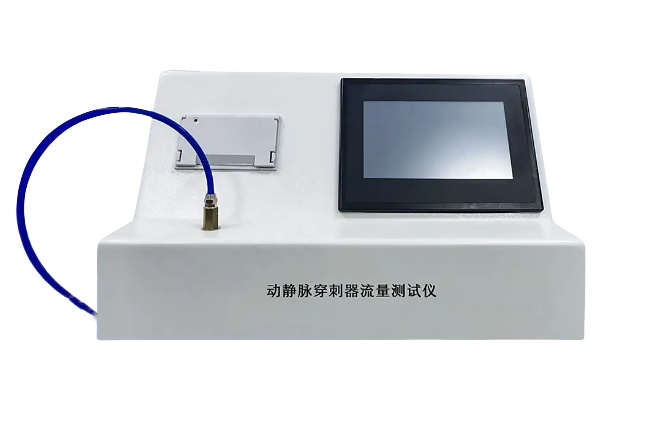
The Pressure Transmission and Flow Tester is widely used in multiple fields and is mainly used to te
WhatsApp : +86 15601902607
Email : info@qinsun-lab.com

The Pressure Transmission and Flow Tester is widely used in multiple fields and is mainly used to test the pressure transmission and flow performance in fluid systems.
- Fluid System Performance Evaluation: The Pressure Transmission and Flow Tester can be used to evaluate the pressure transmission efficiency and flow characteristics of fluid systems under specific conditions, ensuring that the systems can meet the design and usage requirements.
- Product Quality Control: During the manufacturing process, this tester can be used for quality inspection of fluid system components (such as pipelines, valves, sensors, etc.) to ensure that product quality complies with relevant standards and regulations.
- Fault Diagnosis and Maintenance: By testing the pressure and flow data of fluid systems, it can help diagnose faults in the systems and provide a basis for the repair and replacement of faulty components.
- Research, Development and Optimization: In the design, research and development process of fluid systems, the tester can be used to test the effects of different design or improvement schemes, providing data support for optimizing system performance.
The design and manufacture of the Pressure Transmission and Flow Tester need to comply with relevant industry standards and technical specifications to ensure the accuracy and reliability of test results. Common compliance standards include, but are not limited to: GB/T 19335 - 2022 General Technical Requirements for Disposable Blood - path Products, etc.
• The instrument has three test modes: pressure transmission performance, blood occlusion, and puncture device flow rate.
• Equipped with a dual-sensor, vacuum generator, and precise pressure testing system, the testing accuracy is significantly improved.
• Embedded high-speed microcomputer chip control and a simple and efficient human-machine interface provide users with a comfortable and smooth operating experience.
• Equipped with a precision pressure regulating valve for high-precision pressure range adjustment.
• A 7-inch color touch screen combined with intelligent data processing functions provides users with a comfortable and smooth operating experience.
• Simple and intuitive operation interface, convenient user-defined test functions, and comprehensive data analysis and reporting functions.
• Simple and convenient operation process, a brand-new UI interface design, and an intuitive operation interface greatly enhance the user experience.
• Automatic result determination and printable test data.
• Supports quick viewing and printing of historical data.
• The instrument comes with a built-in miniature printer and powerful data storage capabilities, storing up to 50.000 data entries.
• Equipped with a standard RS232 communication port for convenient external connection and data transmission between the system and a computer.
• Energy-saving and environmentally friendly design, aesthetically pleasing appearance, and ultra-low power consumption power supply meet national energy-saving and environmental protection requirements.
| Serial No. | Parameter Item | Parameter Details |
|---|---|---|
| 1 | Testing Range (Pressure) | 0 - 10 KPa (standard configuration); customizable according to actual needs |
| 2 | Testing Range (Flow) | Depends on specific model and configuration; usually covers a wide flow range |
| 3 | Accuracy (Pressure Testing) | 0.5%FS (full-scale error); ensures the accuracy of test results |
| 4 | Accuracy (Flow Testing) | Depends on specific model and configuration; meets high-accuracy requirements |
| 5 | Air Source Pressure | ≤0.7 MPa (user-provided); ensures the normal operation of the tester |
| 6 | Air Source Interface | Φ8 mm polyurethane tube or other standard interfaces; facilitates air source connection |
| 7 | Power Supply | Voltage and frequency vary by model; supports wide voltage range (adapts to different regional electrical standards) |
| 8 | External Dimensions | Main unit: 300 mm(L)×410 mm(W)×150 mm(H) (varies by model); easy to place and operate |
| 9 | Weight | Moderate; easy to carry and move |
| 10 | Other Functions (Data Recording & Storage) | Real-time data recording and storage; convenient for subsequent analysis and processing |
| 11 | Other Functions (Display & Operation Interface) | Color touch-screen interface; supports Chinese-English switching (or other languages); clear and easy to operate |
| 12 | Other Functions (Automatic Calibration & Fault Diagnosis) | Some models have automatic calibration (ensures test accuracy) and fault diagnosis (facilitates timely problem detection/resolution) |
Standard configuration: Main unit, miniature printer, air supply connection pipe, hydraulic leak-proof device
Note: The air source interface of this machine uses an 8mm polyurethane tube; the air source must be provided by the user.
1. Preparation Before Operation
Equipment and Environment Check:
Confirm that the instrument's power supply (wide voltage adaptable) and gas line interfaces (Φ8mm polyurethane tubing) are in normal condition; place the equipment on a ventilated, temperature-stable (20±5℃) workbench, ensuring no airflow interference.
Sample and Consumable Preparation:
Prepare the fluid system components to be tested (e.g., pipes, valves, sensors), ensuring the components are clean and undamaged; prepare a suitable gas source (provided by the user, pressure ≤0.7MPa).
Standard Matching:
Confirm the standards that the test needs to comply with, and clarify the pressure and flow rate test indicators.
2. Equipment Calibration
Start the instrument and access the "Calibration Interface" via the color touch screen;
Perform automatic calibration of the pressure sensor (according to 0.5% FS accuracy requirements) and flow module (supported by some models), or perform manual calibration using a standard pressure/flow source to ensure test accuracy.
3. Parameter Settings
Select the corresponding standard on the touch screen interface;
Set test parameters:
Pressure test range: Default 0-10KPa (customizable as needed);
Flow rate test range: Match the actual flow rate range of the component under test;
Test duration: Set the continuous test cycle according to the component characteristics.
4. Sample Installation
Connect the fluid components to be tested (e.g., pipes, valves) to the input/output terminals of the instrument via standard gas line interfaces (Φ8mm polyurethane tubing);
Check the connection for airtightness (to avoid air leaks affecting test results), ensuring the components are securely installed and not twisted.
5. Test Execution
After confirming that the parameters and sample installation are correct, click "Start Test";
The instrument automatically runs according to the set parameters: controlling the gas source pressure transmission, synchronously collecting flow rate data, and recording indicators such as pressure transmission efficiency and flow characteristics in real time;
Monitor the data curve via the touch screen during the test. If any abnormalities occur (e.g., pressure/flow rate fluctuations exceeding limits), the test can be paused to troubleshoot the problem.
6. Data Processing and Report Generation
After the test is completed, the instrument automatically stores the real-time data;
Export a test report containing "pressure transmission data, flow characteristic curves, and compliance with standard judgment" for:
Fluid system performance evaluation: verifying whether the system meets design/usage requirements;
Product quality control: checking whether the component quality meets industry standards.
7. Post-Test Maintenance
Disconnect the air supply and power, remove the tested component, and clean any remaining impurities from the air circuit connections;
Record the instrument's operating status, and regularly re-check and calibrate it to ensure long-term stable operation of the equipment.
1. What is the primary purpose of the Pressure Transmission Flow Meter Test Instrument?
The Pressure Transmission Flow Meter Test Instrument is mainly used to evaluate pressure transmission and flow performance in fluid systems. It measures how pressure is transmitted through a system and how fluid flow behaves under specified conditions. By collecting real-time pressure and flow data, the instrument helps verify whether a fluid system meets design and usage requirements. It is widely applied in system performance evaluation, product quality control, fault diagnosis, maintenance, and research and development, ensuring accuracy, reliability, and compliance with relevant technical specifications.
2. In which application scenarios is this instrument commonly used?
This instrument is commonly used in fluid system performance evaluation, manufacturing quality control, fault diagnosis, maintenance, and system research and optimization. In manufacturing, it inspects components such as pipelines, valves, and sensors to confirm compliance with standards. In maintenance, it supports fault diagnosis by analyzing pressure and flow data. During research and development, it provides quantitative data for comparing different design or optimization schemes, helping engineers improve overall system performance and reliability based on measured pressure transmission efficiency and flow characteristics.
3. What testing modes are supported by this instrument?
The instrument supports three testing modes: pressure transmission performance testing, blood occlusion testing, and puncture device flow rate testing. These modes allow users to evaluate pressure behavior and flow characteristics under different testing requirements.
4. Which standards does the Pressure Transmission Flow Meter Test Instrument comply with?
The design and manufacture of the instrument comply with relevant industry standards and technical specifications to ensure test accuracy and reliability. One of the referenced standards is GB/T 19335-2022. which specifies general technical requirements for disposable blood-path products.
5. What features improve testing accuracy and operational efficiency?
The instrument is equipped with a dual-sensor system, a vacuum generator, and a precise pressure testing system to improve accuracy. It uses an embedded high-speed microcomputer chip and a color touch screen for intuitive operation. Automatic result judgment, real-time data display, historical data review, and built-in printing further enhance efficiency and usability.
6. How are test data recorded and managed?
The instrument supports real-time data recording and storage, with a built-in miniature printer and the ability to store up to 50.000 data entries. It also includes an RS232 communication port for data transmission to a computer, enabling further analysis, reporting, and long-term data management.
Qinsun Instruments Co., LTD is a professional laboratory testing instrument manufacturer in China,Have been focusing on laboratory instrument R&D more than 30 years and have rich industry experience,Based on international testing standards,We are also the instrument supplier for BV SGS laboratory,We provide one-stop solutions for lab instruments,Free Training and Turn-Key Service,Products exported all over the world,Offer 36 month warranty and are a trustworthy partner.

Company Phone
+86-21-6420 0566
Working hours
Monday to Friday
Mobile phone:
13816217984
Email:
info@qinsun-lab.com