I. Main ApplicationsThe Bone Cement Four-Point Bending Fatigue Tester is primarily used to evaluate
WhatsApp : +86 15601902607
Email : info@qinsun-lab.com

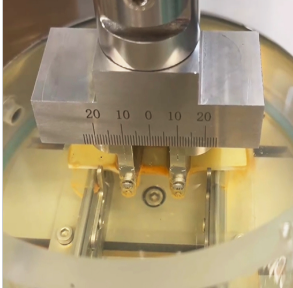
The Bone Cement Four-Point Bending Fatigue Tester is a specialized mechanical testing device designed to evaluate the fatigue performance and structural durability of bone cement used in orthopedic implants. By applying controlled cyclic bending loads at four points along a cement specimen, the tester simulates physiological stresses encountered in vivo, such as those during walking or joint movement. The device provides key data on crack initiation, fracture resistance, and overall fatigue life, helping manufacturers and researchers ensure the safety and reliability of bone cement for clinical applications.
(1)YY/T 1429 (China): Specifies four-point bending fatigue tests for acrylic resin bone cements under quasi-static and cyclic loading.
(2)ISO 16402 (International): Defines protocols for determining the fatigue life of bone cements in simulated physiological environments.
Additional alignment with ASTM F2118 for constant load fatigue testing of polymer-based bone cements.
(1)Dual-Environment Testing: Integrated water bath chamber (37°C ±0.5°C) simulates in-vivo conditions for clinically relevant data.
(2)Precision Fatigue Analysis: 0.01Hz–50Hz frequency range captures both low-cycle and high-cycle fatigue behavior.
(3)Automated SOP Execution: Pre-loaded test protocols for YY/T 1429 and ISO 16402 ensure regulatory compliance.
(4)Real-Time Fatigue Monitoring: Live S-N curve plotting and crack propagation detection via acoustic emission sensors.
(5)Modular Specimen Clamping: Quick-release fixtures accommodate rectangular beam specimens (2×4×30mm to 6×12×60mm).
(6)Data Integrity: Blockchain-timestamped results prevent tampering and simplify audit processes.
(1)Four-Point Bending Configuration: 30–100mm span adjustable for standardized (ISO) or custom specimen geometries.
(2)Electrohydraulic Actuator: Delivers sinusoidal, square, or random vibration waveforms up to 1kN force.
(3)Thermostatic Water Bath: Dual-zone temperature control (15–50°C) with anti-evaporation lid system.
(4)High-Speed Data Acquisition: 16-bit resolution at 10kHz sampling rate captures transient failure events.
(5)AI-Assisted Analytics: Machine learning algorithms predict fatigue life from partial test data.
(6)Safety Interlock System: Emergency stop, over-temperature protection, and breakaway specimen holders.
(1)Four-Point Bending Fixture Kit:
Anodized aluminum load frames with laser-marked span indicators
Self-aligning specimen grips (2–6mm thickness compatibility)
(2)Thermostatic Water Bath:
10L capacity with recirculation pump for temperature uniformity
Corrosion-resistant stainless steel construction
(3)FatigueMaster Pro Software:
Automated S-N curve generation
Crack initiation detection (acoustic emission integration)
21 CFR Part 11-compliant audit trail
(1)Calibrated micrometer set (0–25mm)
(2)Specimen preparation templates (ISO 16402 compliant)
(1)NIST-traceable force calibration weights
(2)Temperature verification thermocouple
| Parameter | Specification |
|---|---|
| Max. Dynamic Force | ±1.000 N (axial) |
| Frequency Range | 0.01–50 Hz (sinusoidal/square wave) |
| Temperature Control | 15–50°C ±0.5°C (water bath) |
| Force Resolution | 0.01 N (0–100N); 0.1 N (100–1.000N) |
| Displacement Range | ±5 mm (0.1 μm resolution) |
| Test Span Adjustability | 30–100 mm (ISO-compliant presets) |
| Power Requirements | 220V/110V ±10%, 50/60Hz, 800W |
| Dimensions (W×D×H) | 900 × 700 × 1.600 mm |
| Weight | 320 kg (including water bath) |
| Noise Level | <65 dB (A-weighted) |
(1)Specimen Preparation: Cut bone cement specimens to standardized dimensions and inspect for defects before testing.
(2)Fixture Setup: Secure the specimen in the four-point bending fixture, ensuring precise alignment for accurate load distribution.
(3)Load Application: Apply cyclic bending loads with controlled amplitude and frequency to simulate physiological stresses.
(4)Data Collection: Record cycles to failure, deformation, fracture points, and other fatigue characteristics for analysis.
(1)Inspection: Regularly check clamps, supports, and sensors for wear, damage, or misalignment.
(2)Cleaning: Keep fixtures, load surfaces, and testing area free of debris and cement residues.
(3)Calibration: Periodically calibrate load cells and displacement sensors to maintain testing accuracy.
(4)Lubrication & Safety: Lubricate moving parts as recommended and ensure all safety interlocks and emergency stop functions are operational.
1. What is the Bone Cement Four-Point Bending Fatigue Tester used for?
It evaluates the fatigue resistance, fracture behavior, and structural durability of bone cement used in orthopedic implants.
2. How does the four-point bending setup work?
The machine applies cyclic loads at four points along the specimen to simulate physiological stresses like those experienced during walking or joint movement.
3. How should test specimens be prepared?
Bone cement specimens must be cut to standardized dimensions and checked for defects before mounting in the fixture.
4. What data does the machine provide?
It records cycles to failure, deformation, crack initiation, and fracture points, offering critical information on fatigue life and mechanical performance.
5. What maintenance is required for the tester?
Maintenance includes inspecting fixtures and sensors, cleaning load surfaces and moving parts, calibrating sensors, and verifying safety interlocks.
Qinsun Instruments Co., LTD is a professional laboratory testing instrument manufacturer in China,Have been focusing on laboratory instrument R&D more than 30 years and have rich industry experience,Based on international testing standards,We are also the instrument supplier for BV SGS laboratory,We provide one-stop solutions for lab instruments,Free Training and Turn-Key Service,Products exported all over the world,Offer 36 month warranty and are a trustworthy partner.

Company Phone
+86-21-6420 0566
Working hours
Monday to Friday
Mobile phone:
13816217984
Email:
info@qinsun-lab.com