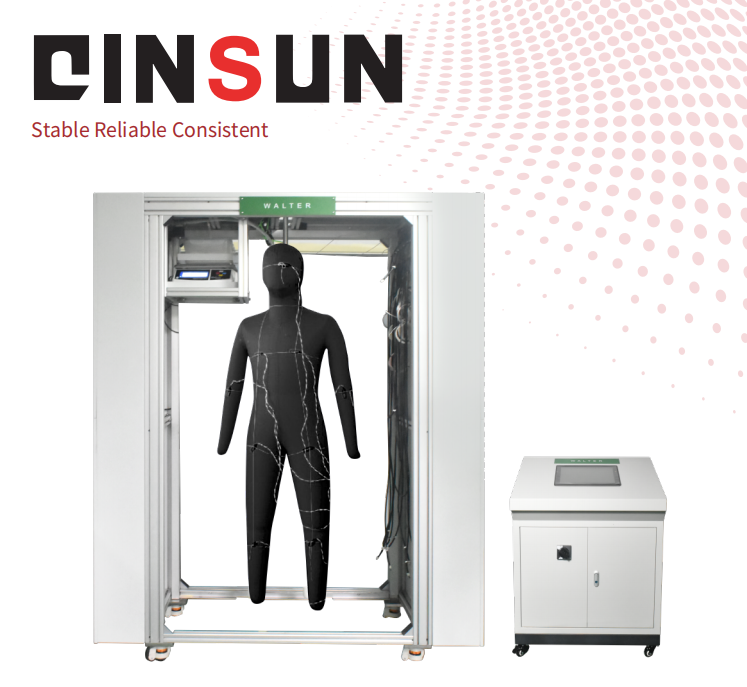
The sweating thermal manikin test system simulates the physical mechanism.
WhatsApp : +86 15601902607
Email : info@qinsun-lab.com

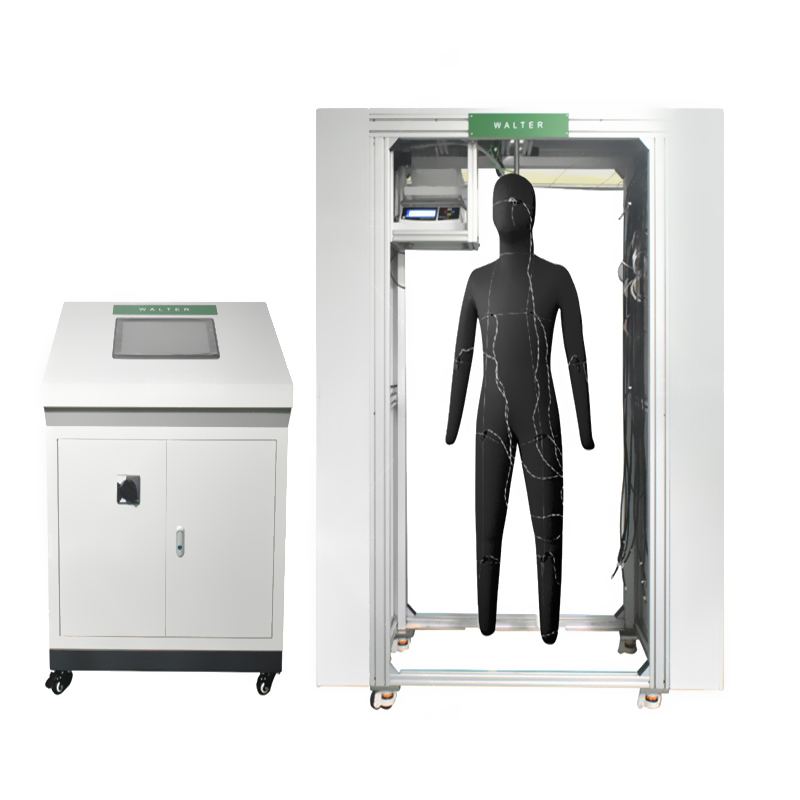
Walter sweating manikins accurately replicate human responses to environmental conditions, crucial for optimizing thermal comfort. Other manikins have limited sweat glands, far fewer than humans (nearly 6 million), can't maintain consistent sweating, and are costly due to complex controls. Walter is the first affordable, accurate manikin using water and breathable fabric.
Sweating mannequins are widely used in research on the moisture transfer properties of clothing and the microclimate conditions beneath garments. They are used to study the evaporative heat dissipation efficiency of clothing and to simulate sweating mechanisms. Sweating mannequins can be used to test the thermal resistance and moisture resistance of clothing, as well as to evaluate the non-evaporative heat dissipation performance of clothing.
The development of sweating mannequins has gone through several stages, from the first-generation static mannequins to the third-generation sweating simulation mannequins. The first-generation mannequins were used for static clothing thermal resistance testing, the second-generation mannequins expanded the evaluation of thermal and moisture performance, and the third-generation mannequins integrate computer technology to achieve precise temperature control and multi-environment simulation.
The applications of sweating mannequins also include studying the moisture transfer properties of clothing and the microclimate conditions beneath garments, as well as simulating sweating mechanisms. These mannequins can be used to test the thermal resistance and moisture resistance of clothing, as well as to evaluate the non-evaporative heat dissipation performance of clothing.
ISO 15831:2004 (E): Clothing-Physiological effects - Measurement of thermal insulation by means of a thermal manikin
ISO 23537-1:Requirements for sleeping bags
ASTM F 1291-04: Standard Test Method for Measuring the Thermal Insulation of Clothing Using a Heated Manikin
ASTM F 1720: Standard Test Method for Measuring Thermal Insulation of Sleeping Bags Using a Heated Manikin
ASTM F 2370: Standard Test Method for Measuring the Evaporative Resistance of Clothing Using a Sweating Manikin
ASTM F2371:Standard Test Method for Measuring the Heat Removal Rate of Personal Cooling Systems Using a Sweating Heated Manikin
ASTM F2732:Standard Practice for Determining the Temperature Ratings for Cold Weather Protective Clothing
EN 13537:Sleeping Bag Temperature Ratings Explained
EN 342:Clothing to protect against cold
ANSI/ISEA 201:Classification of Insulating Apparel Used in Cold Work Environments
ENV 342:Protective clothing - Ensembles for protection against cold
GB/T 18398 – Testing method for clothing thermal resistance
GB/T 11048 – Warmth retention property of textiles
Human-Like Simulation: Mimics human thermoregulation via 32-zone heated segments, microporous "sweating" skin, and dynamic motion (walking/running) for realistic performance analysis.
Precision Engineering: ±0.1°C temperature control and segmented sweating rates (0–100% adjustable) deliver repeatable, human-independent test results.
Multi-Domain Applications: Validated for occupational safety gear, sportswear, aerospace suits, and extreme-environment protective clothing development.
Data-Driven Insights: ThermoTech software provides real-time thermal resistance (clo), evaporative resistance, and comfort metrics, eliminating subjective human trials.
Global Adoption: Trusted in 20+ countries for R&D in military, firefighting, and outdoor industries, meeting stringent safety certifications.
Advanced Thermoregulation:
32 independently heated zones with 2°C max inter-segment differential for anatomical accuracy.
Isothermal or variable temperature modes (indoor to 55°C) simulate diverse climates.
Dynamic Sweating System:
Preheated water circulation ensures stable "sweat" evaporation, minimizing temperature-related errors.
Segmental control (0–100% rate adjustment) replicates localized perspiration patterns.
Motion Capability:
Adjustable gait (0–100 m/min walking; ≤250 m/min running) for dynamic thermal load testing.
Ergonomic neck cable enables unobstructed donning of helmets/masks.
Safety & Compliance:
Anti-leakage protection, overheat shutdown, and overrun alerts for operator safety.
Compliant with CE/UL electrical standards for global deployment.
Software Integration:
ThermoTech Control Analysis Suite: Real-time data visualization, EQT comfort modeling, and exportable reports (CSV/PDF).
| Items | Parameters |
| Material | Antirust copper alloy material |
| Heating section | 32 section (other quantities need to be customized) |
| Temperature detection section | 32 section (other quantities need to be customized) |
| Temperature range | Indoor temperature-55℃ |
| Temperature control accuracy | ±0.1℃ |
| Temperature stability | ±0.1℃ |
| Heating output power | 800-1000W |
| Power accuracy | ≤1% |
| Height of manikin | 175cm(other height need to be customized) |
| Weight of manikin | ≤65kg |
| Heating component | Hot plate heat |
| Environment temperature monitor | 4 section |
| Environment humidity monitor | 2 section |
| Work modes | Constant temperature test, variable temperature test, constant power test, variable power test |
| Sweating system | Controlled, sweat preheating system |
| Walking speed | 0-100m/min |
| Running speed | ≤250m/min |
| Step | 0-100cm/step |
| Safety protection function | Anti-leakage safety protection device, overrun alarm, overheating automatic power off function |
| Test index | Thermal resistance results, Clo value and so on |
| Test software | ThermaoTech Control analysis software |
| Comfort evaluation module | Thermal comfort evaluation model and EQT evaluation model |
| Power | 220V, 50Hz |
| Dimension | 1200 mm(W)×1200mm(L)×2200mm (H) |
| Weight | 475kg |
| Item No | Details |
| STD-5300201 | Thomas sweating thermal |
| STD-5300202 | Walking module |
| STD-5300203 | Thermal comfort analysis module |
| STD-5300204 | Walk-in constant temperature and humidity box |
| STD-5300205 | Pure water machine |
| STD-5300206 | Lenovo brand desktop computer, 1 set |
1、Take test garments according to thermal manikin size.
2、Set the skin temperature of thermal manikin body dummy at 32-35℃.
3、Set the manikin’s experimental status. i.e. static or dynamic, and set the step length and step speed.
4、Set the climate chamber temperature according to the estimated thermal resistance value of the clothing to be tested. When naked, the temperature should not be less than 10℃ below the skin temperature. When the thermal resistance value is between 1 and 3. it should not be less than 20℃ below the skin temperature. When the temperature is greater than 3. it should not be less than 30℃ below the skin temperature.
5、Adjust the humidity of the climate chamber to 30-50%.
6、Regulate the wind speed of the climate chamber at 0.15-8 m/s.
7、Take note of the climate chamber environment’s values, ensuring the change of the ambient temperature in the climate chamber is not more than 1℃, the change of the relative humidity is not more than 5%, and the change of the wind speed is not more than 50%. For 30 to 60 minutes, keep the environmental value consistent.
8、After the warm manikin enters the dynamic heat balance, the skin temperature ambient temperature and the heating power shall be measured every minute, and this state shall be maintained for more than 10 minutes.
9、Start the test by dressing the manikin in the test clothes. The warm manikin needs to be retained for more than 20 minutes when it enters the dynamic thermal balance once more.
10、The thermal resistance test is completed, and the test data can be studied.
How do thermal manikins work?
Thermal manikin measures the difference in heat loss in a controlled environment and sends the data of all sectors to the physical model. The physiological model reads skin temperature, respiration rate, and sweat rate in all sections. It then sends these values to the manikin, forecasting how the human body would react in a particular environment.
For how long, thermal manikins are used?
Dr. Harwood Belding is credited for developing the first operational thermal manikin for the United States military in 1941. The testing involved utilizing human volunteers to test protective clothes and equipment.

Qinsun Instruments Co., LTD is a professional laboratory testing instrument manufacturer in China,Have been focusing on laboratory instrument R&D more than 30 years and have rich industry experience,Based on international testing standards,We are also the instrument supplier for BV SGS laboratory,We provide one-stop solutions for lab instruments,Free Training and Turn-Key Service,Products exported all over the world,Offer 36 month warranty and are a trustworthy partner.

Company Phone
+86-21-6420 0566
Working hours
Monday to Friday
Mobile phone:
13816217984
Email:
info@qinsun-lab.com