Customer BackgroundEstablished in 1998 and located in the industrial region of North Rhine-West
WhatsApp : +86 15601902607
Email : info@qinsun-lab.com

Established in 1998 and located in the industrial region of North Rhine-Westphalia, Germany, the customer is a professional institution specializing in dust explosion protection, with the authority and reliability of third-party testing data as its core competitive advantage. The Minimum Ignition Energy (MIE) data issued by the institution serves as a direct basis for customers' equipment selection, hazardous area classification, and inerting system design. In recent years, as EU ATEX regulations and local German explosion protection requirements have continued to become more stringent, the customer's requirements for testing accuracy and the authority of test reports have reached an unprecedented level.
During the preliminary communication with the customer, we identified the following key challenges:
1. Insufficient energy resolution of the existing equipment, resulting in unreliable data in the low-ignition-energy range
The customer was using an early-generation ignition energy testing device with a minimum resolvable energy increment of approximately 10 mJ, which relied on manual capacitor replacement and manual calculations. For samples such as metal powders and certain chemical intermediates with extremely low ignition energies (< 3 mJ), the equipment was almost unable to provide reliable graded measurement data and could only report results as "< 10 mJ, not determined." This significantly weakened the credibility of the test reports.
2. Poor test repeatability and significant batch-to-batch data drift
Due to factors such as dust dispersion uniformity, electrode spacing, and discharge triggering timing, the MIE results for the same standard sample could vary by 30%–50% between different operators and on different testing dates. This was a critical issue for a third-party testing institution. The customer had been challenged by commissioning parties regarding the reliability of its data and was required to conduct retests and issue supplementary explanations. In 2025 alone, there were 5 retesting disputes, resulting in direct losses of approximately EUR 62.000.
3. Fully manual record-keeping, with insufficient data traceability and verification capability
Key parameters such as the ignition process, energy levels, dust concentration, and ambient humidity were all recorded on paper and entered manually, making it impossible to establish a complete electronic data trail. During DAkkS (German Accreditation Body) reassessments and supplier qualification audits conducted by major chemical companies, the customer was unable to provide a self-verifiable and traceable chain of original test data. Both audits resulted in corrective action items concerning insufficient data traceability.
4. Lack of combined concentration–energy testing capability, resulting in limited reporting dimensions
The customer's clients, particularly chemical and metal powder companies, increasingly expected to obtain an "ignition energy curve at different dust concentrations" from a single sample submission rather than receiving data for only one energy point. With the previous equipment, the customer had to repeatedly disassemble the system and prepare new samples. A single curve could take 2–3 days to complete, resulting in long delivery times. Customers complained that "they could not afford to wait for the report."
5. Core concern of the purchasing decision-makers: the "legal validity" of data in European laboratories
As an accredited testing institution, the customer's primary concern was not the price, but whether the equipment could provide a traceable calibration chain and whether the discharge energy data could withstand scrutiny from industry peers. Regarding Chinese-made equipment, their biggest concern was whether it could meet the methodological requirements of European standards, particularly EN 13821 / IEC 61241-2-3.
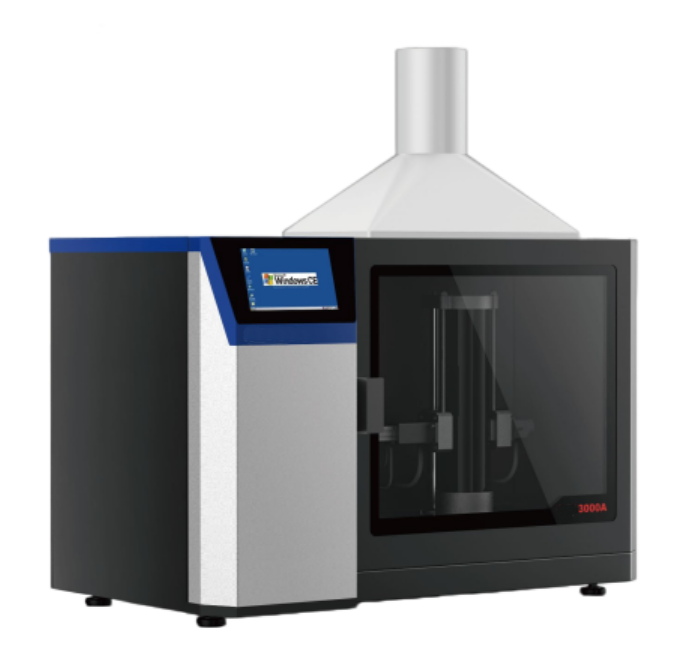
In response to the above challenges, we provided the customer with a complete Dust Cloud Minimum Ignition Energy Tester solution, together with an automatic dust dispersion generator and data management software to form an integrated testing system.
Supporting Solution: Data Management and Calibration Traceability
Self-calibration module: An integrated standard capacitor self-verification program automatically checks the energy output every time the instrument is started and generates a calibration record.
Data management software: Each test record is associated with the sample ID, applicable standard, operator, equipment status, and timestamp, creating a tamper-resistant electronic chain of original test data to support DAkkS audit requirements.
Waveform storage: The original voltage/current waveform of each discharge is stored for subsequent review, allowing the test process to be traced and reproduced when required for technical or peer review.
Delivery and Service Arrangements
Standards alignment: On-site verification was conducted item by item according to the methodological requirements of EN 13821 and IEC 61241-2-3. with a statement of methodological compliance provided.
Language localization: The system interface and operating manuals were provided entirely in German.
On-site training: Engineers stayed on site for 10 days to complete system training and practical assessments for three authorized testing personnel, and assisted with the completion of the customer's first comparative test report.
Long-term support: A 2-year warranty for the complete equipment, a local spare parts warehouse in Europe, 72-hour response service, and one complimentary calibration verification per year were provided.
Key Equipment Advantages
1. 0.1 mJ high energy resolution, eliminating the blind spot for low-ignition-energy samples
Compared with the 10 mJ minimum resolution increment of the previous equipment, the new system's 0.1 mJ resolution enables extremely low-ignition-energy samples such as metal powders and ultrafine chemical dusts to be reported with specific measurable values, rather than simply being classified as "not determined." The ambiguous "< 10 mJ" notation disappeared completely from the customer's test reports.
2. Automatic dispersion + constant-energy triggering, significantly improving repeatability
The automatic dust dispersion generator ensures uniformity and reproducibility of the dust cloud. Combined with microsecond-level discharge triggering control, it reduced the batch-to-batch deviation for the same standard sample from 30%–50% to within ±8%, bringing repeatability to an acceptable level for a third-party testing institution.
3. Fully electronic workflow, establishing a tamper-resistant data chain
From sample registration and parameter configuration to discharge waveform recording and result output, the entire workflow is electronically recorded, with timestamps and operator information automatically associated with each test. The system can export a complete package of original test data with one click. During the customer's DAKKS reassessment six months later, the customer passed the data traceability assessment without any corrective action being issued.
4. One-step generation of concentration–energy curves, shortening delivery times
The automatic continuous testing function for multiple concentration points reduced the time required for concentration–ignition energy curves from the original 2–3 days of repeated disassembly and sample preparation to within 4 hours for a single test session. The average report delivery time was reduced from 12 days to 5 days.
5. One system integrating methodological compliance and safety protection
The equipment is explicitly aligned with the methodological requirements of EN 13821 / IEC 61241-2-3. In terms of hardware, it adopts a dual-layer explosion protection enclosure and interlock design, enabling the customer to meet both methodological compliance and laboratory safety requirements.
Low-ignition-energy blind spot — The 0.1 mJ resolution enables precise reporting of the ignition energy of samples below 10 mJ, completely eliminating ambiguous descriptions in test reports.
Repeatability disputes — Automatic dispersion and constant-energy triggering reduced deviation from 30%–50% to ≤8%, addressing the root technical causes of retesting disputes.
Data traceability — A fully electronic chain of original test data combined with discharge waveform storage helped the customer successfully pass the DAKKS reassessment and supplier audits conducted by major chemical companies.
Methodological compliance — The equipment was delivered following methodological verification against EN 13821 / IEC 61241-2-3. addressing European testing institutions' concerns about the compliance of Chinese-made equipment.
Delivery efficiency — Concentration–energy curves can be generated in a single testing session, reducing testing time by 90% and accelerating report delivery by 58%, significantly improving the customer's testing capacity and order fulfillment capability.
Laboratory safety — The dual-layer protective enclosure, pressure relief design, and interlocked emergency stop system enable high-risk dust ignition tests to be conducted safely in a controlled laboratory environment.
After-sales service concerns resolved — Ten days of on-site training, a European local spare parts warehouse with 72-hour response, and annual calibration verification established long-term service support and customer confidence.
"As an independent testing institution, we are not selling equipment; we are selling the credibility of our data. That is why we were initially very cautious about any new equipment—especially because we simply could not afford to have our data challenged or invalidated.
What surprised us most about this Dust Cloud Minimum Ignition Energy Tester was its energy resolution. In the past, when dealing with metal powder samples, we could only report 'below 10 mJ.' Now, we can provide precise values to the decimal place. For the first time, a commissioning party proactively told us, 'Your reports are different now.'
More importantly, there is the data chain. During the DAkkS reassessment six months ago, we passed the traceability assessment without receiving a corrective action for the first time. The assessor was able to trace the original discharge waveform for every energy level directly. This had previously been the area where we felt the least confident.
If I could offer one piece of advice to our peers: when providing explosion protection data in Europe, accuracy can be improved gradually, but once traceability is missing, what you lose is your customers' trust—and that is the most expensive cost of all."
— Head of the Testing Laboratory, Rheinpulver Prozesssicherheit GmbH
Qinsun Instruments Co., LTD is a professional laboratory testing instrument manufacturer in China,Have been focusing on laboratory instrument R&D more than 30 years and have rich industry experience,Based on international testing standards,We are also the instrument supplier for BV SGS laboratory,We provide one-stop solutions for lab instruments,Free Training and Turn-Key Service,Products exported all over the world,Offer 36 month warranty and are a trustworthy partner.

Company Phone
+86-21-6420 0566
Working hours
Monday to Friday
Mobile phone:
13816217984
Email:
info@qinsun-lab.com