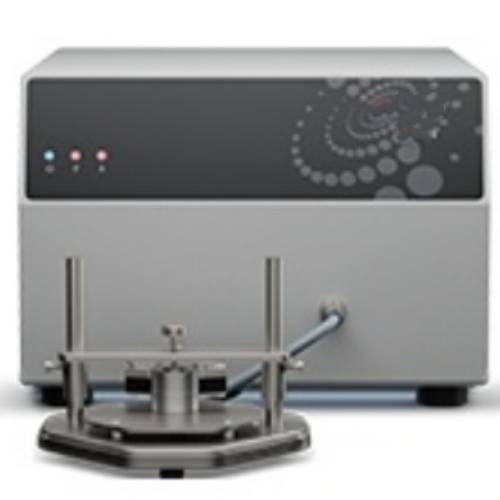
Multi-Function Thermal Conductivity Measurement Platform is an absolute-method measurement system de
WhatsApp : +86 15601902607
Email : info@qinsun-lab.com

Multi-Function Thermal Conductivity Measurement Platform is an absolute-method measurement system designed for accurate determination of thermal conductivity, thermal diffusivity, specific heat capacity, and thermal effusivity of solids, liquids, pastes, and powders. By integrating multiple transient techniques on a single platform, the system enables direct calculation of thermal properties from raw data without calibration materials, supporting reliable and repeatable measurements across a wide range of material types.
The Multi-Function Thermal Conductivity Measurement Platform is suitable for thermal property evaluation in research, quality control, and material development, including:
Polymers, composites, and building materials
Liquids and phase-change materials
Pastes, powders, and bulk solids
Soil and polymeric materials
Typical test samples include solid blocks and plates, liquid samples, powders, pastes, and soil specimens, depending on the selected sensor and test method.
The platform supports internationally recognized absolute measurement standards, including:
(1) ISO 22007-2: Plastics — Determination of thermal conductivity and thermal diffusivity — Transient plane heat source method
(2) ISO 22007-7: Plastics — Determination of thermal conductivity and thermal diffusivity using transient plane heat source
(3) GB/T 32064: Transient plane heat source method for thermal conductivity and thermal diffusivity of building materials
(4) ASTM E3088: Determination of thermal conductivity and thermal diffusivity using the transient plane source method
(5) ASTM D7896: Transient hot-wire method for thermal conductivity, thermal diffusivity, and volumetric heat capacity of liquids
(6) ASTM D5334: Transient line-source probe method
(7) ASTM D5930: Determination of thermal conductivity of plastics by transient line-source technique
| Method | TPS | THW | MTPS | TLS |
|---|---|---|---|---|
| Applicable Materials | Solids, pastes, powders | Liquids, phase-change materials | Solids, pastes, powders | Soil, pastes, polymers |
| Measurement Module | 3D bulk, anisotropic, plate, thin film; general: specific heat | Bulk | 3D bulk, anisotropic, plate; 1D standard | Bulk |
| Thermal Conductivity (W/m·K) | 0.01–500 | 0.01–2 | 0.03–500 | 0.1–8 |
| Thermal Diffusivity (mm²/s) | 0.01–300 | Up to 0.5 | 0.01–300 | Not applicable |
| Volumetric Heat Capacity (MJ/m³·K) | Up to 5 | Up to 5 | Up to 5 | Not applicable |
| Thermal Effusivity (W·s½/m²·K) | 20–40000 | Not applicable | 20–40000 | Not applicable |
| Sample Size (mm | mL) | Ø10 or square | 20 mL | Ø25 or square |
| Sample Thickness (mm) | ≥0.05 | Not applicable | ≥0.1 | Probe length 100 |
| Maximum Sample Size | Unlimited | Unlimited | Unlimited | Unlimited |
| Test Time (s) | 2–160 | 1 | 2–160 | 180 |
| Accuracy (Thermal Conductivity) | 5% | 2% | 5% | 5% |
| Repeatability (Thermal Conductivity) | 2% | 1% | 2% | 2% |
| Temperature Range (°C) | 0–300 / −75–300 | −50–200 | 0–100 / −50–200 | −40–100 |
| Sample Configuration | Symmetric / asymmetric | Insert type | Asymmetric (single-sided) | Insert type |
| Supported Standards | ISO 22007-2. ISO 22007-7. GB/T 32064. ASTM E3088 | ASTM D7896 | ISO 22007-7 | ASTM D5334. ASTM D5930 |
Absolute measurement methods with no calibration materials required
Multiple transient techniques integrated on a single platform
Direct measurement of thermal conductivity, thermal diffusivity, specific heat, and thermal effusivity
Suitable for solids, liquids, pastes, powders, and soil
Raw data–based calculation improves traceability and measurement reliability
(1) TPS sensors for solids, pastes, and powders
(2) THW sensors for liquid measurements
(3) MTPS sensors for single-sided solid measurements (optional)
(4) TLS probe sensors for soil and polymer testing (optional)
(5) Dedicated sample holders and probe assemblies
Select the appropriate transient method and sensor based on sample type.
Prepare the sample according to the required geometry and configuration.
Position the sensor in contact with or inserted into the sample.
Apply electrical current to the sensor to generate controlled heating.
Record the temperature rise as a function of time.
Calculate thermal conductivity, thermal diffusivity, specific heat, and thermal effusivity directly from the transient response data.
Keep sensor surfaces clean to ensure stable thermal contact with samples.
Inspect sensors regularly for mechanical damage or surface wear.
Verify system performance periodically using reference materials.
Store sensors and probes in protective cases when not in use.
1. What thermal properties can be measured by the Multi-Function Thermal Conductivity Measurement Platform?
The platform is designed to measure thermal conductivity, thermal diffusivity, volumetric specific heat capacity, and thermal effusivity. By using absolute transient methods such as TPS, THW, MTPS, and TLS, these parameters are calculated directly from the measured temperature response without the need for calibration materials. This approach ensures high traceability and makes the results suitable for both research and standardized testing.
2. Why is this platform described as an absolute measurement system?
All supported methods are absolute methods, meaning the thermal properties are derived directly from fundamental physical relationships using raw measurement data. No reference samples, calibration materials, or correction media are required. This reduces uncertainty introduced by calibration procedures and allows direct testing of different materials under actual measurement conditions.
3. How does the platform adapt to different material forms?
Different sensors and transient techniques are used depending on the sample type. TPS and MTPS sensors are suitable for solids, pastes, and powders; THW sensors are designed for liquids and phase-change materials; TLS probes are used for soil and polymer testing. Each method has a dedicated configuration to ensure proper heat transfer and accurate data acquisition.
4. What standards does the platform comply with?
The platform supports multiple international standards, including ISO 22007-2 and ISO 22007-7 for plastics, GB/T 32064 for building materials, ASTM E3088 for transient plane source testing, ASTM D7896 for liquid measurements, and ASTM D5334 and ASTM D5930 for transient line source methods. This makes it suitable for regulated testing environments.
Qinsun Instruments Co., LTD is a professional laboratory testing instrument manufacturer in China,Have been focusing on laboratory instrument R&D more than 30 years and have rich industry experience,Based on international testing standards,We are also the instrument supplier for BV SGS laboratory,We provide one-stop solutions for lab instruments,Free Training and Turn-Key Service,Products exported all over the world,Offer 36 month warranty and are a trustworthy partner.

Company Phone
+86-21-6420 0566
Working hours
Monday to Friday
Mobile phone:
13816217984
Email:
info@qinsun-lab.com