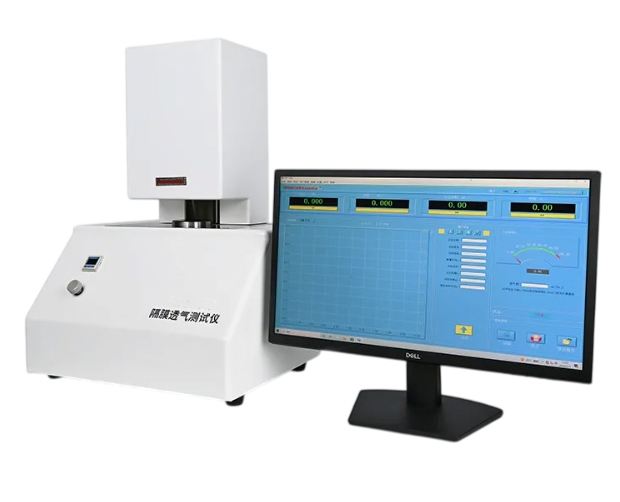
Tests battery diaphragm gas permeability per GB/T standards for battery separators.
WhatsApp : +86 15601902607
Email : info@qinsun-lab.com

The Battery Diaphragm Gas Permeability Tester is a precision instrument designed to evaluate the gas permeability of battery diaphragms and separators. It provides accurate, high-resolution measurements under controlled pressure conditions, enabling reliable assessment of materials used in battery production. The compact design and ease of operation make it suitable for laboratory and quality control environments.
Differential-pressure Method Gas Permeability Tester:
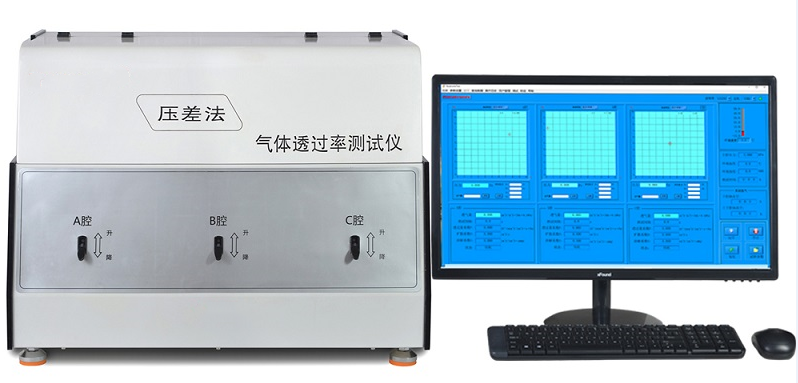
(1) Measuring gas permeability of battery diaphragms and separators in lithium-ion and other rechargeable batteries.
(2) Evaluating barrier performance of separator materials for battery safety and efficiency.
(3) Research and development of new diaphragm and separator materials.
(4) Quality control and inspection in battery manufacturing facilities.
(5) Laboratory testing for material science studies related to electrochemical devices.
(6) Comparing permeability of different separator types to guide material selection.
ISO 5636-5 Paper and board.Determination of air permeance (medium range).Part 5: Gurley method
ISO 2965 Material used as cigarette papers; Determination of air permeability
SJ/T 10171 General test method for basic properties of alkaline battery separators
GB/T 36363 Polyolefin separator for lithium-ion battery
(1) High-accuracy measurement of gas permeability (10–15000 s/100ml).
(2) Exceptional resolution (0.1 s/100ml) and pressure accuracy (0.0001 kPa).
(3) Multiple selectable pressure ranges: 5 kPa standard, 10 kPa and 20 kPa optional.
(4) Single-sample testing with secure sample holder.
(5) Compact, robust design suitable for laboratory environments.
(6) User-friendly interface for easy parameter setting and operation.
(7) Requires only clean air as a test gas.
(8) Provides reliable and repeatable results for quality control and R&D applications.
Measuring range | 0.01-2.5um/(Pa.s) |
Resolution | 0.001um/(Pa.s) |
Transmission rate | 0.01-120ml/min (other ranges are optional) |
Pressure difference/range 0-3KPa, accuracy | ±0.01kPa (other ranges are optional) |
Effective pressure difference | 1.21kpa±0.01kPa |
Fixture diameter | φ28.6 ±0.1mm(transmissive area: 642mm2) |
Test area | 50mm×50mm Effective area:6.42cm2 |
Test time | 1-999999 seconds Accuracy: 0.1 seconds |
Sample temperature and humidity treatment | A. Pretreatment: <40ºC,10-35%RH atmospheric conditions, stand for 24h B. The difference between weighing 1h before and after is not more than 0.25% of the total mass, and the sample is balanced |
Weight | 15kg |
(1) Main testing machine
(2) Sample holder
(3) Pressure application system
(4) User manual
(5) Power cable
(1) Install the battery diaphragm or separator sample securely in the sample holder.
(2) Connect the clean air source to the machine and ensure proper pressure supply.
(3) Select the test pressure and configure the test parameters.
(4) Start the test; the machine measures the time required for 100 ml of gas to pass through the sample.
(5) Read and record the permeability value from the high-resolution display.
(6) Repeat the test for additional samples as needed.
(1) Regularly inspect the sample holder and pressure components for wear or leaks.
(2) Keep the instrument clean and free from dust or debris.
(3) Check the air source for contaminants that may affect test accuracy.
(4) Periodically verify calibration to maintain measurement precision.
(5) Handle the machine carefully to avoid damage to sensitive components.
(6) Follow manufacturer guidelines for servicing and spare parts replacement.
1. What is the primary purpose of this tester?
It measures the gas permeability of battery diaphragms or separators to evaluate their effectiveness in preventing gas leakage and ensuring safe battery operation.
2. Which types of battery diaphragms can be tested?
The tester is suitable for polymer, ceramic, and composite diaphragms used in lithium-ion, nickel-metal hydride, and other rechargeable batteries.
3. How does the tester simulate real-world conditions?
It applies controlled pressure differentials and measures the rate of gas transmission through the diaphragm under specified environmental conditions.
4. Which standards does this tester comply with?
It supports international standards for battery separator and diaphragm testing, including ASTM, IEC, and relevant national battery safety protocols.
5. Who typically uses this equipment?
Battery manufacturers, R&D laboratories, and quality control teams use it to ensure diaphragm integrity, optimize materials, and maintain battery safety and performance.
Qinsun Instruments Co., LTD is a professional laboratory testing instrument manufacturer in China,Have been focusing on laboratory instrument R&D more than 30 years and have rich industry experience,Based on international testing standards,We are also the instrument supplier for BV SGS laboratory,We provide one-stop solutions for lab instruments,Free Training and Turn-Key Service,Products exported all over the world,Offer 36 month warranty and are a trustworthy partner.

Company Phone
+86-21-6420 0566
Working hours
Monday to Friday
Mobile phone:
13816217984
Email:
info@qinsun-lab.com