Product Features1. Precise temperature control with high temperature uniformity and small fluctuatio
WhatsApp : +86 15601902607
Email : info@qinsun-lab.com

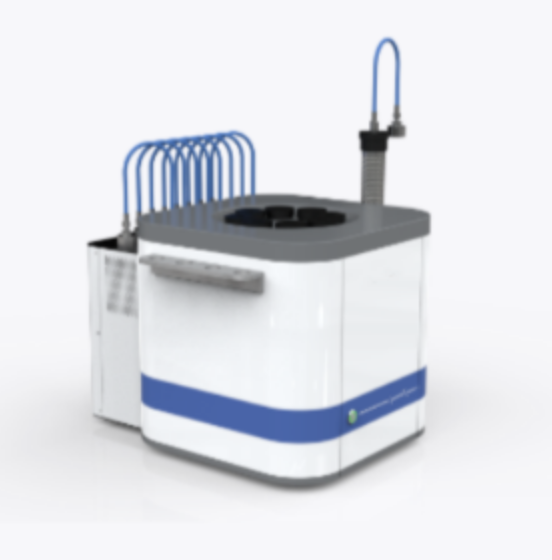
The Solid Energetic Materials Stability Tester monitors the changes in gas pressure over time during the thermal decomposition of solid materials (such as explosives and propellants) in a tightly sealed reaction vessel under isothermal heating conditions in real time and continuously. This method can accurately and repeatedly test the chemical instability of energetic materials caused by impurities that compromise their stability, incompatibility with surrounding substances, or aging, thus precisely characterizing the thermal decomposition reaction characteristics of energetic materials and scientifically assessing their thermal stability and storage life.
The Solid Energetic Materials Stability Tester is primarily used to assess the stability of solid energetic materials (such as explosives and propellants) under conventional storage and transportation conditions. It accurately characterizes the thermal decomposition reaction characteristics of materials by continuously monitoring the changes in gas pressure over time during the thermal decomposition of solid materials within a tightly sealed reaction vessel under isothermal conditions, thereby scientifically evaluating their thermal stability and storage life.
EN 13938-2: Respiratory Protective Equipment for Firefighters - Part 2: Positive Pressure Respirators (PPR) for Firefighting and Rescue Services
STANAG 4490: NATO Standardization Agreement 4490 - Jet Fuels - Requirements and Test Methods
MIL-STD-1751AMethods 1031, 1032 & 1033: Military Standard 1751A - Test Methods for Electrical and Electronic Equipment Used in Aircraft- Method 1031: Vibration Test- Method 1032: Shock Test- Method 1033: Temperature Cycle Test
EN 13763-13: Explosives for Civil Uses - Part 13: Thermal Stability Test - Accelerating Rate Calorimetry (ARC)
1. Precise temperature control with high temperature uniformity and small fluctuation.
2. Supports long - term continuous real - time monitoring to meet different experimental testing requirements.
3. Allows for the setting of up to 5 levels of different experimental durations and temperature gradients.
4. Multiple units can be connected to a single machine, meeting the testing needs of 4 instruments simultaneously.
5. Remote communication control and human - machine isolation ensure the safety of experimenters during testing.
6. Equipped with a built - in thermal protector and gas overpressure detection function to ensure the safe use of the instrument.
| Technical Parameter | Specification |
|---|---|
| Temperature range | 40 °C ~ 200 °C |
| Temperature fluctuation | ± 0.1 °C (within 60 minutes) |
| Temperature uniformity | ≤ 0.3 °C (at the bottom of any two test cavities in the furnace) |
| Pressure measurement range | 10 kPa ~ 300 kPa |
| Pressure measurement error | ≤ 0.1% FS |
| Pressure resolution | 0.01 kPa |
1. Test chamber assembly (compatible with multi-unit synchronous testing)
2. Solid energetic material sample holder (for positioning and securing samples within the test chamber)
3. Multi-unit connection cable (enabling interconnection between up to 4 units and a single unit)
4. Spare built-in thermal protection element (a spare part to ensure temperature safety)
5. Spare overpressure detection sensor (a spare part to maintain pressure detection function)
6. Communication connection cable (supports remote communication)
7. Test chamber seal (ensuring the sealing performance of the test chamber)
1. Experimental Preparation: Check the instrument status and install the test chamber components; fix the solid energetic material sample in the test chamber using the sample holder and seal the test chamber.
2. Equipment Connection: If multi-unit testing is required, connect up to 4 units to the unit using unit connection cables; connect the communication cable to prepare for remote monitoring.
3. Parameter Setting: After powering on, set the experimental parameters (including temperature range, experimental duration up to 5 levels, and temperature gradient) on the instrument interface.
4. Start-up and Operation: After confirming the parameters are correct, start the instrument and enable real-time monitoring; remote observation can be performed during the experiment via remote communication.
5. Safety Assurance: During the experiment, the instrument's built-in thermal protector and overpressure detection function will automatically operate to ensure experimental safety.
6. Experimental Completion: After the experiment is completed and the instrument has cooled and depressurized to a safe state, shut down the equipment; remove the sample and clean and maintain the test chamber.
1. What is the purpose of a Solid Energetic Materials Stability Tester?
It is used to evaluate the thermal and chemical stability of solid energetic materials, such as explosives, propellants, and pyrotechnics, to ensure safe handling, storage, and usage.
2. What types of materials can be tested?
The instrument can test a variety of solid energetic compounds, including powders, pellets, and pressed or cast formulations.
3. How does the tester work?
The tester heats the material under controlled conditions and monitors pressure, temperature, decomposition, or other indicators of instability to determine its stability characteristics.
4. What standards does the tester comply with?
It is designed to meet relevant military and industry standards for energetic material testing, including ISO, NATO, and national explosive safety regulations.
5. What safety features are included?
The device includes protective shielding, automated temperature and pressure control, emergency shutoff mechanisms, and data logging, ensuring safe operation during tests on potentially hazardous materials.
Qinsun Instruments Co., LTD is a professional laboratory testing instrument manufacturer in China,Have been focusing on laboratory instrument R&D more than 30 years and have rich industry experience,Based on international testing standards,We are also the instrument supplier for BV SGS laboratory,We provide one-stop solutions for lab instruments,Free Training and Turn-Key Service,Products exported all over the world,Offer 36 month warranty and are a trustworthy partner.

Company Phone
+86-21-6420 0566
Working hours
Monday to Friday
Mobile phone:
13816217984
Email:
info@qinsun-lab.com