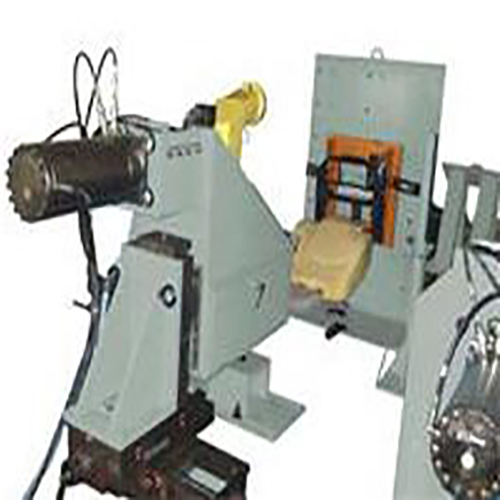
Applicable standards:GB 11550-2009 "Performance requirements and test methods for car seat headrest"
WhatsApp : +86 15601902607
Email : info@qinsun-lab.com

The Impact Strength Tester for Car Seat Launching Headrest is a specialized testing system designed to evaluate the impact resistance, energy absorption capability, and whiplash protection performance of automotive seat headrests under dynamic loading conditions.
By simulating vehicle collision or rapid deceleration scenarios through controlled headform impact, the system accurately measures impact velocity, acceleration response, rebound behavior, and injury-related parameters.
It is widely used by automotive OEMs, seat and headrest manufacturers, certification bodies, and safety research laboratories for regulatory compliance testing, product development, and occupant injury assessment.
(1) Impact strength and energy absorption testing of automotive seat headrests.
(2) Dynamic whiplash injury performance evaluation of headrest systems.
(3) Launch-type headrest deployment and rebound behavior assessment.
(4) Headrest impact safety verification for passenger cars, commercial vehicles, and special-purpose vehicles.
(5) Regulatory compliance testing for vehicle seat and head restraint systems.
(6) Comparative testing of different headrest structures, materials, and energy-absorbing designs.
(7) R&D validation of active and passive head restraint systems.
(8) OEM internal validation and safety rating development testing.
(1) FMVSS 202a – Head Restraints.
(2) ECE R17 – Strength and safety requirements for vehicle seats and head restraints.
(3) ISO 17373 – Road vehicles – Test method for head restraint impact performance.
(4) IIHS Head Restraint Rating Protocol.
(5) Euro NCAP – Whiplash Assessment Protocol.
(6) OEM technical specifications and internal safety standards.
(1) Pneumatic launch system with precise impact velocity control.
(2) Biofidelic headform configuration compliant with international safety standards.
(3) Adjustable impact arm angle and Z-axis position to accommodate various seat types and test conditions.
(4) High-speed dynamic impact analysis with ultra-high sampling resolution.
(5) Integrated injury criteria calculation, including neck injury and whiplash-related parameters.
(6) Automatic rebound prevention mechanism to ensure test safety and repeatability.
(7) Advanced crash pulse reconstruction capability for detailed dynamic analysis.
(8) High-speed data acquisition and professional post-processing software.
(9) Comprehensive safety protection system ensuring operator and equipment safety.
| Parameter | Specification |
|---|---|
| Impact Velocity | 5–24 km/h (1.4–6.7 m/s) |
| Typical Test Speed Range | 25–30 km/h (standard collision simulation) |
| Max Impact Energy | 500 J (±2%) |
| Impact Head Diameter | 165 mm (standard) |
| Equivalent Impact Mass | 6.8 kg (standard headform) |
| Selectable Test Mass | 7 kg / 18 kg / 24.5 kg |
| Acceleration Range | 0–100 g (±1.5%) |
| Impact Velocity Accuracy | ±1% |
| Acceleration Measurement Accuracy | ±3% |
| Measurement Frequency | 100 kHz (16-bit DAQ) |
| Time Resolution | 10 μs |
| Power Supply | 3-phase, 480 VAC, 60 Hz |
(1) Biofidelic headform impactor (standard configuration).
(2) Triaxial accelerometer sensor set.
(3) Laser Doppler velocimeter.
(4) Professional impact analysis and data processing software.
(5) Safety containment chamber with protective shielding.
(6) Calibration tools for velocity and acceleration systems.
(1) Install the seat and headrest assembly securely on the test fixture.
(2) Select the appropriate impact head type and equivalent mass according to the test standard.
(3) Adjust the impact arm position and angle to meet test requirements.
(4) Set impact velocity, data acquisition parameters, and safety interlocks.
(5) Arm the pneumatic launch system and verify safety protection status.
(6) Execute the impact test and record impact velocity, acceleration, and rebound data in real time.
(7) Complete data acquisition and automatically stop the system after impact.
(8) Analyze test results, generate curves and injury criteria values, and export reports.
(1) Regularly inspect the pneumatic launch system and impact arm for wear or misalignment.
(2) Periodically calibrate accelerometers, velocity sensors, and data acquisition channels.
(3) Check safety interlocks, emergency stop devices, and protective enclosures before operation.
(4) Keep electronic components, sensors, and software systems clean and properly grounded.
(5) Lubricate mechanical moving parts according to the maintenance schedule.
(6) Perform routine system diagnostics to ensure long-term stability and measurement accuracy.
Qinsun Instruments Co., LTD is a professional laboratory testing instrument manufacturer in China,Have been focusing on laboratory instrument R&D more than 30 years and have rich industry experience,Based on international testing standards,We are also the instrument supplier for BV SGS laboratory,We provide one-stop solutions for lab instruments,Free Training and Turn-Key Service,Products exported all over the world,Offer 36 month warranty and are a trustworthy partner.

Company Phone
+86-21-6420 0566
Working hours
Monday to Friday
Mobile phone:
13816217984
Email:
info@qinsun-lab.com