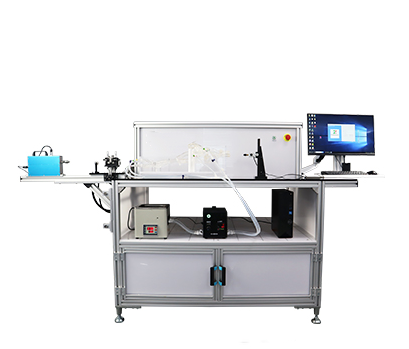
Main Uses of the Guidewire Pushing Force TesterThe guidewire pushing force tester is a precision tes
WhatsApp : +86 15601902607
Email : info@qinsun-lab.com

The Guidewire Pushing Force Tester is a testing device used to verify and record the performance characteristics of interventional medical devices (including balloon catheters, guidewires, and stent delivery systems). This system simulates the tracking force and pushing efficiency of the product within human blood vessels. It offers a variety of test combinations, and the test results can be used for routine data analysis and product performance evaluation.
The guidewire pushing force tester is a precision testing tool in the medical device industry, mainly used to test the mechanical properties of guidewires during the pushing process. This equipment plays a crucial role in the research, development, production, and quality - control processes of medical devices.
Its specific uses include: Testing in the R & D Stage: In the R & D stage of medical devices, the guidewire pushing force tester helps R & D personnel conduct comprehensive tests on the performance of new guidewires. By simulating pushing operations under different conditions, testers can obtain data on the mechanical properties of guidewires in various scenarios, and thus evaluate whether they meet the design requirements. This data provides valuable references for R & D personnel, enabling them to optimize the structure and performance of guidewires, and improve the overall quality of medical devices.
Quality Control in the Production Stage: During the production stage, the application of the guidewire pushing force tester ensures that each batch of guidewires meets the quality requirements. By regularly testing guidewires in the production process, manufacturers can promptly identify and resolve potential quality issues, ensuring product consistency and stability.
Optimization of Process Parameters: The guidewire pushing force tester can also be used to optimize process parameters during production, aiming to increase production efficiency and reduce costs.
Competitive Product Analysis and Market Strategy Formulation: Through strict testing of finished guidewires, manufacturers can ensure that products meet the predetermined performance standards. Meanwhile, this equipment can also be used to analyze and compare competing products on the market, helping manufacturers understand their own advantages and disadvantages, and thus formulate more targeted market strategies.
Comprehensive Testing Tasks: The guidewire pushing force tester can also be integrated with other medical equipment to perform more complex testing tasks. For example, by connecting it with a blood vessel simulator, testers can simulate the pushing process of guidewires in real blood vessels, and thus evaluate their performance more accurately. This comprehensive testing method contributes to improving the precision and reliability of medical device research and production.
ASTM F2394 Standard Guide for Measuring Securement of Balloon-Expandable Vascular Stent Mounted on Delivery System
YY/T 0807 Standard guide for measuring securement of balloon expandable vascular stent mounted on delivery system
• Utilizes imported miniature dynamic torque and force sensors capable of detecting minute force changes.
• Employs a high-precision angle sensor for measuring rotation angles.
• Features Panasonic servo motors and a reduction system for stable and efficient operation.
• Uses a roller clamping system with push and retraction functions.
• Includes encoder resistance correction function to reduce testing errors.
• Equipped with a high-precision water bath circulating temperature control device with inlet and outlet ports for temperature control of the vascular model.
• A movable slider carries the angle and torque sensors, allowing for switching between different sensors for angle and torque measurements.
• Provides historical data backup and management functions for diverse analysis of historical test data.
• Offers multi-level user access control for convenient and standardized equipment management by laboratory personnel.
• Computer software control system enables real-time curve analysis during testing, facilitating data processing and transmission.
• Displays maximum, minimum, and average values and generates test reports; connects to a printer for printing reports.
• Configured with an overflow return device; the vascular model and sample inlet are horizontally submerged in water during testing to ensure a horizontal state throughout the testing process.
• Optional software features include data traceability, multi-level access control, audit trail, and electronic signatures, complying with GMP requirements.
• Pubtester also provides professional customization services to meet users' personalized needs regarding fixtures, software, etc.
• Optional customized video recording function allows for clear visualization of guidewire and catheter movement within the vascular model.
• Software provides free lifetime upgrades.
| Parameter | Specification |
|---|---|
| Force-measuring Range | Varies by specific model and application; the force-measuring range of some testers can reach dozens of newtons |
| Force-measuring Accuracy | A key indicator for evaluating tester performance; high-precision testers can achieve 0.1N or higher (enables R&D personnel to precisely understand guidewire performance characteristics) |
| Testing Speed | Refers to the force application rate during testing (different speeds affect guidewire performance); usually has an adjustable range (e.g., 0 - 500mm/min) to meet various testing needs |
| Equipment Composition | Typically consists of a testing main unit, angle sensor, torque sensing system, force sensor, roller clamping device, etc. (these components cooperate to complete guidewire pushing-force testing) |
Standard configuration: main unit, computer, printer, force sensor, angle sensor, torque sensor, clamping device, water bath temperature control system, automatic control system
Optional: camera-based image recognition system
1. Before testing, appropriate test conditions, such as water flow rate and pressure, should be set according to the pipe specifications and testing requirements. This helps to ensure the accuracy and reliability of the measurement results.
2. When connecting the pipes, ensure a tight, leak-free connection. Any leaks will affect the accuracy of the measurement results.
3. During the testing process, keep the testing instrument and pipes clean to avoid contamination affecting the test results. Regularly clean and maintain the instrument to ensure its proper functioning and extend its service life.
4. After the test is completed, turn off the testing instrument, disconnect the pipes, and clean and dry them for future use. This helps prevent corrosion and damage to the instrument and pipes due to prolonged disuse.
1. What is the main function of the Guidewire Pushing Force Tester?
The Guidewire Pushing Force Tester is designed to measure and record the pushing force and mechanical properties of interventional medical devices such as guidewires, balloon catheters, and stent delivery systems. It simulates the tracking and pushing behavior of these devices inside human blood vessels, helping R&D personnel, manufacturers, and quality-control teams to evaluate device performance, optimize designs, and ensure the safety and reliability of medical products during both development and production stages.
2. How is the Guidewire Pushing Force Tester used in product R&D?
During the R&D stage, this tester allows engineers to simulate pushing operations under various conditions to collect precise data on guidewire behavior. The data helps evaluate whether the guidewire meets design specifications and provides valuable insight for optimizing the structure and mechanical properties of guidewires. By analyzing pushing force, torque, and angle performance, developers can improve product quality, ensure consistency across batches, and enhance overall safety and efficiency in clinical applications.
3. What features ensure high accuracy in measurements?
The tester uses imported miniature dynamic torque and force sensors capable of detecting minute changes, along with high-precision angle sensors. The roller clamping system allows stable push and retraction operations, while the encoder resistance correction function reduces errors. A high-precision water bath circulates water for consistent temperature control of the vascular model, ensuring accurate simulation. The system also provides real-time curve analysis, maximum/minimum/average value display, historical data backup, and optional video recording for detailed observation of guidewire movement.
4. How does this tester support quality control in production?
In the production stage, the Guidewire Pushing Force Tester helps ensure that every batch of guidewires meets pre-established quality standards. Regular testing identifies potential mechanical or performance issues early, allowing manufacturers to correct them promptly. The system can also optimize production parameters to increase efficiency and reduce cost. By maintaining a consistent standard of pushing force and torque performance, the tester contributes to producing reliable, safe medical devices ready for clinical use.
Qinsun Instruments Co., LTD is a professional laboratory testing instrument manufacturer in China,Have been focusing on laboratory instrument R&D more than 30 years and have rich industry experience,Based on international testing standards,We are also the instrument supplier for BV SGS laboratory,We provide one-stop solutions for lab instruments,Free Training and Turn-Key Service,Products exported all over the world,Offer 36 month warranty and are a trustworthy partner.

Company Phone
+86-21-6420 0566
Working hours
Monday to Friday
Mobile phone:
13816217984
Email:
info@qinsun-lab.com