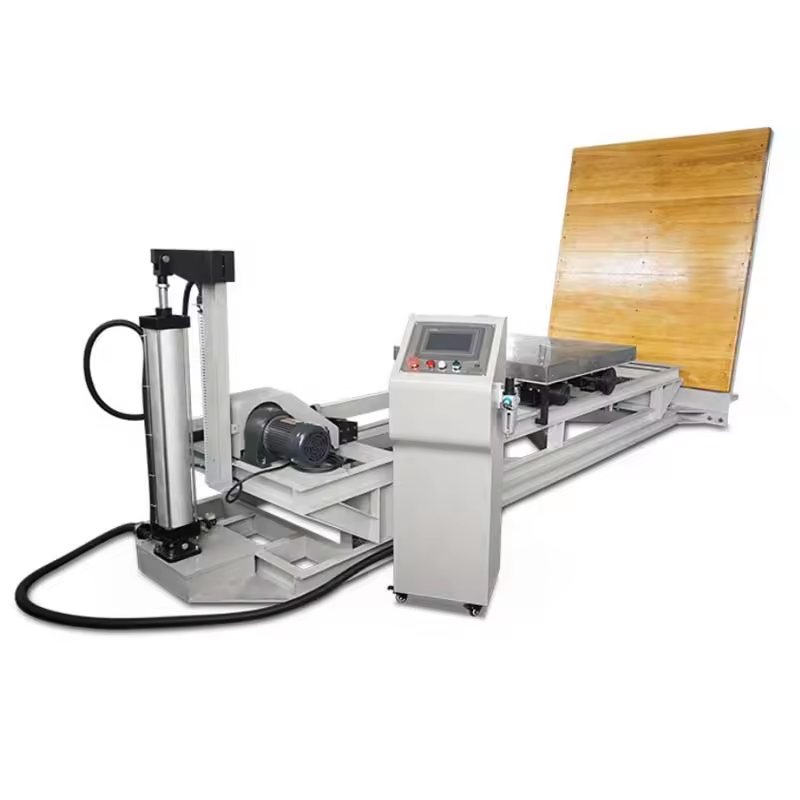
Main uses:Evaluate the impact resistance of the material: By applying the impact load, the oblique i
WhatsApp : +86 15601902607
Email : info@qinsun-lab.com

The Incline Impact Tester is designed to evaluate the impact resistance of products, packaging, and transport systems under controlled oblique loading conditions. It simulates real-world drop, collision, and tilt scenarios, providing quantitative assessment of structural integrity, energy absorption, and deformation for a wide range of consumer, industrial, and automotive components.
(1) Packaging drop and transport impact testing
(2) Consumer goods durability evaluation under oblique impact
(3) Industrial machinery and palletized freight crash simulation
(4) Automotive component oblique load testing
(5) Quality control in logistics and manufacturing
(6) Material and design validation for R&D laboratories
(1) ASTM D7748 – Impact resistance testing of packaging and transport systems
(2) ISO 13355 – Automotive component durability evaluation under oblique load conditions
(3) ISTA 3E – Simulates truck collision scenarios for palletized freight testing
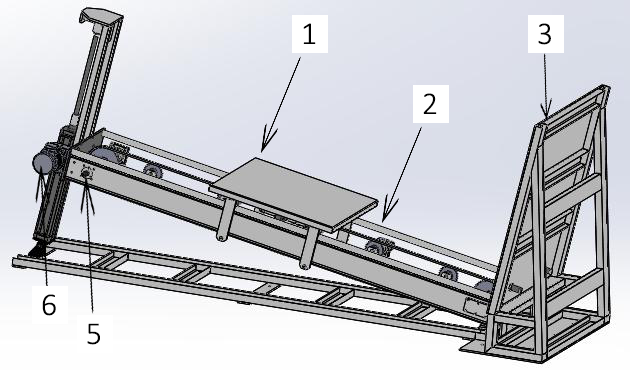
(1) Rapid Precision Deployment: Pneumatic positioning system with <0.1 mm repeatability and tool-free impact speed adjustment.
(2) Modular Impact Configuration: Multiple load capacities (1,000–10,000 lbs) and scalable collision surfaces for various product sizes.
(3) Advanced Data Acquisition: High-speed 4-channel TLP system with laser velocimetry for peak force and deformation capture.
(4) Ergonomic Workflow: Low-profile sled and self-centering guides for repeatable impact angles and easy specimen handling.
(5) Industrial Durability: Hardened steel AR500-grade collision plates and IP67-rated sealed drive system for long-term reliability.
(6) Safety Systems: Enclosure interlocks, laser safety curtains, and overload protection to prevent operator hazards.
| Model | Load Capacity | Collision Surface | Sled Size | Max Speed | Simulated Drop Height |
|---|---|---|---|---|---|
| Ⅱ1000 | 1,000 lbs | 60” × 60” | 48” × 48” | 8 ft/sec | 18” |
| Ⅱ2000 | 2,000 lbs | 72” × 72” | 60” × 60” | 8 ft/sec | 18” |
| Ⅱ4000 | 4,000 lbs | 84” × 84” | 72” × 72” | 8 ft/sec | 18” |
| Ⅱ6000 | 6,000 lbs | 84” × 84” | 72” × 72” | 8 ft/sec | 18” |
| Ⅱ8000 | 8,000 lbs | 84” × 84” | 72” × 72” | 8 ft/sec | 18” |
| Ⅱ10000 | 10,000 lbs | 96” × 96” | 84” × 84” | 8 ft/sec | 18” |
(1) Collision Surface Upgrades: AR600 steel targets, replaceable rubber bumpers
(2) Software Add-Ons: CrashView Pro™ (high-speed video up to 10,000 fps), Cloud Safety remote monitoring
(3) Calibration Services: Annual NVLAP-accredited velocity calibration, accelerometer cross-axis testing
(4) Safety Upgrades: Explosion-proof enclosure, seismic-rated anchoring system
(5) Consumables: High-temperature lubricant for linear bearings, replacement laser sensor covers
(1) Secure the specimen onto the sled or collision surface using appropriate clamps.
(2) Select load capacity, impact speed, and oblique angle via touchscreen interface.
(3) Initiate pneumatic launcher and monitor real-time force, velocity, and deformation data.
(4) Capture post-impact data and high-speed video for analysis.
(5) Repeat for additional test conditions or specimens as required.
(1) Inspect pneumatic components, sled rails, and collision plates regularly for wear.
(2) Clean laser sensors, sled guides, and collision surfaces after each test series.
(3) Verify calibration of velocimetry and accelerometer sensors at scheduled intervals.
(4) Lubricate moving components with high-temperature lubricant.
(5) Store in a dry environment to prevent corrosion and maintain measurement accuracy.
1. How does the Incline Impact Tester differ from a standard vertical drop test?
While a vertical drop test simulates a package falling straight down, the Incline Impact Tester focuses on horizontal and oblique forces. This is essential for simulating "shunting" or "emergency braking" forces where the impact comes from the side or at an angle, which is how most transport damage occurs.
2. Can the impact speed be adjusted without using tools?
Yes. The system features a tool-free adjustment mechanism via the pneumatic controller and touchscreen interface, allowing you to change the release point on the incline to achieve specific velocities up to 8 ft/sec.
3. What is the significance of the AR500-grade steel used in the collision plates?
AR500 is an abrasion-resistant steel with high hardness. In impact testing, it is crucial that the "wall" does not deform or absorb the energy intended for the specimen. This ensures that the impact data reflects the specimen's durability, not the tester's deformation.
4. How does the system ensure the sled doesn't "bounce" and cause a secondary impact?
The tester is equipped with self-centering guides and an optional braking or damping system on the sled to ensure a clean primary impact and prevent uncontrolled secondary collisions that could skew your data.
5. Is the "Simulated Drop Height" parameter a literal height?
No. In the context of an incline tester, the simulated drop height (e.g., 18 inches) represents the vertical component of the travel on the incline, which is used to calculate the kinetic energy equivalent to a free-fall drop from that specific height.
Qinsun Instruments Co., LTD is a professional laboratory testing instrument manufacturer in China,Have been focusing on laboratory instrument R&D more than 30 years and have rich industry experience,Based on international testing standards,We are also the instrument supplier for BV SGS laboratory,We provide one-stop solutions for lab instruments,Free Training and Turn-Key Service,Products exported all over the world,Offer 36 month warranty and are a trustworthy partner.

Company Phone
+86-21-6420 0566
Working hours
Monday to Friday
Mobile phone:
13816217984
Email:
info@qinsun-lab.com