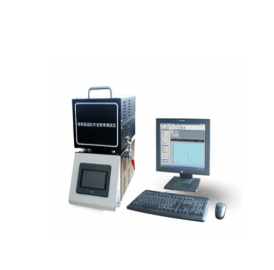
Application ScopeThis instrument is used to determine the far-infrared properties of various textile
WhatsApp : +86 15601902607
Email : info@qinsun-lab.com

The Textile Far-Infrared Radiation Heating Tester is designed to accurately measure the far-infrared properties of textile materials, including fibers, yarns, fabrics, nonwovens, and finished products. It provides precise, non-destructive testing of emissivity and surface temperature rise, supporting research, development, and quality control of functional and heat-retaining textiles.
Measurement of far-infrared emissivity and thermal radiation properties of textile fibers, yarns, woven and nonwoven fabrics.
Evaluation of heat-retention and thermal comfort performance of apparel textiles, bedding, and industrial fabrics.
Assessment of performance for far-infrared functional textiles used in medical, sports, or therapeutic applications.
Quality control of heat-insulating, warming, or protective textiles for automotive, aerospace, and construction industries.
Research and development of infrared-emitting fabrics and fabrics with thermal regulatory properties.
Comparative testing of different textile treatments, coatings, or fiber blends on far-infrared radiation performance.
Support for product certification and compliance testing related to thermal and radiative properties.
GB/T 30127-41: Determination of Far-Infrared Emissivity of Textile Materials (China)
ISO 9050: Glass in building — Determination of light transmittance, solar direct transmittance, and solar heat gain coefficient (relevant for infrared emissivity comparison methods)
ASTM E1933: Standard Test Method for Measuring the Far-Infrared Emissivity of Materials
EN 14505: Clothing for protection against heat and flame — Measurement of thermal properties
ISO 11092: Textiles — Physiological effects — Measurement of thermal and water-vapour resistance under steady-state conditions
IEC 60584-1: Thermocouples — EMF specifications and tolerance (relevant for temperature measurement accuracy)
Touchscreen control with intuitive, menu-based operation for simplified testing;
Self-developed multifunctional motherboard for core system control and stability;
High-quality electrostatic powder coating for durable, corrosion-resistant appearance;
Optical modulation technology minimizing interference from environmental or sample surface radiation;
Self-repair function and customizable window settings to compensate for diffuse reflection and measurement errors;
Lock-in and microelectronic signal processing for high sensitivity and detection of weak far-infrared signals;
Non-destructive testing with simple, flexible operation suitable for various textile types;
USB and network interface for data transfer and integration with Windows-compatible software;
Integrated temperature measurement and precise control system ensuring reproducible results;
Compact and portable design, fitting easily into laboratory and R&D environments;
| Parameter | Specification |
|---|---|
| Spectral Response Range | 5–14 μm |
| Measurement Method | Far-infrared emissivity and surface temperature rise |
| Sample Types | Fibers, yarns, woven and nonwoven fabrics, textile products |
| Hot Plate Temperature Control | Sequential hot plate with stable temperature regulation |
| Measurement Accuracy | Optical modulation with lock-in signal detection for high precision |
| Data Output | Touchscreen display, exportable via USB/network |
| Environment | Ambient temperature 15–35℃ |
Standard blackbody reference plate
Sample hot plate
Far-infrared radiation measurement system
USB and network cables
Instrument software and user manual
Optional calibration kits and additional blackbody plates
Place the standard blackbody reference plate on the hot plate and set the required temperature.
Place the textile sample on the hot plate after the blackbody measurement is completed.
Allow both to reach a stable temperature.
Measure far-infrared radiation intensity of the blackbody and the sample.
Calculate the sample’s far-infrared emissivity as the ratio of its radiation intensity to that of the blackbody.
For temperature rise measurements, irradiate the sample with a constant far-infrared source and record the surface temperature change over time.
Repeat for multiple samples or temperature settings to generate comprehensive emissivity data.
Regularly clean hot plates, blackbody surfaces, and sample holders to maintain accuracy.
Periodically inspect and calibrate the far-infrared measurement system.
Check touchscreen and interface connections for proper operation.
Keep the instrument in a dry, dust-free environment to prevent degradation.
Apply software and firmware updates to maintain performance and measurement precision.
Avoid mechanical shocks to the measurement system and optical components.
Qinsun Instruments Co., LTD is a professional laboratory testing instrument manufacturer in China,Have been focusing on laboratory instrument R&D more than 30 years and have rich industry experience,Based on international testing standards,We are also the instrument supplier for BV SGS laboratory,We provide one-stop solutions for lab instruments,Free Training and Turn-Key Service,Products exported all over the world,Offer 36 month warranty and are a trustworthy partner.

Company Phone
+86-21-6420 0566
Working hours
Monday to Friday
Mobile phone:
13816217984
Email:
info@qinsun-lab.com