The Shoe Slip Resistance Tester is used for testing the anti-slip performance of soles heels or mate
WhatsApp : +86 15601902607
Email : info@qinsun-lab.com

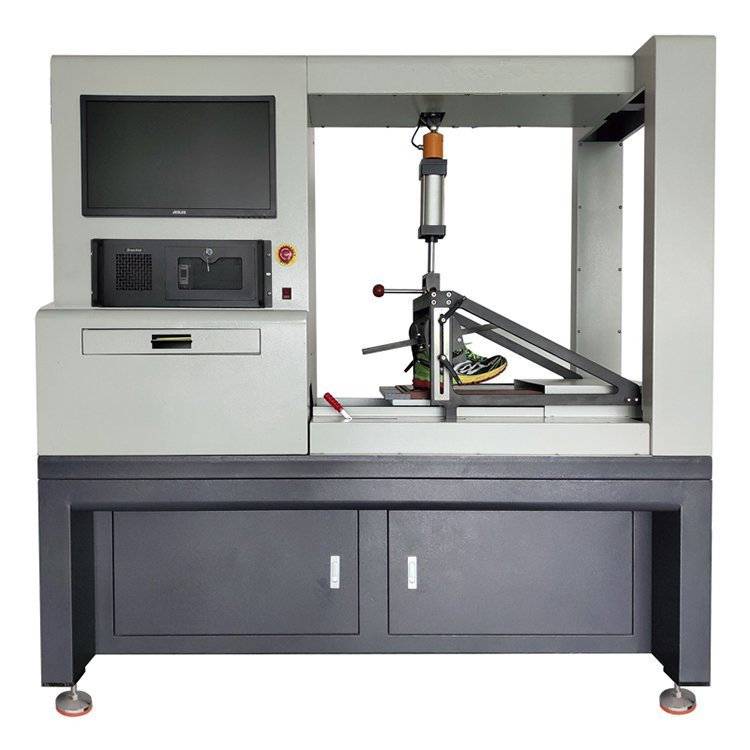
The Shoe Slip Resistance Tester is used for testing the anti-slip performance of soles heels or material test by the friction between shoes and different mediums(board,PVC,ceramic tile or other material) under specified load.
(1)Measurement of slip resistance of safety, work, and casual footwear.
(2)Evaluation of non-slip performance of flooring materials, tiles, carpets, and sports surfaces.
(3)Quality control of slip-resistant shoes for children, the elderly, and vulnerable groups.
(4)Compliance testing for footwear in occupational health and safety assessments.
(5)Laboratory testing for footwear R&D and new material development.
(6)Testing public environment surfaces such as hospitals, schools, and industrial facilities.
(7)Evaluation of slip resistance for sports and recreational footwear.
(8)Comparison of different sole materials and flooring combinations for ergonomic and safety design.
SATRA TM144 SATRA Slip Resistance Test Method
EN ISO 13287 Personal protective equipment - Footwear - Test method for slip resistance
ASTM F2913 Standard Test Method for Measuring the Coefficient of Friction for Evaluation of Slip Performance of Footwear and Test Surfaces/Flooring Using a Whole Shoe Tester
GB/T 3903.6 Footwear—Test methods for whole shoe—Slip resistance performance
GB/T 28287 Foot protection - Test method for footwear slip resistance
(1)Fasten device enables quick and secure sample installation, minimizing test variability.
(2)Real-time load acquisition system ensures accurate force measurement during testing.
(3)Support component and regulator indicator display test status dynamically.
(4)Pneumatic lifting control accommodates different specimen thicknesses.
(5)Irregular surface support tools provide uniform load and pilot force for non-flat surfaces.
(6)Adjustable test inclination to simulate various floor angles and slip conditions.
(7)Dial-type adjustment allows precise observation and modification of tilt angle during testing.
(8)Real-time analysis software visually displays maximum, minimum, and average friction.
(9)Automatic calculation of friction coefficient for accurate evaluation.
(10)Multi-path data output and high compatibility with Windows-based systems.
Vertical load cell range | 0~1000N |
Horizontal load cell range | 0~1000N |
| Sliding speed | 0.1~0.5±0.03m/s, adjustable |
| Static contact time | 0.5s |
Test normal force | 500±25N, For footwear of European size 40 (UK size 6.5) and above; 400±20N, For footwear of European size below 40 (UK size 6.5) |
| Wedge angle gauge | 7° |
| Control method | Computer-controlled |
| Monitor | 19-inch |
| Dimensions | 190×86×171cm |
| Weight | Approx 500kg |
| 7°Wedge angle gauge | 2pcs |
| Shoe last fixture | 2pcs |
| Prosthetic foot fixture | 2pcs |
| 180×90×90mm calibration rubber fixture | 1pc |
| Stainless steel plate | 1pc |
| 100×70mm steel block | 1pc |
| Power line | 1pc |
(1)Install the footwear or floor specimen on the test fixture using the fasten device.
(2)Adjust the tilt angle according to the test requirement.
(3)Set the load and testing speed parameters.
(4)Initiate the test; the rotating or tilting mechanism applies horizontal force to the sample.
(5)Monitor real-time friction values displayed by the analysis software.
(6)Record maximum, minimum, and average friction, along with the calculated coefficient of friction.
(7)Repeat for additional samples or floor/sole combinations as needed.
(1)Clean test surfaces and fixtures regularly to prevent contamination affecting friction results.
(2)Inspect pneumatic and load systems periodically for leaks or wear.
(3)Check and calibrate the tilt mechanism and load sensors to maintain accuracy.
(4)Update software and backup test data frequently.
(5)Store the tester in a dry and stable environment to prevent corrosion and mechanical degradation.
1. What is the difference between Static and Dynamic Coefficient of Friction in this test?
The Static COF represents the friction required to start a slip, while the Dynamic COF measures the friction maintained during the sliding motion. This tester captures both, which is critical for understanding the full safety profile of a shoe.
2. Can I test slip resistance on wet or oily surfaces with this machine?
Yes. You can apply various contaminants (water, oil, or glycerol) to the test plate as required by standards like EN ISO 13287 to simulate hazardous workplace conditions.
3. Why is the "Torque Speed" of 50 N within 0.2 s significant?
This simulates the rapid "heel strike" or "toe-off" phase of a human step. It ensures that the vertical load is applied quickly enough to accurately reflect the forces generated during a real slip event.
4. Does the tester accommodate different shoe sizes?
The machine uses interchangeable mandrels and an adjustable pneumatic lift, allowing you to test everything from small children's shoes to large industrial boots.
5. How does the inclination angle affect the COF results?
Inclination changes the vector of the applied force. Testing at an angle allows you to determine if a shoe's grip remains effective when the wearer is walking up or down a ramp, which is a common requirement for safety certification.
Recommended similar products:
Qinsun Instruments Co., LTD is a professional laboratory testing instrument manufacturer in China,Have been focusing on laboratory instrument R&D more than 30 years and have rich industry experience,Based on international testing standards,We are also the instrument supplier for BV SGS laboratory,We provide one-stop solutions for lab instruments,Free Training and Turn-Key Service,Products exported all over the world,Offer 36 month warranty and are a trustworthy partner.

Company Phone
+86-21-6420 0566
Working hours
Monday to Friday
Mobile phone:
13816217984
Email:
info@qinsun-lab.com