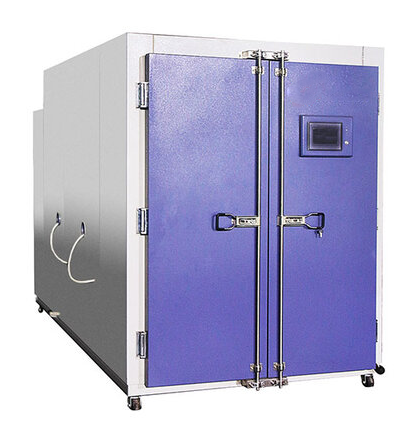
The Combined (or Composite) Salt Spray Test Chamber is an advanced corrosion testing instrument desi
WhatsApp : +86 15601902607
Email : info@qinsun-lab.com

The Combined Salt Spray Test Chamber is an advanced corrosion testing instrument designed to evaluate the corrosion resistance of metal surfaces, coatings, and protective materials. By integrating salt spray exposure with cyclic wet-heat environments, this chamber simulates real outdoor and industrial conditions. It accelerates the aging process of materials, coatings, and components, allowing precise assessment of protective treatments and coating durability.
This chamber is widely used in industries and laboratories to assess corrosion resistance and durability of materials under accelerated environmental conditions:
Photovoltaic Modules and Backplates: Salt spray corrosion resistance testing.
Metal Plated Parts: Evaluation of corrosion resistance for zinc, nickel, chromium plating, etc.
Coating Materials: Research on organic coatings and powder coatings corrosion resistance.
Anodized Aluminum and Protective Films: Durability and longevity testing.
Anti-Rust Oils and Surface Treatments: Performance verification of corrosion protection.
Marine, Automotive, and Transportation Components: Corrosion resistance assessment.
Electronics, Electrical, and Outdoor Machinery: Salt spray aging testing.
Accelerated Aging Experiments and Quality Control: Laboratory evaluation for product development and QC.
The chamber is designed to comply with international and domestic corrosion testing standards, including but not limited to:
GB/T 2423.17-2008 – Environmental Testing for Electric and Electronic Products, Salt Spray Test Method
GB/T 10125-2012 – Salt Spray Test
IEC 61701-2011 – Salt Mist Corrosion Testing of Photovoltaic Modules
ISO 9227-2017 – Corrosion Tests in Artificially Created Salt Atmospheres
| Item | Technical Parameter |
|---|---|
| Chamber Volume | Approx. 3.8 m³ |
| Internal Dimensions | 1200 × 1600 × 2500 mm (W×H×D), excluding sloped top height |
| External Dimensions | 2000 × 2400 × 2800 mm (W×H×D), excluding control cabinet |
| Control Cabinet Size | 600 × 1500 × 1000 mm (W×H×D) |
| Solution Tank Size | 600 × 600 × 1000 mm (L×W×H) |
| Weight | Approx. 1000 kg |
| Base Load Capacity | Approx. 200 kg |
| Noise Level | ≤70 dB (1 m in front, 1.2 m above ground) |
| Max Power | 26 kW |
| Max Current | 60 A |
| Power Supply | AC 380V, Three-phase Four-wire + Protective Ground ±10%, 50±0.5 Hz |
| Temperature Range | RT – 55℃ |
| Pressure Tank Temperature | RT – 63℃ |
| Relative Humidity | 30 – 95% RH |
| Relative Humidity Deviation | +2%, -3% |
| Temperature Resolution | 0.1℃ |
| Temperature Deviation | ±1℃ |
| Temperature Uniformity | ≤2℃ |
| Temperature Fluctuation | ≤±1℃ |
| Salt Spray Deviation | ≤±1% |
| Spray Rate | 1–2 ml/80 cm³ |
| pH Value | 6.5 – 7.2 |
| Spray/Static Time | 1 min – 9999 h, programmable cycles |
| Heating Rate | Chamber RT→50℃ ≤60 min; Tank RT→63℃ ≤60 min |
| Sample Capacity | At least 2 modules (2000×1000×38 mm) |
Composite cyclic design combining salt spray and wet-heat environment for realistic corrosion simulation.
Programmable cycles allow customization of spray time, static time, and temperature-humidity conditions.
SUS304 stainless steel inner chamber ensures corrosion resistance and easy cleaning.
Precise control of solution concentration and pH, with uniform salt spray distribution (deviation ≤±1%).
High-precision temperature and humidity control: temperature fluctuation ≤±1℃, humidity deviation ±2–3%.
Integrated PID intelligent control with user-friendly interface for programmable cycles.
Eco-friendly design with rapid heating for spray and pressure tank systems.
High power (26 kW) ensures continuous, efficient operation.
Standard Configuration: Salt spray chamber main body (inner chamber, pressure tank, circulation spray system, heating system, control system)
Standard Configuration: Control cabinet with PID program control for real-time monitoring
Standard Configuration: Sample holder accommodating at least 2 modules (2000×1000×38 mm)
Consumables: Sodium chloride (chemical/analytical grade) for preparing 5% ±0.1% salt solution
Consumables: Deionized/distilled water for solution preparation
Consumables: Spray nozzles (laboratory-grade, multi-direction adjustable)
Optional: Data acquisition system for recording spray time, temperature-humidity curves, and cycles
Sample Preparation: Clean and dry samples, place securely on sample holder.
Solution Preparation: Prepare 5% NaCl solution, pH 6.5–7.2. temperature 20±2℃.
Salt Spray Exposure: Set chamber temperature 15–35℃, spray for 2 hours.
Wet-Heat Storage: Transfer samples to wet-heat chamber, 40±2℃, 90±3% RH, 20–22 hours.
Cycle Repetition: Repeat salt spray + wet-heat cycle 3 times.
Rinse and Dry: Rinse with water, dry at 55℃ for 1 hour.
Room Temperature Storage: Store at 23±2℃, 45–55% RH for 1–2 hours.
Data Recording: Record temperature-humidity curves, cycle counts, and sample conditions.
Ensure proper grounding and electrical capacity before operation.
Regularly inspect solution tank water level, concentration, and pH.
Clean inner chamber periodically to prevent residue buildup.
Maintain spray system, pressure tank, and temperature-humidity control for stable performance.
Check sample holders and cabinet components for corrosion or wear.
The Combined Salt Spray Test Chamber offers precise, accelerated evaluation of corrosion resistance for metals, coatings, and protective materials. Its composite cyclic design, high control accuracy, and user-friendly interface ensure reliable simulation of real-world corrosive environments. This chamber is indispensable for R&D, quality control, and durability testing in multiple industrial sectors.
What types of materials can be tested in the chamber?
The chamber is suitable for metals (plated or anodized), coatings (organic, powder), protective films, anti-rust oils, photovoltaic modules, and electronic components. It accelerates aging to evaluate corrosion resistance and coating durability.
How is the salt spray generated and applied to samples?
The NaCl solution is atomized into a fine mist by the spray system, covering the sample surface uniformly. After the spray, samples are transferred to the wet-heat environment. The alternating cycles accelerate corrosion and simulate outdoor industrial conditions.
Can the chamber run automated cycles?
Yes, the integrated PID control allows programmable cycles, including spray duration, static period, temperature, and humidity. Users can customize the cycle count to meet specific testing requirements.
What are the temperature and humidity control accuracies?
Temperature fluctuation is ≤±1℃, and humidity deviation is ±2–3%. The uniformity and resolution are strictly controlled to ensure test reliability.
How should samples be prepared before testing?
Samples should be thoroughly cleaned and dried. Place them securely on the holder to avoid movement during spray and wet-heat cycles. After testing, rinse with water, dry, and store under controlled room conditions.
Qinsun Instruments Co., LTD is a professional laboratory testing instrument manufacturer in China,Have been focusing on laboratory instrument R&D more than 30 years and have rich industry experience,Based on international testing standards,We are also the instrument supplier for BV SGS laboratory,We provide one-stop solutions for lab instruments,Free Training and Turn-Key Service,Products exported all over the world,Offer 36 month warranty and are a trustworthy partner.

Company Phone
+86-21-6420 0566
Working hours
Monday to Friday
Mobile phone:
13816217984
Email:
info@qinsun-lab.com