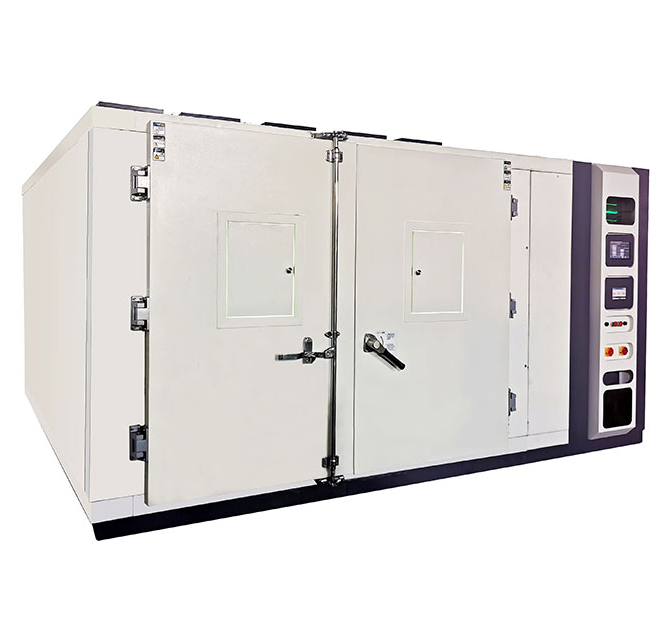
The BBA Steady-State Solar Simulator is a high-precision laboratory device that provides solar illum
WhatsApp : +86 15601902607
Email : info@qinsun-lab.com

The BBA Steady-State Solar Simulator is a high-precision laboratory device that provides solar illumination closely resembling natural sunlight. Using a BBA-class large-area steady-state light source, it enables PV module aging tests, maximum power measurements, temperature coefficient evaluation, low irradiance performance testing, hotspot durability experiments, and light-induced degradation assessments. The system helps evaluate the electrical performance and reliability of PV modules under various illumination conditions.
The BBA Steady-State Solar Simulator is applicable in multiple scenarios:
Factory performance testing and certification of PV modules
R&D evaluation of PV module maximum power and electrical performance
Photovoltaic module light-induced degradation and hotspot durability testing
Temperature coefficient and low-irradiance performance measurements
Type testing and laboratory simulation of PV module aging
Climate environment laboratories simulating controlled light conditions
The simulator complies with key international standards:
(1) GB/T 6495.3 – Solar Radiation – Measurement of Spectral Irradiance Distribution
(2) IEC 61215 – Crystalline Silicon Terrestrial Photovoltaic Modules – Design Qualification and Type Approval
(3) IEC 61646 – Thin-Film Photovoltaic Modules – Design Qualification
(4) IEC 60904-6 – Photovoltaic Devices – Procedures for Using Reference Cells and Simulators
| Item | Technical Specification |
|---|---|
| Effective Test Area | 2.0 × 1.0 m |
| Simulator Class | BBA |
| Spectral Match | Class B |
| Irradiance Uniformity | Class B |
| Instantaneous Instability | Class A |
| Light Source Type | Metal halide lamp |
| Measurable Parameters | NOCT, STC, Hot Spot |
| Light Source Lifetime | Single lamp ~1000 hours, 1 spare set provided |
| Illumination Direction | Top-down, vertical incidence on module |
| Consumables Lifetime | Light source and filters for 2000 hours of use |
| Light Intensity Range | 800 – 1000 W/m², continuously adjustable |
| Low Irradiance Testing | Down to 200 W/m² |
| Operating Temperature | +15°C to +30°C |
| Power Supply | 380V, 50Hz, ≤150A |
| Software Features | Simplified/Traditional Chinese, English; data storage, query, export/print; report output to Word, Excel, PDF, JPG |
| Supporting Equipment | Dedicated computer for software operation |
Large-area BBA-class steady-state solar simulator suitable for full-size PV module testing
Strict Class B spectral match and uniformity compliance
High-precision light intensity adjustment (800–1000 W/m²) and low irradiance testing (200 W/m²)
Supports hotspot testing, temperature coefficient measurement, and light-induced degradation experiments
Long-life metal halide lamp with spare set ensures up to 2000 hours of operation
Multilingual software interface with full data acquisition, storage, analysis, and report generation
(1) BBA Solar Simulator Main Unit – includes light source, lamp mount, and optical system
(2) IV Curve Tester – measures module current-voltage characteristics
(3) Control Software – data acquisition, display, and report generation
(4) Dedicated Computer – software operation and data management
(5) Consumable Metal Halide Lamp – single lamp ~1000 hours, 1 spare set provided
(6) Consumable Optical Filters – ensure spectral match and irradiance uniformity
(7) Optional Calibration Reference Device – IEC 60904-6 standard photovoltaic reference
Configure test parameters: irradiance (800–1000 W/m²), temperature (STC or NOCT), and low irradiance (200 W/m²)
Mount the PV module on the test fixture and adjust angle for perpendicular incidence of light
Start the BBA steady-state solar simulator and stabilize illumination to the set conditions
Use the IV curve tester to record the module’s current-voltage characteristics
Conduct hotspot experiments, temperature coefficient measurements, and light-induced degradation tests
Collect test data, analyze maximum power, fill factor, efficiency, and electrical performance variations
Output and archive experiment reports for traceability
Ensure power supply and grounding meet safety standards
Regularly inspect the lamp, optical filters, and software system for operational status
Replace lamps and filters according to usage hours to maintain measurement accuracy
Clean optical surfaces and test fixtures to prevent contamination affecting uniformity
Check the computer and data acquisition system for smooth operation
Schedule periodic calibration using reference devices to ensure test precision
The BBA Steady-State Solar Simulator provides highly accurate, reproducible, and versatile testing of PV modules under controlled light conditions. It supports full-size module testing, high-precision light intensity and spectral control, and comprehensive IV curve analysis. The system is suitable for R&D, type testing, factory quality control, and environmental laboratory studies, ensuring PV module performance evaluation and reliability verification in various illumination scenarios.
1. What is the primary purpose of the BBA Steady-State Solar Simulator?
The simulator provides laboratory-controlled sunlight conditions to evaluate PV module performance, including maximum power, efficiency, temperature coefficients, low irradiance performance, hotspot durability, and light-induced degradation. It enables accurate reproduction of solar conditions for R&D, quality control, and type testing.
2. How is light intensity controlled and measured?
Light intensity is continuously adjustable between 800–1000 W/m², with low irradiance testing down to 200 W/m². The simulator uses metal halide lamps combined with optical filters to ensure Class B spectral match and uniformity. Light intensity is monitored in real time by the system and stabilized before data acquisition.
3. Can the simulator be used for full-size PV modules?
Yes, the simulator has a 2.0 × 1.0 m effective test area, making it suitable for full-size PV module testing. Its BBA-class uniformity ensures consistent illumination across the entire module surface, supporting accurate IV measurements, hotspot, and aging experiments.
4. What are the software capabilities of the system?
The control software allows multilingual interface (Simplified/Traditional Chinese, English), data acquisition, storage, query, export, and report generation in Word, Excel, PDF, or JPG formats. It integrates IV curve testing and experimental parameter control for comprehensive performance analysis.
Qinsun Instruments Co., LTD is a professional laboratory testing instrument manufacturer in China,Have been focusing on laboratory instrument R&D more than 30 years and have rich industry experience,Based on international testing standards,We are also the instrument supplier for BV SGS laboratory,We provide one-stop solutions for lab instruments,Free Training and Turn-Key Service,Products exported all over the world,Offer 36 month warranty and are a trustworthy partner.

Company Phone
+86-21-6420 0566
Working hours
Monday to Friday
Mobile phone:
13816217984
Email:
info@qinsun-lab.com