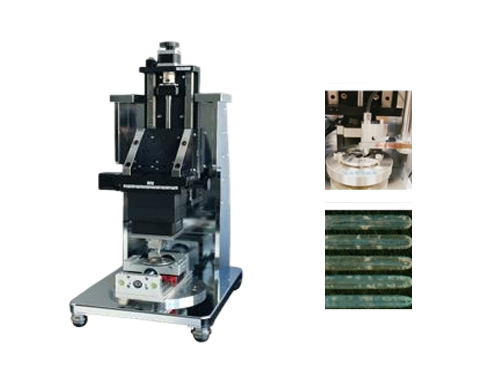
Instrument for evaluating friction and wear performance of materials and surface coatings under line
WhatsApp : +86 15601902607
Email : info@qinsun-lab.com

The Linear Constant-Speed Reciprocating Friction and Wear Tester is a specialized instrument for evaluating friction and wear performance of materials and surface coatings under linear constant-speed sliding conditions. The instrument can accurately measure friction coefficient, wear depth, wear width, and wear volume under various loads, sliding speeds, stroke lengths, and temperature conditions, in dry or lubricated environments. The testing process is computer-controlled with real-time data acquisition and graphical display, suitable for material research, process evaluation, and quality control.
Friction and wear testing of metallic materials.
Wear resistance evaluation of non-metallic materials (plastics, rubber, composites).
Tribological study of surface coatings, platings, and surface-modified layers.
Testing of solid and liquid lubricants’ friction performance.
Analysis of material surface processing effects on friction and wear behavior.
Material failure mechanism and reliability research.
Industrial product quality inspection and process control.
GB/T 3960-2016 Plastics – Determination of Sliding Wear Properties
GB/T 12444 Metallic Materials – General Friction and Wear Testing Methods
ASTM G133 Linear Reciprocating Sliding Wear Test
ASTM G99 Pin-on-Disk Wear Test (related friction measurement requirements)
ISO 7148 Sliding Friction and Wear Testing (relevant sections)
DIN 50324 General Principles of Friction and Wear Testing
| Parameter | Specification |
|---|---|
| Test Load Range | 30–1000 g (weight loading) |
| Automatic Loading Range | 10–200 N |
| Test Load Measurement Accuracy | 0.2% F.S |
| Reciprocating Stroke | 0.5–50 mm (adjustable) |
| Reciprocating Frequency | 2–30 Hz |
| Sliding Speed | 0.1–20 mm/s |
| Heating Furnace Temperature | Room temperature – 300℃ |
| Furnace Sample Size | Φ15–40 mm |
| Load Range in Heated State | 0.3–80 N |
| Friction Force Measurement Range | ≤100 N |
| Wear Load Range | ≤40 g |
| Wear Depth Measurement Range | ±0.5 mm |
| Wear Depth Measurement Accuracy | 0.02 µm |
| Control Method | Computer automatic control |
| Data Processing | Real-time curve display and data storage |
Linear constant-speed reciprocating motion ensures stable, repeatable friction conditions.
Wide load range supports both weight and automatic loading.
Independently adjustable sliding speed and stroke to simulate various working conditions.
Supports high-temperature testing for realistic service environment simulation.
Integrated online wear depth measurement allows quantitative wear analysis.
Computer-controlled data acquisition ensures synchronized friction coefficient and wear measurement.
Long-term stable operation suitable for research and industrial testing.
| Accessory | Specification / Use |
|---|---|
| Reciprocating Drive Unit | Standard, achieves constant-speed reciprocating motion |
| Friction Fixture | Multiple specifications, for different samples |
| Weight Set | 30–1000 g, manual load application |
| Automatic Loading Module | 10–200 N, stable load control |
| High-Temperature Furnace | Room temperature – 300℃, high-temperature friction testing |
| Wear Measurement Probe | Standard, measures wear volume |
| Control and Analysis Software | Standard, data acquisition and analysis |
During testing, the drive system moves the specimen in a linear constant-speed reciprocating motion under a set load, creating a stable and controlled friction interface. Friction sensors collect real-time friction force signals and calculate the friction coefficient. The wear measurement system accurately records wear depth and width to determine wear volume. By comparing friction and wear parameters under different materials or test conditions, the tester provides quantitative evaluation of material wear resistance.
Ensure specimens are clean, flat, and correctly installed.
Select appropriate loading method and test parameters according to standards.
For high-temperature tests, confirm the furnace and temperature control system are functioning properly.
Do not touch moving parts or high-temperature areas during testing.
Stop the machine immediately if abnormal friction force or noise occurs.
Save data after testing and clean the friction fixture.
Prepare specimens and measure initial dimensions according to standards.
Install specimens and friction fixtures, set load, stroke, speed, and temperature.
Start the test; the system performs linear constant-speed reciprocating friction automatically.
Acquire friction coefficient and wear data in real-time and generate curves.
Measure wear morphology and wear volume after the test.
Compile test data and generate a complete test report.
1.What is this product?
A Linear Constant-Speed Reciprocating Friction and Wear Tester for precise evaluation of material friction and wear properties.
2.What is this product used for?
Measuring friction coefficient, wear depth, wear width, and wear volume under controlled sliding conditions.
3.Why is this product important?
Provides high-precision, repeatable tribological data for material research, coating evaluation, and quality control.
4.What industries is this product suitable for?
Tribology laboratories, materials research, surface coating evaluation, industrial QC, academic research.
5.What types of this product are available?
Linear reciprocating testers with adjustable stroke, frequency, load, and high-temperature testing capability.
Qinsun Instruments Co., LTD is a professional laboratory testing instrument manufacturer in China,Have been focusing on laboratory instrument R&D more than 30 years and have rich industry experience,Based on international testing standards,We are also the instrument supplier for BV SGS laboratory,We provide one-stop solutions for lab instruments,Free Training and Turn-Key Service,Products exported all over the world,Offer 36 month warranty and are a trustworthy partner.

Company Phone
+86-21-6420 0566
Working hours
Monday to Friday
Mobile phone:
13816217984
Email:
info@qinsun-lab.com