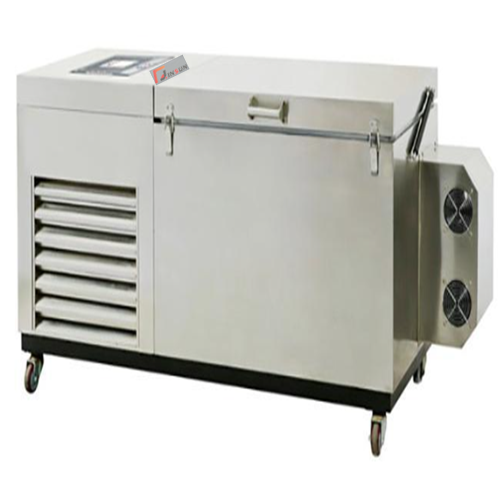
Environmental chamber for testing footwear and materials at low temperatures per standards.
WhatsApp : +86 15601902607
Email : info@qinsun-lab.com

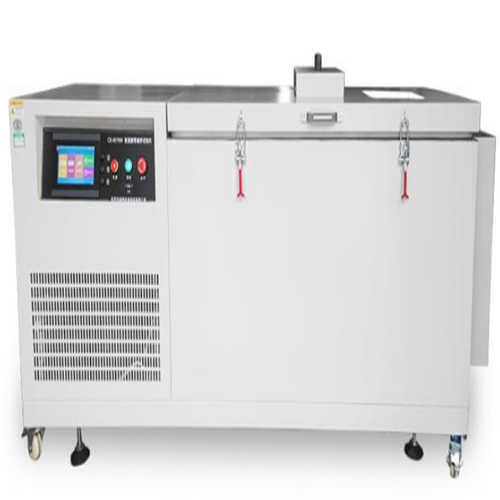
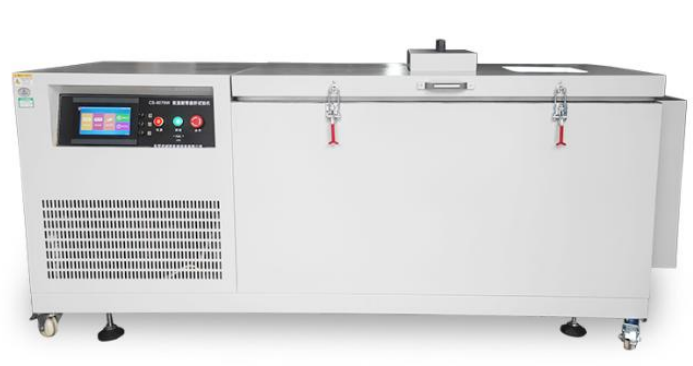
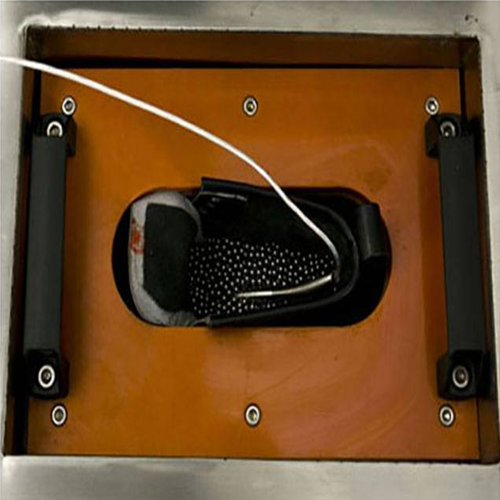
The Footwear Cold Insulation Tester is designed to evaluate the low-temperature performance of finished shoes and footwear materials, including rubber, soles, synthetic leather, plastics, and other components. The instrument provides a controlled cold environment to determine material and shoe adaptability to cold climates or harsh low-temperature terrains. Constructed from rust-resistant stainless steel (SUS), the tester can be equipped with various fixtures to meet diverse standard testing requirements.
(1)Testing finished shoes for cold climate adaptability.
(2)Evaluation of rubber, synthetic leather, plastic, and sole materials under low temperatures.
(3)Thermal insulation performance assessment of footwear.
(4)Cold flex and cold impact testing of shoes and components.
(5)Quality control in footwear manufacturing for winter shoes and insulated footwear.
(6)Research and development of footwear for cold regions.
(7)Verification of compliance with industry-specific cold resistance standards.
(1)ASTM D1790 — Standard Test Methods for Footwear Cold Resistance
(2)EN ISO 20344 — Personal Protective Footwear – Test Methods
(3)HG/T 2411 — Footwear Cold Resistance Test
(4)HG/T 2871 — Testing Methods for Low-Temperature Footwear
(5)DIN 53351 — Material Cold Flexibility Test
(6)SATRA TM55 — Cold Resistance Test for Footwear
(7)Adidas GE-24, GE-57 — Industry Footwear Cold Testing Protocols
(8)GB/T 20991-2007 — Footwear Cold Resistance Test Method
(1)Balanced temperature and humidity control system for precise environmental conditioning.
(2)Wide temperature range from -25℃ to +150℃, suitable for various cold resistance tests.
(3)High temperature uniformity (≤2℃) and minimal fluctuation (≤±0.5℃).
(4)Accurate temperature measurement with ±0.2℃ accuracy.
(5)Rapid heating and cooling: +25℃→+85℃ in ~30 min, +25℃→-40℃ in ~50 min (no load).
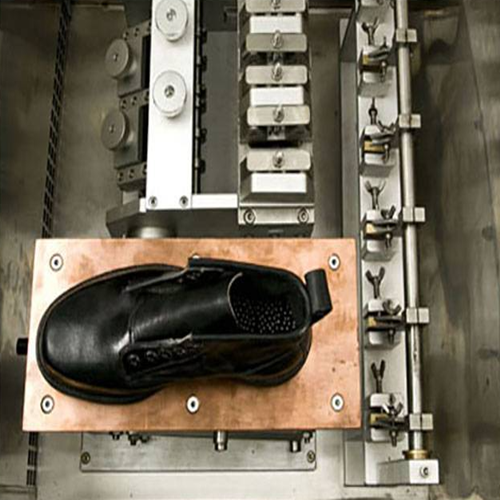
(6)Customizable thermal test fixtures for low-temperature evaluation, including cold medium, test copper plate, and thermometer.
(7)Durable stainless steel construction resistant to rust and wear.
(8)Lead hole (φ50mm) with rubber plug for instrumentation or probes.
(9)Adjustable heating rate (3–5℃/min) and cooling rate (0.7–1℃/min).
(10)Compatible with various low-temperature testing methods, including cold flex, impact, and insulation tests.
| Item | Specification |
|---|---|
| Temperature range | -25℃ – +150℃ |
| Temperature fluctuation | ≤ ±0.5℃ |
| Temperature uniformity | ≤ 2℃ |
| Temperature accuracy | ± 0.2℃ |
| Heating time (+25℃→+85℃, no load) | ~30 min |
| Cooling time (+25℃→-40℃, no load) | ~50 min |
| Lead hole | φ50mm, with rubber plug |
| Heating rate | 3–5℃/min (average) |
| Cooling rate | 0.7–1℃/min (average) |
| Cold medium | Stainless steel balls, Ø5 mm, total mass 4 kg |
| Test copper plate | 350 ± 5 × 150 ± 1 × 5 ± 0.1 mm |
| Thermometer accuracy | ±0.5℃ |
| Power supply | AC220V, 50Hz |
| Construction | Rust-resistant stainless steel (SUS) |
(1)Cold medium: stainless steel balls (Ø5 mm, 4 kg total).
(2)Test copper plate (350×150×5 mm).
(3)Thermometer (±0.5℃ accuracy).
(4)Rubber plug for lead hole.
(5)User manual and calibration certificate.
(1)Install the appropriate test fixtures according to the test method or standard requirement.
(2)Place the footwear or material sample into the test chamber.
(3)Set the desired test temperature, heating/cooling rate, and duration on the control system.
(4)Start the temperature conditioning cycle until the sample reaches target conditions.
(5)Monitor the sample during testing, and record relevant measurements (e.g., insulation, flex, or impact performance).
(6)Upon completion, remove the sample and evaluate material or footwear performance according to the applicable standard.
(1)Clean the chamber and test fixtures after each use to prevent residue buildup.
(2)Check and maintain temperature sensors and thermometers regularly for accuracy.
(3)Lubricate moving parts if applicable and inspect for wear.
(4)Ensure proper storage in a dry environment to prevent corrosion.
(5)Periodically inspect electrical and control systems for safe operation.
Qinsun Instruments Co., LTD is a professional laboratory testing instrument manufacturer in China,Have been focusing on laboratory instrument R&D more than 30 years and have rich industry experience,Based on international testing standards,We are also the instrument supplier for BV SGS laboratory,We provide one-stop solutions for lab instruments,Free Training and Turn-Key Service,Products exported all over the world,Offer 36 month warranty and are a trustworthy partner.

Company Phone
+86-21-6420 0566
Working hours
Monday to Friday
Mobile phone:
13816217984
Email:
info@qinsun-lab.com