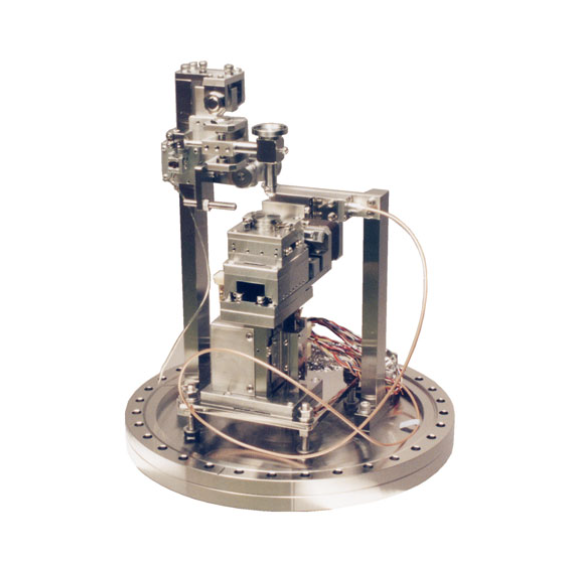
The Vacuum Friction and Wear Tester integrates a proven friction and wear testing mechanism into a s
WhatsApp : +86 15601902607
Email : info@qinsun-lab.com

The Vacuum Friction and Wear Tester integrates a proven friction and wear testing mechanism into a sealed vacuum chamber, enabling reliable tribological testing under controlled vacuum conditions. By reproducing low-pressure environments that are difficult to simulate with conventional equipment, this system makes friction and wear evaluation under vacuum straightforward and repeatable. It is especially suited for performance assessment of materials, coatings, and components used in aerospace, advanced materials research, and emerging technologies where ambient-pressure testing is insufficient.
This tester is designed for friction and wear evaluation in vacuum or reduced-pressure environments, covering a wide range of materials and surface treatments.
Typical applications include:
Tribological performance testing of aerospace structural materials under vacuum
Evaluation of solid lubricants and dry-film coatings in space-simulated environments
Friction and wear assessment of ceramics, precision metals, and surface-engineered materials
Research on new materials and technologies requiring environmental control
Comparative testing of coatings, polymers, and composites under vacuum conditions
Applicable test specimens include metal samples, ceramic components, coated substrates, polymer materials, and functional surface layers.
The Vacuum Friction and Wear Tester supports or is applicable to the following international and industry standards:
NASA / SAE AMS 3150 (Vacuum friction and wear testing of aerospace materials)
ESA PSS-01-705 (Friction and wear testing for space application materials under vacuum)
GB/T 6040-2008 (Metallic surface wear resistance test method)
GB/T 10375-2008 (Tribological test methods – reciprocating friction and wear testing)
ISO 12137-2 (Abrasion resistance of coated fabrics and films – environmental testing)
ISO 20502 (Fine ceramics and coatings scratch / wear testing, adaptable to vacuum conditions)
JIS L 0849 (Abrasion resistance test method for plastic products, optional vacuum conditions)
JIS P 8139 (Friction and wear performance evaluation of coatings, applicable in vacuum chambers)
| Parameter Category | Specification |
|---|---|
| Vertical Load | 10–1000 g |
| Loading Method | Weight loading, switchable configuration |
| Specimen Fixing Method | Central bolt fixing (adjustable to specimen shape); vacuum chuck (optional) |
| Force Sensor | Capacity: 9.8 N; Measurement accuracy: ±0.098 N |
| Upper Specimen Holder | Dedicated clamping fixture |
| Lower Specimen Fixing | Bolted to rotating worktable |
| Rotating Table Size | φ60 mm |
| Rotational Speed Range | 1–2000 rpm |
| Vacuum Pump System | Turbomolecular pump combined with rotary pump |
| Dynamic Strain Amplifier | Integrated within control rack |
| Friction Force / External Output | External output terminal on control rack |
| Data Analysis System | General-purpose friction analysis software |
Vacuum-integrated tribological testing structure
A well-established friction and wear testing mechanism is housed within a vacuum chamber, enabling accurate testing under low-pressure conditions.
Stable and reliable loading system
The balanced weight loading method allows precise load application starting from low loads, ensuring consistent contact conditions during testing.
Flexible test configuration
The rotating worktable supports a wide range of test modes, including optional high-speed wear testing and customized low-load configurations.
Wide vacuum capability
The standard configuration achieves vacuum levels down to 10 Pa, with optional high-vacuum specifications available to meet specialized testing requirements.
Integrated data acquisition and analysis
Friction force signals are captured via a dedicated sensor and processed using professional tribological analysis software for reliable result interpretation.
Specimen holding clamps (customized upon request)
Tribological analysis software with A/D converter
Power cable
Operation manual
Install the upper and lower specimens using the designated clamping fixtures.
Seal the vacuum chamber and initiate the vacuum pump system to reach the target pressure.
Set the desired normal load using the weight loading mechanism.
Configure rotational speed and test duration parameters via the control system.
Start the test and continuously monitor friction force signals during operation.
Upon completion, vent the chamber safely and remove the specimens for post-test analysis.
Analyze friction and wear data using the supplied software.
Regularly inspect vacuum seals, flanges, and O-rings to maintain chamber integrity.
Check and calibrate the force sensor periodically to ensure measurement accuracy.
Maintain the vacuum pump system according to manufacturer recommendations, including oil replacement and filter inspection.
Keep the rotating worktable and fixtures clean to prevent contamination of test results.
Store software and data acquisition components in a stable, dry environment.
1. What is the core advantage of this product?
Its main advantage is the ability to perform reliable friction and wear testing under vacuum conditions using a proven tribological testing structure.
2. Are the test results reliable?
Yes. Stable weight loading, accurate force sensing, and controlled vacuum conditions ensure repeatable and dependable test results.
3. Which international or industry standards does it comply with?
The system is applicable to aerospace, space, and tribology standards such as NASA / SAE AMS, ESA PSS, ISO, GB/T, and JIS standards.
4. Why is this product important?
Many materials behave differently under vacuum than in ambient air. This tester enables realistic evaluation of material performance in environments relevant to aerospace and advanced technology applications.
5. Which fields is this product suitable for?
It is suitable for aerospace engineering, space technology, materials science research, surface engineering, and development of advanced coatings and new materials.
Qinsun Instruments Co., LTD is a professional laboratory testing instrument manufacturer in China,Have been focusing on laboratory instrument R&D more than 30 years and have rich industry experience,Based on international testing standards,We are also the instrument supplier for BV SGS laboratory,We provide one-stop solutions for lab instruments,Free Training and Turn-Key Service,Products exported all over the world,Offer 36 month warranty and are a trustworthy partner.

Company Phone
+86-21-6420 0566
Working hours
Monday to Friday
Mobile phone:
13816217984
Email:
info@qinsun-lab.com