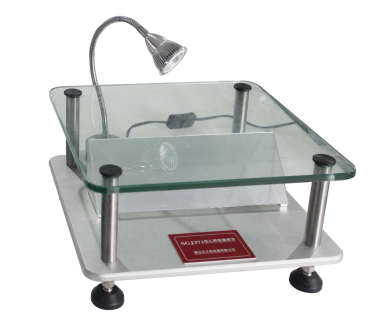
Evaluates material resistance to ethanol exposure via immersion, spot, or wipe tests.
WhatsApp : +86 15601902607
Email : info@qinsun-lab.com

The Ethanol Resistance Tester is designed to evaluate the durability and chemical resistance of materials when exposed to ethanol under controlled laboratory conditions. It provides objective data on visual, physical, and chemical changes, helping manufacturers and researchers predict material performance, ensure quality control, and guide product development for applications where ethanol contact may occur.
(1) Evaluating the resistance of coatings, paints, inks, and surface finishes to ethanol exposure.
(2) Assessing the ethanol resistance of plastic components and polymer materials.
(3) Testing materials for automotive interiors, fuel systems, and electronic devices.
(4) Quality control to ensure materials meet specified ethanol resistance standards.
(5) Research and development of new materials and surface treatments with improved ethanol resistance.
(6) Predicting the lifespan and performance of materials under ethanol exposure.
(7) Comparing material performance for selection of suitable products in ethanol-containing environments.
(1) ASTM D1308 – Standard Test Method for Effect of Household Chemicals on Clear and Pigmented Organic Finishes.
(2) ASTM D543 – Standard Practices for Evaluating the Resistance of Plastics to Chemical Reagents.
(3) ISO 2812-1 – Paints and Varnishes – Determination of Resistance to Liquids – Part 1: Immersion Method.
(4) ISO 2812-4 – Paints and Varnishes – Determination of Resistance to Liquids – Part 4: Spotting Method.
(1) Provides standardized testing for immersion, spot, and wipe (rub) methods.
(2) Test containers or chambers made of ethanol-resistant materials to prevent leakage and evaporation.
(3) Fixtures or racks for securely holding specimens during immersion tests.
(4) Spot test accessories such as watch glasses or sealing films for controlled ethanol exposure.
(5) Mechanical wiping/rubbing device to apply controlled force, speed, and stroke numbers with ethanol-saturated media.
(6) Temperature control system for maintaining specified exposure conditions.
(7) Timer for precise control of test durations.
(8) Standardized visual inspection area for evaluating specimen changes.
(9) Optional equipment for quantitative evaluation: gloss meters, colorimeters, hardness testers.
(10) Compact, robust design suitable for laboratory environments.
| Parameter | Specification |
|---|---|
| Exposure methods | Immersion, Spot, Wipe (Rub) |
| Test containers | Ethanol-resistant materials |
| Specimen size | Adjustable according to test requirements |
| Temperature control | Optional temperature-controlled bath or chamber |
| Timer | Adjustable duration for exposure |
| Optional measurement | Gloss, color, hardness |
| Power supply | AC220V 50Hz (if applicable for automated rubbing devices) |
| Net weight | Depends on configuration |
| Dimensions | Depends on configuration |
(1) Test containers or chambers resistant to ethanol.
(2) Specimen racks or holders for immersion tests.
(3) Watch glasses, sealing films for spot tests.
(4) Mechanical rubbing device with test media for wipe tests.
(5) Temperature control unit (bath or chamber).
(6) Timer for exposure duration control.
(7) Optional: gloss meter, colorimeter, hardness tester.
(1) Prepare the test specimens according to required dimensions and standards.
(2) Select the test method: immersion, spot, or wipe.
(3) For immersion: place specimens in ethanol-filled containers using racks.
(4) For spot test: place a defined amount of ethanol on the specimen surface and cover it.
(5) For wipe test: attach specimen and rubbing media to the mechanical device, set force, speed, and stroke number.
(6) Set the exposure temperature and duration using the control system.
(7) After completion, remove specimens, clean if necessary, and evaluate changes in visual appearance, weight, dimensions, or mechanical properties.
(8) Record observations or quantitative measurements for analysis.
(1) Clean test containers, chambers, and accessories after each test to avoid contamination or chemical residue.
(2) Inspect mechanical rubbing devices regularly for wear and maintain lubrication if required.
(3) Store ethanol and chemicals safely according to laboratory safety guidelines.
(4) Ensure temperature control units are functioning and calibrated.
(5) Periodically calibrate optional measurement instruments (gloss meter, colorimeter, hardness tester).
(6) Handle specimens and accessories carefully to avoid damage.
1. What is this product?
Answer: It is a fully automated testing instrument that precisely measures the rate of water vapor permeation through materials using high-precision weighing and environmental control.
2. What is the purpose of this product?
Answer: It helps determine whether a fabric is “breathable,” serving as a core metric for evaluating wearing comfort (whether it feels stuffy or damp and cold).
3. How does this product work?
A: Under a set temperature and humidity differential, water vapor permeates from the high-humidity side through the sample to the low-humidity side. The instrument calculates permeation volume by monitoring minute changes in the mass of the moisture permeation cup.
4. Why is this product important?
A: Moisture permeability directly impacts clothing comfort and the effectiveness of protective materials, serving as a critical quality control basis for outdoor gear and protective products entering the market.
5. Which industries is this product suitable for?
Answer: It is applicable to textile R&D, medical protective material manufacturing, building waterproofing industries, packaging testing agencies, and university research laboratories.
Qinsun Instruments Co., LTD is a professional laboratory testing instrument manufacturer in China,Have been focusing on laboratory instrument R&D more than 30 years and have rich industry experience,Based on international testing standards,We are also the instrument supplier for BV SGS laboratory,We provide one-stop solutions for lab instruments,Free Training and Turn-Key Service,Products exported all over the world,Offer 36 month warranty and are a trustworthy partner.

Company Phone
+86-21-6420 0566
Working hours
Monday to Friday
Mobile phone:
13816217984
Email:
info@qinsun-lab.com