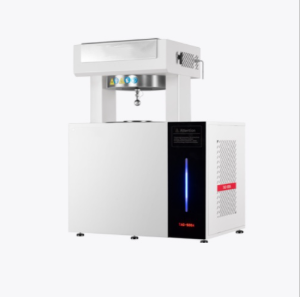
Adiabatic Rate Calorimeter (ARC) for evaluating thermal hazards.
WhatsApp : +86 15601902607
Email : info@qinsun-lab.com

An Accelerating Rate Calorimeter (ARC) is a high-precision thermal analysis instrument that assesses the thermal decomposition behavior and safety risks of chemical substances by monitoring sample temperature, pressure, and thermodynamic parameters in real time under adiabatic conditions.
Battery Safety Research: Evaluating the thermal runaway characteristics of batteries under abusive conditions, providing key parameters of the thermal runaway process, such as self-heating onset temperature and thermal runaway initiation temperature.
Material Thermal Stability: Studying the thermal stability and thermal decomposition behavior of materials, and evaluating the thermal safety of materials.
Chemical Reaction Thermal Analysis: Analyzing the thermal effects of chemical reactions, providing thermodynamic parameters such as reaction heat and activation energy.
Safety Standard Development: Assisting in determining the safe operating range and runaway hazards of materials and products, providing references for the development of safety standards.
T/CIS 17007-2023:
Since "T/CIS" is not a widely - known, globally standardized prefix like some international or well - recognized national standard - setting body abbreviations, without specific context about the issuing organization (CIS here might refer to a certain industry association or similar entity in China), a general way to name it could be "Technical Specification T/CIS 17007 - 2023" (assuming it is a technical specification; if it's a different type of standard, the description before the number can be adjusted accordingly).
JJF 1059.1-2012:
Evaluation and Expression of Uncertainty in Measurement - Part 1: General Rules (JJF is the code for metrological verification regulations in China, and this standard is about the evaluation and expression of measurement uncertainty)
JJF 1001-2011:
General Terms in Metrology and Their Definitions (JJF 1001 is a fundamental standard in the field of metrology in China that defines general metrological terms)
1. Supports Heating - Waiting - Scanning (HWS) mode, constant - temperature mode, isochronous scanning mode, etc. 2. Equipped with professional data - analysis software, enabling automatic calculation of parameters such as exothermic onset temperature, adiabatic temperature rise, activation energy, and pre - exponential factor.
3. The software integrates the safety risk assessment methods and standards for reactions in the *Guidelines for Safety Risk Assessment of Fine Chemical Reactions* issued by the former State Administration of Work Safety, enabling one - stop assessment of the hazard level of reaction processes.
4. Key components are from well - known international brands, ensuring the long - term and stable operation of the instrument.
5. After the experiment, an inert gas can be introduced to rapidly cool down the furnace body.
6. Features an experimental status indication function, as well as overpressure and over - temperature alarm functions.
7. The furnace cover has an automatic lifting function, ensuring safety and facilitating operation.
8. With professional industrial design, it is simple and elegant, has a user - friendly human - machine interaction, and is easy to learn, understand, and operate.
9. The data - analysis software incorporates the differential conversion - rate thermodynamics calculation method, which has significant advantages in the calculation of the thermal decomposition kinetics of mixed materials and the prediction of thermal hazards.
Operating Environment | (5~40)℃, <85%RH |
Temperature Control Range | Room temperature~500℃ |
Temperature Detection Threshold | (0.005~0.02)℃/min |
Temperature Tracking Rate | (0.005~40)℃/min |
Temperature Display Resolution | 0.001℃ |
Pressure Range | Maximum withstand pressure 20MPa |
Pressure Resolution | 1kPa |
Sample Cell Specifications | 8mL |
Sample Cell Material | Stainless steel, titanium, Hastelloy (optional) |
Phi Value | ≤1.35 |
Interfaces | USB or RJ45 |
Power Supply | AC220V/50Hz |
Power | ≤3000W |
Dimensions | 620mm*470mm *670mm |
Weight | Approx. 78kg |
Core measurement system components
Temperature control and insulation system components
Sample handling system components
Safety and protection system components, etc.
Preparation before operation: Operators should wear appropriate work clothes, gloves, and safety glasses, as well as other personal protective equipment. Operators must understand the working principle of the instrument, its operating procedures, and the corresponding experimental procedures.
Experimental operation: Operators must place the test substance, samples, and test tubes in the sample chamber of the adiabatic accelerating calorimeter according to the instructions or experimental requirements. The use of excessive reagents is prohibited during the experiment.
Experimental precautions: Touching the high-temperature samples inside the sample chamber during the experiment is prohibited. After the experiment is completed, the instrument power should be turned off, all connecting lines should be disconnected, and the adiabatic accelerating calorimeter should be properly cleaned for future use.
Data recording and analysis: By connecting to a computer or data logger, the instrument can display the temperature change curve during the reaction in real time.
1.How does an adiabatic calorimeter work?
In principle, an adiabatic calorimeter is one in which heat is confined to the calorimeter usually by surrounding it with an adiabatic shield maintained at the temperature of the calorimeter. In practice, temperature gradients in the calorimeter and shield cause a net heat exchange during the experiment.
2.What is the difference between adiabatic and isothermal calorimetry?
The major difference between these two types of processes is that in the adiabatic process, there is no transfer of heat towards or from the liquid. On the other hand, in the isothermal process, there is a transfer of heat to the surroundings to make the overall temperature constant.
3.What does arc accelerating rate calorimetry primarily measure?
Accelerating Rate Calorimeter (ARC®) is a specialized calorimeter used to study the thermal stability and runaway behavior of chemicals and batteries (lithium-ion, sodium-ion). Primarily it was developed to measure thermal behavior of chemicals but now it is commonly used to evaluate the thermal safety of batteries.
4.Does adiabatic mean no heat flow?
In an adiabatic process, the temperature change is due to work done by, or on the system; there is no heat flow at all. Because γ is always greater than unity for a gas, (γ − 1) is always positive.
5.What is the difference between isothermal and adiabatic calorimetry?
Like isothermal calorimetry, adiabatic calorimetry measures heat exchange. The most notable difference between these two techniques is that while isothermal calorimetry requires constant temperature maintenance, adiabatic calorimetry permits no environmental heat losses.
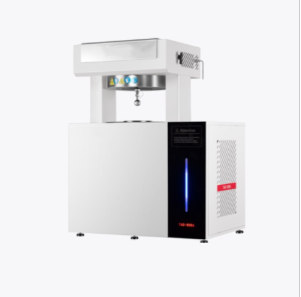
Qinsun Instruments Co., LTD is a professional laboratory testing instrument manufacturer in China,Have been focusing on laboratory instrument R&D more than 30 years and have rich industry experience,Based on international testing standards,We are also the instrument supplier for BV SGS laboratory,We provide one-stop solutions for lab instruments,Free Training and Turn-Key Service,Products exported all over the world,Offer 36 month warranty and are a trustworthy partner.

Company Phone
+86-21-6420 0566
Working hours
Monday to Friday
Mobile phone:
13816217984
Email:
info@qinsun-lab.com