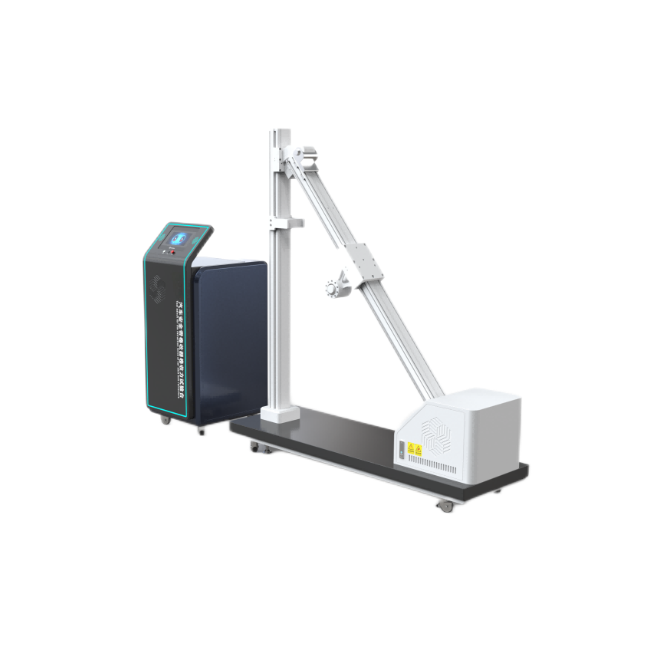
Applicable standards:National mandatory standards:GB 15083-2006 "Automobile seats, seat fixtures and
WhatsApp : +86 15601902607
Email : info@qinsun-lab.com

The Automobile Seat Belt Fixed Point Test Bench is a precision testing system designed to evaluate the strength, durability, and reliability of vehicle seat belt anchorage points. The system simulates forces encountered during crashes and extreme conditions, ensuring that seat belt fixing points comply with regulatory and manufacturer standards.
It is widely used by automotive OEMs, safety laboratories, and R&D centers for certification, quality control, and vehicle safety development.
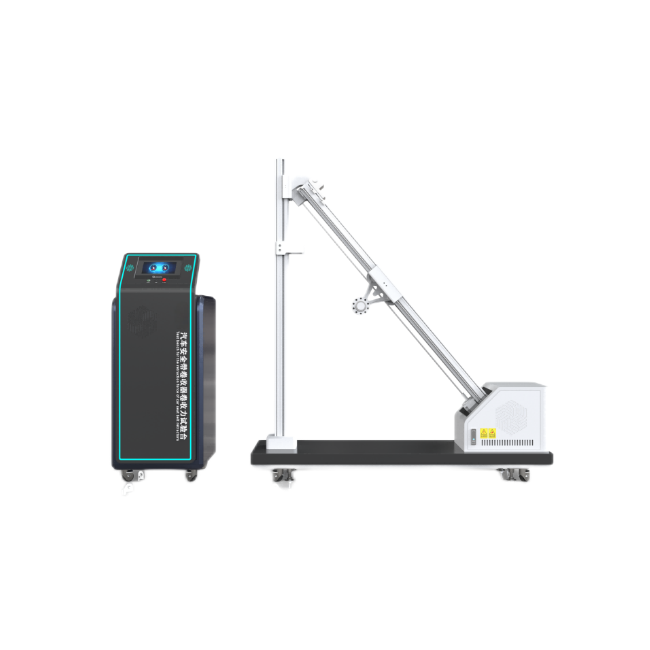
(1) Static and dynamic testing of vehicle seat belt anchorage points.
(2) Verification of seat belt attachment strength for passenger seats, driver seats, and child restraint systems.
(3) R&D validation of new seat belt designs and anchorage layouts.
(4) Quality control and batch inspection of automotive seat belt installations.
(5) Comparative evaluation of multi-channel seat belt fixing systems.
(6) Compliance testing for global standards, including FMVSS, ECE, ISO, and manufacturer-specific requirements.
(7) Environmental testing in combination with temperature and humidity chambers to simulate extreme conditions.
(8) Engineering analysis for vehicle safety improvements and crashworthiness assessment.
National Standards (China)
GB 15083-2006 – Automobile seats, seat fixtures and headrests strength requirements and test methods
GB 14167-2006/2013 – Car Seat Belt Installation Fixed Point
GB 11550-2009 – Automobile seat headrest strength requirements and test methods
GB 13057-2003/2014 – Strength of passenger seats and vehicle fasteners
GB 14166-2013 – Seat belt, restraint system, child restraint system for motor vehicle occupants, ISOFIX child restraint system
International Standards & Regulations
ECE R14 – Uniform Regulation on vehicle seat belt fixing points
ECE R17 – Uniform Regulation on vehicle seats, seat fixation points and headrests
ECE R80 – Child restraint systems
FMVSS 207 – Seating System
FMVSS 210 – Seat Belt Assembly Fixing Point
FMVSS 225 – Child Restraint System Fixed Point
Enterprise & Industry Standards
Volkswagen EP development standard – Strength of seat system and seat belt fixing point
SAE J384 – Stationary Point Test Code for Seat Belts in Motor Vehicles
SAE J385 – Motor Vehicle Seat Belt Fixed Point Performance Requirements
(1) Multi-channel hydraulic system enables simultaneous testing of multiple seat belt anchorage points.
(2) High-precision load measurement and control ensure accurate evaluation of fixed point strength.
(3) Adjustable stroke and loading speed accommodate various seat designs and belt locations.
(4) Stepless adjustable load holding time for flexible compliance with different test protocols.
(5) Computer-controlled system provides automated test execution, real-time data acquisition, and reporting.
(6) Robust mechanical structure with emergency stop and overload protection ensures operator and equipment safety.
(7) Suitable for both R&D and certification-level testing for automotive seats and restraint systems.
| Parameter | Specification |
|---|---|
| Load Measuring Range | 0–30 kN (multi-channel, e.g., 6 channels) or 0–15 kN (fewer channels, e.g., 3 channels) |
| Control Accuracy | ±200 N for 5–30 kN load; ±100 N for 0–5 kN load |
| Hydraulic Cylinders | Number depends on design, e.g., 9 cylinders for 9-channel system |
| Cylinder Load Capacity | Typically 3T per cylinder or as required |
| Cylinder Stroke | Typically 1000 mm to fit various seat and belt positions |
| Loading Speed | Adjustable to reach preset output in ≤2 seconds |
| Load Holding Time | Stepless adjustable, typically 0.2–120 s |
(1) Additional hydraulic cylinders for increased channel testing.
(2) High-precision load sensors and calibration kits.
(3) Software modules for automated testing, data analysis, and reporting.
(4) Protective enclosures for operator safety.
(5) Environmental simulation accessories for temperature and humidity testing.
(1) Secure the vehicle seat or test sample in the fixture.
(2) Set test parameters including load range, hydraulic stroke, loading speed, and load holding time.
(3) Activate the control system to execute the test; the system applies forces to the seat belt fixed points while recording load data in real time.
(4) Review and analyze the test results for certification, R&D, or quality evaluation purposes.
(1) Inspect hydraulic cylinders, sensors, and mechanical components regularly for wear or damage.
(2) Calibrate load sensors and control systems periodically to maintain measurement accuracy.
(3) Verify emergency stop and safety interlocks before each test.
(4) Lubricate moving parts and maintain the hydraulic system according to the manufacturer’s schedule.
(5) Keep control software and data acquisition devices clean, dry, and up-to-date.
Qinsun Instruments Co., LTD is a professional laboratory testing instrument manufacturer in China,Have been focusing on laboratory instrument R&D more than 30 years and have rich industry experience,Based on international testing standards,We are also the instrument supplier for BV SGS laboratory,We provide one-stop solutions for lab instruments,Free Training and Turn-Key Service,Products exported all over the world,Offer 36 month warranty and are a trustworthy partner.

Company Phone
+86-21-6420 0566
Working hours
Monday to Friday
Mobile phone:
13816217984
Email:
info@qinsun-lab.com