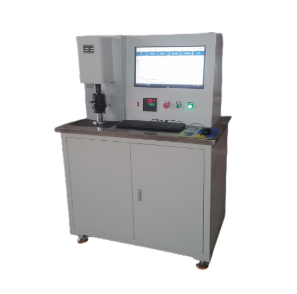
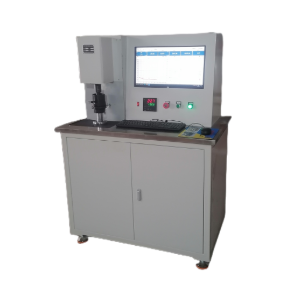
Multi-functional machine tests material friction & wear.
WhatsApp : +86 15601902607
Email : info@qinsun-lab.com

It can perform flat grinding, curved grinding, edge grinding, folded edge grinding, and abrasion resistance tests such as anti-frosting, edge sealing, and pilling. The tested samples can be in a dry state or immersed in water, oil, or other liquids. It can be used for woven fabrics, knitted fabrics, coated fabrics, pile fabrics, socks, felt, non-woven fabrics, deep-pile fabrics, yarns, threads, plastic films, rubber, leather, paper, and many other materials.
Petrochemical: Used to assess the long-term wear resistance of lubricating oil and grease, and to develop a variety of high-grade series of hydraulic oil, internal combustion engine oil, gear oil and other products.
Materials science: Helps researchers understand the friction and wear properties of emerging materials, providing important data support for the design and optimization of new materials.
Universities and institutes: as an important tool for teaching and research, it is used for research and exploration in the field of tribology.
Industrial field: such as subway, automobile, train, wind power, ship, construction machinery, etc., used to evaluate the friction and wear performance of various parts.
ASTM G99-04: Standard Test Method for Wear Testing with a Pin-on-Disk Apparatus
ASTM G77-16: Standard Test Method for Ranking Resistance of Materials to Sliding Wear Using Block-on-Ring Wear Test
ISO 9352:1995: Plastics - Determination of resistance to wear by abrasive wheels
GB/T 12444-2006: Metallic materials - Wear test method - Block-on-ring sliding wear test
GB/T 1865-2009: Paints and varnishes - Artificial weathering and exposure to artificial radiation - Exposure to filtered xenon-arc radiation
1. Equipped with various accessories to meet different standard requirements, offering multiple functions and a wide range of applications;
2. Equipped with both flat and curved abrasion testing heads;
3. Equipped with a digital timer and an LCD display timer;
4. Equipped with one electronic touch rubber diaphragm and one non-electronic touch rubber diaphragm;
5. Equipped with a reciprocating worktable and an improved sample box stretching device;
6. Equipped with a set of pressure weights and a set of tension weights;
7. Equipped with a built-in air compression system;
8. Equipped with perforated and non-perforated sandpaper, and 50 yards of standard ribbon;
9. Equipped with standard fabric, calibration and testing knives.
| Feature/Specification | Details |
|---|---|
| Working Range of Test Force | 10 - 1000 N, stepless adjustable |
| Relative Error of Test Force | ±1% |
| Measuring Range of Friction Torque | 0 - 2500 N·mm |
| Relative Error of Friction Torque | ±2% |
| Spindle Speed Range | 1 - 2000 r/min |
| Maximum Output Torque of Main Motor | 5 N·m |
| Test Medium | Oil, Water, Mud, Abrasive, etc. |
| Temperature Control Range | Room Temperature - 260°C |
| Maximum Distance between Main Shaft and Lower Sub-disk | >75 mm |
| Test Time Control Range | 1 s - 999999 min |
Friction pairs: such as four-ball, pin-on-disk, thrust ring, and ring-block configurations, used to simulate different friction and wear conditions.
Loading device: such as spring-type force application systems and lever loading systems, used to apply test force to the friction pair.
Driving system: including motors and reduction gears, used to drive the movement of the friction pair.
Sensors: such as test force sensors, friction force sensors, and temperature sensors, used to measure key parameters during the test process.
Oil bath and heater: used to simulate wet friction environments; the oil bath can hold lubricating oil or other liquid media, and the heater can control the test temperature.
Other accessories: such as chucks, tie rods, screws, springs, and nuts, used for the assembly and debugging of the testing machine.
Preparation:
Determine the type of friction pair for the test and machine the samples according to the drawings.
Clean the samples, lower disc, and fixtures to ensure they are free of impurities.
Powering on:
Turn on the testing machine's power supply, start the control computer, and preheat the equipment for 10 minutes.
Sample installation:
Install the prepared samples into the corresponding fixtures, ensuring they are securely clamped.
If conducting a heating test, connect the temperature controller and temperature sensor.
Parameter setting:
According to the test requirements, set parameters such as load and speed, ensuring they meet the test standards.
Starting the test:
Press the start button to begin the test; the time and cycle count will begin.
By following these steps, the friction and wear testing machine can be used correctly, thus obtaining accurate test results.
Qinsun Instruments Co., LTD is a professional laboratory testing instrument manufacturer in China,Have been focusing on laboratory instrument R&D more than 30 years and have rich industry experience,Based on international testing standards,We are also the instrument supplier for BV SGS laboratory,We provide one-stop solutions for lab instruments,Free Training and Turn-Key Service,Products exported all over the world,Offer 36 month warranty and are a trustworthy partner.

Company Phone
+86-21-6420 0566
Working hours
Monday to Friday
Mobile phone:
13816217984
Email:
info@qinsun-lab.com