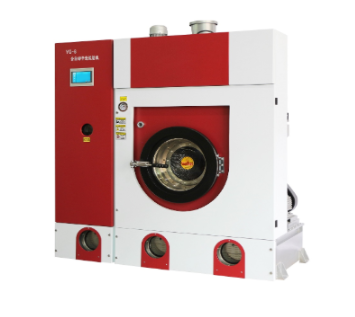
Instrument PurposeThe YG-6 Fully Automatic Dry Cleaning Tester is used to evaluate the physical
WhatsApp : +86 15601902607
Email : info@qinsun-lab.com

An automatic dry cleaning tester is a testing device for textiles and garments, capable of determining their physical properties after washing and drying with organic solvents or detergents. These instruments typically feature microcomputer control, automatic testing, LCD Chinese display, and audible alarms, and are suitable for dry cleaning testing of various textiles and garments.
Automatic dry cleaning testers have wide applications in multiple fields, primarily including the following:
Textile Industry: Testing the appearance, color, and dimensional changes of various textiles (such as heat-fused interlinings and garment fabrics) after dry cleaning to assess their quality.
Apparel Manufacturing and Retail: Apparel manufacturers use dry cleaning and washing cylinder instruments to conduct dry cleaning tests on finished products during production to ensure that garments maintain their original appearance and quality after dry cleaning.
Combustion Test Preparation: Dry cleaning and washing cylinder instruments can also be used to prepare samples for combustion tests. Through dry cleaning, the samples are brought to the specific state required for combustion testing, thereby improving the accuracy and reliability of the test.
Scientific Research and Education: In the fields of textile science and materials science, dry cleaning and washing cylinder instruments can be used to study the influence of different factors on the dry cleaning performance of textiles, providing experimental support for scientific research.
Education and Training: In teaching experiments in textile, apparel, and related majors, dry cleaning and washing cylinder instruments are used for practical teaching, helping students master the methods and skills for testing the dry cleaning performance of textiles.
The YG-6 Fully Automatic Dry Cleaning Tester is used to evaluate the physical properties of wool, fur, cotton-linen, worsted, and synthetic fabrics, as well as garments, after dry cleaning. It measures changes in appearance color, dimensional stability, and peel strength.
GB/T 19981.2: Textiles - Professional care, drycleaning and wetcleaning of fabrics and garments - Part 2: Procedure for testing performance when cleaning and finishing using tetrachloroethene
ISO 3175.1: Textiles - Drycleaning and finishing - Part 1: Performance specifications for the drycleaning and finishing of garments
FZ/T 01013: Textiles - Determination of dimensional change after perchloroethylene drycleaning by mechanical method
FZ/T 80007.3: Dry wash resistance test method for garments using adhesive interlining
FZ/T 01083: Testing method for surface appearance and dimensional change on dry cleaning for fusible interlinings
The automatic dry cleaning tester features:
Activated carbon automatic door suction device: Effectively removes solvent gases from the drum, protecting operator health.
Fully enclosed refrigeration and recovery system: Improves solvent recovery rate and reduces residual solvent gases.
High-quality stainless steel structure: Low wear rate, gentle on clothes, and high cleaning efficiency.
Unique distillation tank structure and process: Ensures thorough distillation, reducing solvent content in residual contaminants to standard levels.
Three-cylinder single-filtration structure: Features an electrically operated, extra-large nylon centrifugal filter system using high-strength Japanese Sakura filter elements, offering strong adsorption capacity and excellent cleaning results.
Automatic solvent tank sight glass rinsing function: Eliminates the need for manual disassembly and cleaning, saving time and effort.
These features make the automatic dry cleaning tester highly efficient, accurate, and environmentally friendly in determining the physical properties of textiles and garments after washing and drying.
| Working Mode | Microcomputer-controlled; automatic testing; LCD Chinese display; alarm sound prompt |
| Rated Capacity | 8kg |
| Drum Specifications | φ715×340mm |
| Liquid Tank Capacity | 90L (1st tank), 80L (2nd tank), 98L (3rd tank) |
| Distillation Tank Capacity | 72L |
| Washing Speed | 45r/min |
| Dehydration Speed | 420r/min |
| Drying Time | 1–99 minutes |
| Odor Exhaustion Time | 1–99 minutes |
| Drying Temperature | Room temperature to 60±3°C |
| Power | AC380V, 50Hz, 5KW, three-phase four-wire system |
Accessories for an automatic dry cleaning tester typically include a stainless steel dry cleaning tank, a rotatable drum, a multi-speed driver, a digital timer, sealing rings, a liquid tank, a metering pump, a programmable pressure valve, an activated carbon filter, a temperature sensor, and a control panel. Below is a brief description of these accessories:
Stainless Steel Dry Cleaning Tank: Used to hold the dry cleaning solvent and the textiles to be tested; it typically features corrosion resistance and sealing properties.
Rotatable Drum: Installed inside the dry cleaning tank, it simulates the tumbling motion during the dry cleaning process, ensuring full contact between the textiles and the solvent.
Multi-Speed Driver: Used to drive the drum to rotate at different speeds to accommodate different testing standards.
Digital Timer: Used to precisely control the dry cleaning time, ensuring test accuracy.
Sealing Rings: Used to ensure the dry cleaning tank's airtightness, preventing solvent leakage.
Liquid Tank: Used to store and replenish the dry cleaning solvent; typically equipped with a metering pump to precisely control the amount of solvent added.
Programmable Pressure Valve: Used to regulate the air pressure during the dry cleaning process, ensuring the stability of the testing environment.
Activated Carbon Filter: Used to filter the exhaust gases generated during the dry cleaning process, protecting the environment. Temperature sensor: Used to monitor the temperature inside the dry cleaning tank, ensuring the test is conducted under constant temperature conditions.
Control panel: Typically equipped with an LCD screen and operation buttons, used to set test parameters, start the test program, and display test results.
1. After confirming the instrument is functioning correctly, turn on the power and press the electrolysis switch.
2. Short-circuit the two spring contacts of the electrolysis socket. Both the electrolysis and measurement indicators should be at their maximum and the meter should be counting.
3. Short-circuit the two spring contacts of the measurement socket. Both the electrolysis and measurement indicators should be 0 and the meter should not be counting.
Before using the trace moisture analyzer, thoroughly clean all contaminated parts of the electrolysis cell with organic solvents such as acetone or methanol. Dry the cells in an oven at approximately 80°C for one hour, then allow them to cool naturally. Clean the electrolysis and measurement electrodes with acetone, methanol, or other organic solvents. Note that the two electrodes *must not be washed with water.
Qinsun Instruments Co., LTD is a professional laboratory testing instrument manufacturer in China,Have been focusing on laboratory instrument R&D more than 30 years and have rich industry experience,Based on international testing standards,We are also the instrument supplier for BV SGS laboratory,We provide one-stop solutions for lab instruments,Free Training and Turn-Key Service,Products exported all over the world,Offer 36 month warranty and are a trustworthy partner.

Company Phone
+86-21-6420 0566
Working hours
Monday to Friday
Mobile phone:
13816217984
Email:
info@qinsun-lab.com