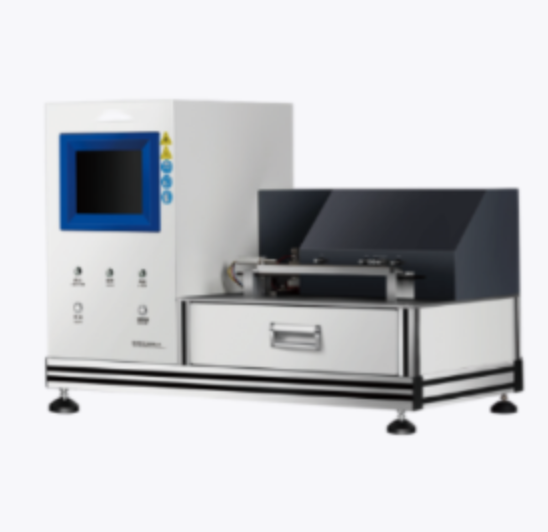
Measures the rate at which solid materials burn.
WhatsApp : +86 15601902607
Email : info@qinsun-lab.com

This product complies with "Recommendations on the Transport of Dangerous Goods - Manual of Tests and Criteria" 33.2.1.4 Test N.1: Test Method for Flammable Solids issued by the United Nations, GB/T 21618 - 2008 Test Method for Burning Rate of Flammable Solids in Dangerous Goods, and NY/T 1860.15 - 2010 *Guidelines for Physicochemical Property Testing of Agricultural Chemicals - Part 15: Solid Flammability.
This testing instrument is used to determine the ability of a substance to propagate combustion. After igniting the substance, the combustion time is determined. It is suitable for granular, pasty, or powdery substances.
It conforms to the United Nations Recommendations on the Transport of Dangerous Goods - Manual of Tests and Criteria 33.2.1.4 Test N.1: Test Method for Flammable Solids; conforms to GB/T 21618-2008 "Dangerous Goods - Test Method for Burning Rate of Flammable Solids"; conforms to NY/T 1860.15-2010 "Guidelines for Determination of Physicochemical Properties of Pesticides - Part 15: Flammability of Solids"; conforms to GB 5085.4 "Identification Standards for Hazardous Waste - Flammability Identification" 4.2 Flammable Solid Test; conforms to GAT536 "Classification and Test Methods for Fire Hazards of Flammable and Explosive Hazardous Goods"; and conforms to national standards and industry standards that are equivalent or equivalent to the above standards.
(1)It adopts an embedded processor and Windows CE operating system.
(2)With an 8 - inch liquid - crystal touch screen, it can display the test status in real - time.
(3) It integrates two functions, "sieving experiment" and "combustion rate experiment", into one.
(4)It is applicable to the detection of two types of sample materials: non - metallic powder and metallic powder.
(5) It is equipped with a standard stacking mold and features a user - friendly shaking handle design.
(6)Strictly in accordance with standard requirements, an ignition torch is used for the sieving experiment, eliminating the need for a gas cylinder and ensuring safety.
(7) A nitrogen rod is used as the ignition source for the combustion rate experiment. The material has high stability, and the ignition source temperature detection device ensures that the ignition temperature reaches above 1000°C.
(8) It uses full - automatic infrared flame detection technology, which can reliably detect open flames and smoldering phenomena, ensuring detection accuracy.
(9) It has a fault - detection function and audible and visual alarm functions to ensure the safety of the experiment.
(10) The experimental process is fully automated, requiring no manual intervention. It supports functions such as parameter setting, data storage, and report viewing.
Operating environment | (5~40)°C, <85%RH |
Ignition source temperature | ≥1000°C |
Ignition method | Gas igniter with nitrogen-silicon rod |
Combustion detection stroke | (0~250)mm |
Combustion distance measurement accuracy | ±0.5mm |
Timing range | 5min (non-metallic); 20min (metallic) |
Timing display resolution | 0.1s |
Pile stack mold | Triangular-shaped molds 260mm long, 20mm wide, profiled to an inner height of 10mm |
Burner plate | Flat plate made of corundum mullite, impervious to penetration, non-combustible, and with low thermal conductivity |
(1) Core Working Components
Sieving Experiment Module
Standard Stacking Mold (compliant with UN Test N.1 requirements): Used for sample sieving and dispersion, adaptable to loading different powder samples;
Vibrating Handle (user-friendly design): Aids in uniform sample distribution within the mold, improving sieving consistency;
Gas Canister-Free Ignition Gun: Meets the safety ignition requirements of sieving experiments, eliminating the need for an external gas canister.
Combustion Rate Testing Module
Nitriding Rod Ignition Source: High-temperature resistant material, ignition temperature can stably reach over 1000℃ (meets standard requirements);
Dedicated Combustion Chamber: Adaptable to combustion testing of both non-metallic and metallic powder samples.
Control and Detection Module
8-inch LCD Touch Screen (equipped with Windows CE system): Real-time display of test status, supports parameter setting/data viewing;
Embedded Processor: Enables fully automated control of the experimental process;
Fully Automatic Infrared Flame Detection Device: Accurately identifies open flame and smoldering phenomena, ensuring detection accuracy;
Audible and Visual Alarm Device: Automatically triggers warnings in case of malfunction or experimental risk.
Automated Unit
Experimental Parameter Storage/Report Generation Module: Supports data export and report viewing.
(2) Auxiliary Accessories
Sample Processing: Standard sieves (to match experimental particle size requirements), sample drying oven (to control sample moisture content), quantitative sample spoon;
Calibration and Maintenance: Standard combustion rate sample (for instrument calibration), cleaning brush/cotton swabs (to clean mold/cavity residue);
Operating Tools: High-temperature resistant protective gloves, data export USB flash drive (for storing test reports).
(1)Sample Preparation
Dry the solid material to be tested (non-metallic/metallic powder) to ensure the moisture content meets the corresponding standard (e.g., GB/T 21618-2008 requirements); If it is a block material, grind it into powder and then pass it through a standard sieve to ensure uniform particle size.
(2) Instrument Preparation
Start the instrument and access the Windows CE system via the 8-inch touchscreen. The instrument will automatically complete a self-check;
Select the modules according to the testing requirements:
Sieving Experiment: Install the standard stacking mold;
Combustion Rate Experiment: Adjust the nitriding rod ignition source (ensure the temperature ≥1000℃);
Calibrate the instrument using a standard combustion rate sample to verify the accuracy of infrared flame detection.
(3)Sieving Experiment Operation (corresponding to UN Test N.1)
Load the quantitatively processed sample into the standard stacking mold and use the vibrating handle to sieve and disperse the sample;
Set the experimental parameters on the touchscreen and start the gas-free ignition gun for ignition;
The infrared detection device monitors in real time and records whether the sample continues to burn.
(4)Combustion Rate Experiment Procedure (corresponding to GB/T 21618-2008)
Evenly spread the powder sample to be tested into the combustion chamber;
Set the ignition source parameters for the nitriding rod and start the fully automatic experimental procedure;
The instrument automatically completes ignition and combustion process monitoring, recording data such as combustion time and flame propagation speed;
The system automatically calculates and outputs the combustion rate of the sample.
(5)Data Processing and Conclusion
After the experiment, view/export the test report via the touchscreen (data storage supported);
After the instrument cools down, clean the mold and chamber of any sample residue using cleaning tools;
Turn off the power to complete the experiment.
(1)Routine Inspection: Check sensors, ignition components, and electrical connections for damage.
(2)Cleaning: Remove ash and residues from the combustion chamber and sample holder after each test.
(3)Calibration: Periodically verify timers, temperature controls, and sensors for accuracy.
(4)Safety Checks: Ensure safety interlocks, emergency stops, and protective barriers are functional.
(5)Lubrication: Apply recommended lubrication to moving parts without contaminating samples.
(6)Storage: Keep the tester in a clean, dry, and stable environment to prevent corrosion or sensor drift.
(7)Troubleshooting: Log issues and follow manufacturer guidance for repair or part replacement.
1. What is a Solid Combustion Rate Tester used for?
The Solid Combustion Rate Tester is designed to measure the burning rate of solid materials under controlled laboratory conditions. It is commonly used for evaluating fuels, polymers, composite materials, and other solid substances to ensure safety, quality, and compliance with industry standards.
2. Which standards does the Solid Combustion Rate Tester comply with?
This instrument typically operates according to international and national standards such as ASTM E202. ISO 9001. ISO 19706. or other regulatory guidelines depending on the tested material. Users should refer to specific test protocols for precise compliance requirements.
3. How does the Solid Combustion Rate Tester work?
The device ignites a prepared sample in a controlled environment and monitors parameters such as flame propagation, burn rate, and heat release. Sensors and high-precision timers record data, allowing calculation of the material’s combustion characteristics accurately.
4. What types of materials can be tested?
The tester is suitable for a wide range of solid fuels and materials, including wood, coal, biomass, polymers, composite materials, and other combustible solids used in industrial, research, or safety applications.
5. How can the results from the Solid Combustion Rate Tester be used?
The measured combustion rate and related data help in material selection, safety evaluation, fire hazard assessment, and product development. These results are critical for industries such as aerospace, automotive, chemical, and energy, where controlled combustion performance is essential.
Qinsun Instruments Co., LTD is a professional laboratory testing instrument manufacturer in China,Have been focusing on laboratory instrument R&D more than 30 years and have rich industry experience,Based on international testing standards,We are also the instrument supplier for BV SGS laboratory,We provide one-stop solutions for lab instruments,Free Training and Turn-Key Service,Products exported all over the world,Offer 36 month warranty and are a trustworthy partner.

Company Phone
+86-21-6420 0566
Working hours
Monday to Friday
Mobile phone:
13816217984
Email:
info@qinsun-lab.com