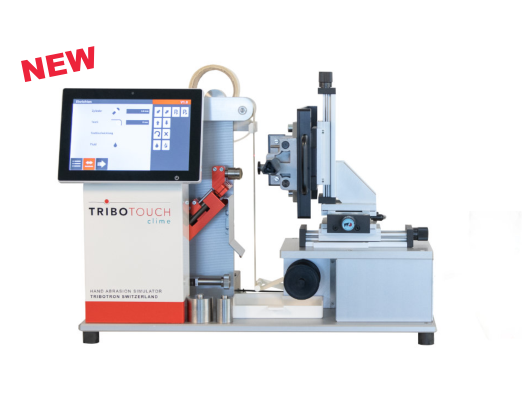
The Universal Finger Abrasion Tester is a high-precision instrument designed to simulate wear and ab
WhatsApp : +86 15601902607
Email : info@qinsun-lab.com

The Universal Finger Abrasion Tester is a high-precision instrument designed to simulate wear and abrasion caused by human fingers, nails, teeth, and other contact surfaces on various materials. You can replicate real-life mechanical and chemical interactions, including exposure to liquids such as sweat, hand cream, sunscreen, detergents, and toothpaste. This tester quantifies surface wear, scratches, and coating durability, providing reliable data for quality evaluation across multiple industries.
Universal Finger Abrasion Tester can simulate virtually all wear processes involving products and fingers/skin, and realistically replicate liquid environments such as human sweat, hand lotion, sunscreen, detergents, toothpaste, and other liquid media.
This device can simulate wear processes including: finger abrasion, nail scratches, tooth wear, sole abrasion, and industrial scratches. When human fingers, skin, teeth, and other media come into contact with various products, they cause wear on the material surfaces. This wear significantly impacts product quality and performance.
International Standard IEC 68-2-70 Environmental Testing Part 2: Test Methods Test Fb: Finger Abrasion
European Standard DIN EN 60068-2-70 Environmental Testing Marking and Letter Abrasion Test Caused by Finger and Hand Friction
BMW Standard BMW GS 97034 Simulating the Friction Effects of Fingers, Hands, or Other Body Parts on Materials
BMW Standard BMW GS 97045 Evaluation of Surface Material Durability for Consumer Products (e.g., Automotive Interiors, Electronics) During Daily Use
Mercedes-Benz Standard Daimler DBL 7384 Coatings for Plastic Interior Components in Vehicles
Ford Standard Ford WSS-M2P188-A1 Performance Requirements for Paints Used on Plastic Substrate Interior Components
Sony Ericsson 45/152 41-FEA 202 8139 Uen
Abrasion resistance of surface coatings on electronic devices
Simulates finger or skin contact
Volkswagen Standard VW TL 226
Requirements for paint layers on vehicle interior trim materials
DIN 53160-2
Determination of color fastness of everyday items - Part 2: Artificial sweat test
EWIMA Specification
1. High-fidelity testing that realistically simulates chemical/mechanical wear processes
2. High reproducibility and repeatability
3. Standardized fully automated test procedures
4. Wide range of applications
5. Flexible device configuration, exceptional durability, and user-friendly operation
| Item | Specifications |
|---|---|
| Normal Load | 1. 5. 10 N (20 N optional) |
| Friction Path | 1–40 mm |
| Cycle Count | 1–100.000.000 cycles |
| Fluid Replenishment | Cyclic |
| Fabric Replenishment | Cyclic |
| Power Supply | 110V/230V |
| Weight | 55 kg |
Related Configurations:
1. Test Heads (Optional Accessories):
Nail Scratch Resistance Test: Simulates friction and scratches caused by human fingernails on material surfaces (e.g., printing, coatings);
Nail Scratch Test “Automotive Industry Use”: Simulates industrial scratches according to various testing standards to evaluate coating quality;
Shoe Sole Abrasion Test: Tests material resistance to shoe sole abrasion based on various inspection standards;
Tooth Simulation Test: Simulates tooth abrasion resistance per testing standards;
Fingerprint Test: Evaluates affinity for fingerprint adhesion and removal characteristics.
2. Scanning Calculation System:
This system calculates material surface structure, coatings, imprints, abrasion and wear, particle size distribution, and porosity.
Specifically designed to organize and evaluate wear results, it also assesses various other surface properties.
Calculation parameters include:
Particle size distribution (count, area, size, and percentage)
Average values (including standard deviation)
Pore distribution
Height analysis of grayscale surface morphology images
Azimuthal length profiles
Abrasion and wear analysis
3. Test Cloth Selection:
Nail Scratch Resistance Test: Simulates friction and scratches from human fingernails on material surfaces (e.g., printing, coating);
Nail Scratch Test “Automotive Industry”: Simulates industrial scratches per various test standards to evaluate coating quality;
Shoe Sole Abrasion Test: Evaluates material resistance to shoe sole abrasion per various inspection standards;
Tooth Simulation Test: Simulates tooth abrasion resistance per test standards;
Fingerprint Test: Assesses affinity for fingerprint adhesion and removal characteristics.
4. Artificial Sweat:
Compliant with standards: DIN 53160-2:2001. BMW GS 97045-2. DBL 7384. VW TL 226
5. Other Standard Test Fluids:
Cleaning creams, lotions, polishing compounds, toothpaste, etc.
Equipment Options:
1. Mechanical Options
Standard Fabrics:
Human skin simulation acc.
ISO 12947-1/IEC 68-2-70
Dust Adhesion:
Material soiling simulation
Cotton contaminated with carbon/oil, etc.
Abrasion Pad:
High-intensity mechanical wear simulation
Abrasion Pad, Tape Test:
Simulation of tape-cloth friction
2. Chemical Options
Synthetic Sweat:
Synthetic sweat per DIN ISO 9022-12
Synthetic sweat per DIN EN 60068-2-70
Synthetic sweat per DIN ISO 105-E04
Synthetic sweat per DIN 53160-2
Synthetic sweat per company standards (BMW, Volkswagen, Daimler)
Hand cream/sunscreen oil:
Hand cream and sunscreen oil per customer specifications.
1. Equipment Preparation
Verify the tester is properly powered and connected (110V/230V).
Ensure test heads, abrasion cloths, and liquid reservoirs are properly installed.
Confirm test parameters: load, friction path, number of cycles, and test medium (dry or liquid).
2. Sample Mounting
Secure the sample material on the fixture, ensuring flat and stable contact with the test head.
3. Test Execution
Select the test program (dry abrasion, liquid abrasion, or customized cycles).
Start the test; the system applies the defined load and friction path automatically.
Monitor the test progress via control software; record cycles, force, and abrasion results.
4. Data Analysis
Evaluate material wear, scratches, and surface degradation.
Compare results against predefined quality or industry standards.
1. What types of materials can be tested?
You can test coatings, plastics, metals, textiles, leather, paper, dental materials, and other consumer or industrial products.
2. Can the tester simulate liquid conditions?
Yes, it can simulate sweat, hand creams, sunscreen, detergents, and toothpaste, or operate under dry conditions.
3. How many cycles can the instrument perform?
The device supports 1 to 100.000.000 cycles, depending on the selected program and sample requirements.
4. Is it suitable for automotive interior tests?
Yes, it meets BMW, Mercedes, Ford, and VW interior abrasion standards.
5. Can the abrasion load be adjusted?
Yes, normal loads are 1 N, 5 N, 10 N, with an optional 20 N for high-pressure testing.
6. How is reproducibility ensured?
Through fully programmable automatic cycles, precise load control, and standardized test procedures.
Qinsun Instruments Co., LTD is a professional laboratory testing instrument manufacturer in China,Have been focusing on laboratory instrument R&D more than 30 years and have rich industry experience,Based on international testing standards,We are also the instrument supplier for BV SGS laboratory,We provide one-stop solutions for lab instruments,Free Training and Turn-Key Service,Products exported all over the world,Offer 36 month warranty and are a trustworthy partner.

Company Phone
+86-21-6420 0566
Working hours
Monday to Friday
Mobile phone:
13816217984
Email:
info@qinsun-lab.com