I. Instrument ApplicationUsed for various textile products includingfibers, yarns, fabrics, nonwoven
WhatsApp : +86 15601902607
Email : info@qinsun-lab.com

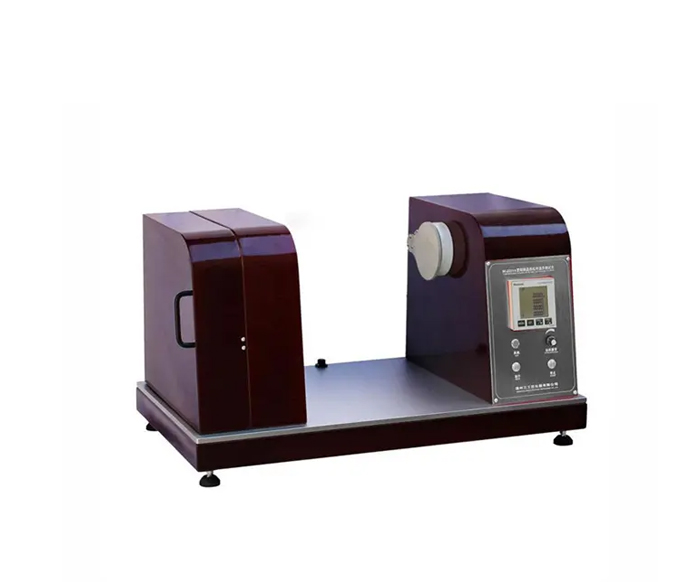
The Textile Far Infrared Radiation Temperature Rise Tester is a high-precision analytical instrument specifically engineered to evaluate the far-infrared thermal performance of functional textiles. By simulating infrared radiation exposure and monitoring the resulting thermal response, this tester allows you to determine the temperature rise efficiency and heat-retention capabilities of advanced materials. It integrates a standardized 150W radiation source with high-speed thermal sensors to provide you with objective, repeatable data on how a fabric interacts with infrared energy—a critical metric for verifying the therapeutic or "self-heating" claims of modern performance textiles.
Textile Far Infrared Radiation Temperature Rise Tester is used for various textiles including fibers, yarns, fabrics, nonwovens, and their products. It employs temperature rise testing to determine the far-infrared performance of textiles.
GB/T 30127-2013 :“Textiles - Testing and Evaluation of Far-Infrared Properties” Clause 4.2 Test Method for Far-Infrared Radiation Temperature Rise
T/CAS 115.5-2021:Health Care Textiles — Part 5: Far Infrared
1. Features an industrial-grade color touchscreen display and control system with an intuitive human-machine interface that is simple to use and enhances operational convenience.
2. Utilizes an automatic measurement mode, enabling one-touch initiation to automatically complete the testing process.
3. Incorporates high-precision sensors capable of rapid response and accurate measurement of current temperature.
Parameter Item | Parameter Value |
Specimen Holder | 500mm distance from radiation source to specimen surface |
Radiation Source | Main wavelength 5μm~14μm, radiation power 150W |
Specimen Irradiation Area | φ60~φ80mm |
Temperature Range & Accuracy | 15℃~50℃, ±0.1℃ precision, ≤1s response time |
Specimen Types |
|
(1) Standard Specimen Disk: For flat fabric samples.
(2) Square Metal Frame Fixture: Specialized for yarn specimens.
(3) Open Cylindrical Container: For loose fiber testing.
(4) High-Precision Temperature Probe: Rapid-response contact or non-contact sensor (model dependent).
(5) Integrated Thermal Printer: For immediate generation of test reports.
(6) Power Cable and Calibration Certificate.
I. Power-Up and Setup
1. Connect Power:
Turn on the instrument's power switch to enter the setup interface.
2. Parameter Settings:
Irradiation Power: Typically set to 150W.
Test Duration: Generally 30 seconds.
Test Cycles: Set according to standard requirements, e.g., 5 cycles.
II. Sample Installation
1. Fixture Selection:
Thin Samples: Install thin-sample fixture and tighten the nut.
Thick Samples: Place directly onto the disk, aligning with the center.
2. Sample Placement:
Ensure the test line is positioned at the center point.
Place the sample face up and secure the edges with a ruler.
III. Test Procedure
1. Preheat: Click “Turn on Light” to preheat the instrument.
2. Start Test:
Click the test interface; timing starts for 30 seconds.
Observe temperature rise value, initial temperature, and final temperature.
Automatic Result Display: Data appears automatically upon test completion.
IV. Data Processing
Data Retrieval: Click Details to view test results.
Report Printing: Click Print to generate the test report.
1. Why is the 5μm–14μm wavelength range significant for this test?
This range corresponds to the "far-infrared" spectrum often referred to as the "light of life." Textiles that emit or reflect energy in this specific band are believed to interact most effectively with human skin for thermal and therapeutic benefits.
2. Can I adjust the distance between the sample and the radiation source?
The standard distance is fixed at 500mm to comply with GB/T 30127 and T/CAS 115.5-2021:Health Care Textiles — Part 5: Far Infrared. While some research applications may require adjustment, keeping this distance constant is essential for comparing results across different materials according to the standard.
3. What is the difference between Far-Infrared Temperature Rise and Far-Infrared Emissivity?
Temperature rise measures how much the fabric heats up when exposed to an external infrared source, whereas emissivity (tested via a different module/standard) measures the fabric's ability to emit its own infrared energy. Both are key to a full far-infrared evaluation.
4. Why is a 30-second test duration standard?
The 30-second window is optimized to capture the initial, rapid thermal absorption phase of the textile. This provides a clear "temperature rise" value ($\Delta T$) before the sample reaches thermal equilibrium with its surroundings.
5. Does the thickness of the sample affect the result?
Yes. Thicker samples or those with high loft (like fleece) may show different temperature rise characteristics compared to thin, flat weaves. This is why using the correct fixture (disk vs. frame) and ensuring center alignment is vital for accuracy.
Qinsun Instruments Co., LTD is a professional laboratory testing instrument manufacturer in China,Have been focusing on laboratory instrument R&D more than 30 years and have rich industry experience,Based on international testing standards,We are also the instrument supplier for BV SGS laboratory,We provide one-stop solutions for lab instruments,Free Training and Turn-Key Service,Products exported all over the world,Offer 36 month warranty and are a trustworthy partner.

Company Phone
+86-21-6420 0566
Working hours
Monday to Friday
Mobile phone:
13816217984
Email:
info@qinsun-lab.com