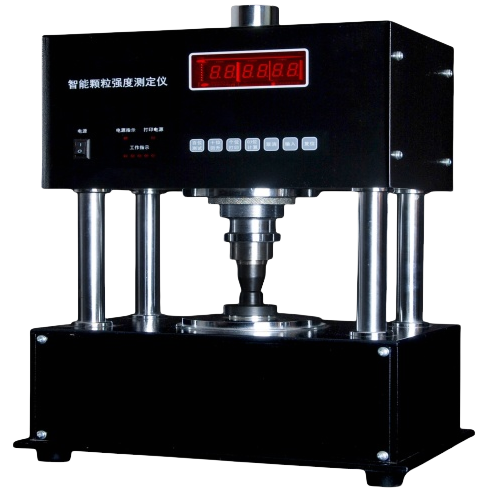
Intelligent tester for determining crushing strength of rigid particles like catalysts and fertilize
WhatsApp : +86 15601902607
Email : info@qinsun-lab.com

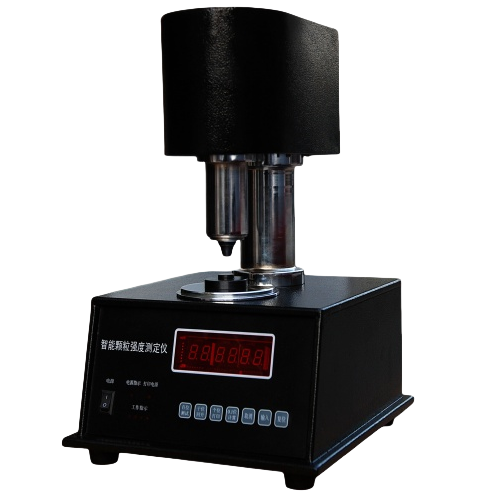
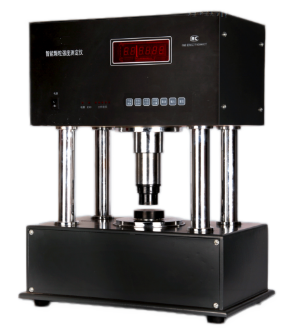
The Particle Strength Tester is a high-precision instrument designed to measure the mechanical strength of individual particles, granules, and catalyst carriers. It provides versatile testing capabilities—including compression, tension, shear, and indentation—to evaluate particle durability and resistance under controlled conditions. Equipped with intelligent automation, environmental control options, and advanced data acquisition, it is suitable for laboratories, quality control, and research & development in chemical, pharmaceutical, and material science industries.
(1) Testing single-pellet pressure resistance of catalysts and catalyst carriers
(2) Measuring radial crush strength of extruded catalyst and granular particles
(3) Evaluating mechanical durability of pharmaceutical granules, food pellets, and ceramic particles
(4) Quality control of particle materials in chemical, pharmaceutical, and materials manufacturing
(5) Research and development for improving particle formulations and process optimization
(6) Non-destructive internal defect inspection via ultrasonic imaging
ASTM D4179 — Standard Test Method for Single-Pellet Pressure Resistance of Catalysts and Catalyst Carriers
ASTM D6175 — Standard Test Method for Radial Crush Strength of Extruded Catalyst and Catalyst Carrier Particles
ISO 9773 — Methods for Testing Catalysts: Radial Crush Strength
(1) Unrivaled Precision: Sub-micron displacement resolution (0.01 μm) and sub-Newton force detection (0.001 N) for fragile particles
(2) Universal Applicability: Tests particles 0.1–50 mm, including spherical, cylindrical, and irregular shapes
(3) Multi-Mode Testing: Supports compression, tension, shear, and indentation on one platform
(4) Intelligent Automation: AI-driven load application with auto-centering fixture to prevent sample damage
(5) User-Friendly Workflow: 10.1” HD touchscreen with gesture control and one-click testing for ASTM/ISO protocols
(6) Data Integrity & Analytics: Blockchain-secured data storage, cloud connectivity, and AI-driven failure prediction
(7) Environmental Control: Optional temperature (-40°C to 200°C) and humidity (10%–95% RH) chamber compatibility
(8) Non-Destructive Testing Option: Ultrasonic imaging module for visualizing internal cracks without sample destruction
(9) Dynamic Force Profiling: Programmable force ramps with sinusoidal, triangular, or custom waveforms
(10) Safety Features: Laser-based emergency stop system with safety curtain
| Parameter | Specification |
|---|---|
| Force Range | 0.001 N – 5,000 N (500 kgf) |
| Force Accuracy | ±0.1% of reading (1–5,000 N) |
| Displacement Resolution | 0.01 μm |
| Testing Speed | 0.001–1,000 mm/min (adjustable) |
| Return Speed | Up to 2,000 mm/min |
| Connectivity | USB 3.1, Ethernet, Wi-Fi 6, Bluetooth 5.0 |
| Power Consumption | 600 W (max), 50 W (idle) |
| Dimensions | 550 mm (W) × 480 mm (D) × 720 mm (H) |
| Weight | 75 kg (net) / 90 kg (gross) |
(1) Testing Fixture Kit: Compression platens (2/5/10 mm), tensile grips (0.5–50 mm), shear blade set (V-notch & flat)
(2) Software Suite: ParticleAnalyst Pro license, 6-month AI-driven failure prediction module access
(3) Calibration & Safety: NIST-traceable weights (1–500 g), emergency stop pendant with magnetic dock
(4) Portability & Storage: Shockproof carrying case with foam inserts, dust cover, anti-vibration pads
(5) Documentation: Quick-start guide (printed & digital), compliance certificates for ASTM/ISO standards
Select the appropriate testing mode (compression, tension, shear, or indentation).
Mount the particle using the auto-centering fixture or relevant grip/fixture.
Set test parameters: force range, displacement, speed, and number of cycles if applicable.
If required, activate environmental chamber for temperature and humidity control.
Start the test; AI-controlled system automatically adjusts load to prevent sample damage.
Monitor real-time data via the touchscreen interface.
Save results to blockchain-secured storage and/or cloud platform.
For non-destructive testing, activate ultrasonic imaging module to inspect internal structure.
(1) Clean fixtures, grips, and platen surfaces after each test to prevent contamination.
(2) Periodically calibrate force sensors and displacement encoders using NIST-traceable weights.
(3) Inspect electrical connections and safety systems (laser curtain, emergency stop) for proper function.
(4) Maintain environmental chamber (if installed) by checking humidity and temperature sensors.
(5) Keep the instrument in a clean, dry, and vibration-free environment to ensure long-term accuracy.
(6) Update software and AI modules regularly to ensure compatibility with new ASTM/ISO standards.
1. What is a Particle Strength Tester used for?
It measures the mechanical strength, breakage resistance, or durability of individual particles, granules, or powders.
2. How does the tester operate?
The instrument applies controlled compression, impact, or shear forces to particles and records the force required to break or deform them.
3. What types of materials can be tested?
Suitable for powders, pellets, granules, pharmaceutical tablets, food particles, and chemical or polymer particles.
4. How is test data recorded and analyzed?
Strength values, breakage points, and force-deformation data are collected digitally and can be displayed, stored, or exported for analysis.
5. What maintenance is required for the tester?
Regular cleaning of sample holders and force sensors, calibration checks, inspection of moving parts, and timely replacement of worn or damaged components
Qinsun Instruments Co., LTD is a professional laboratory testing instrument manufacturer in China,Have been focusing on laboratory instrument R&D more than 30 years and have rich industry experience,Based on international testing standards,We are also the instrument supplier for BV SGS laboratory,We provide one-stop solutions for lab instruments,Free Training and Turn-Key Service,Products exported all over the world,Offer 36 month warranty and are a trustworthy partner.

Company Phone
+86-21-6420 0566
Working hours
Monday to Friday
Mobile phone:
13816217984
Email:
info@qinsun-lab.com