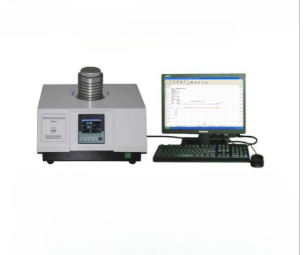
Scope of application:It is used to determine the time of automatic catalytic oxidation of the sample
WhatsApp : +86 15601902607
Email : info@qinsun-lab.com

Differential Scanning Calorimeter DSC is designed to determine the inner heat transition relating to temperature and heat flow, it is widely used in the field of polymer development, performance testing & quality control. DSC research and development includes the following field: glass transition temperature, melting point, cold crystallization, crystallization, phase transition, Enthalpy, oxidation induction time (OIT).
It is used to determine the time of automatic catalytic oxidation of the sample at room temperature hydrogen, and to evaluate the thermal stability of the sample. It is suitable for plastics and rubber materials.
GB/T17391-1998: Polyolefin pipe systems for the conveyance of fluids under pressure - Test methods for the resistance to internal pressure
ISO/TR10837:1991: Technical Report on the use of plastics pipes and fittings for the conveyance of drinking water - Guidelines for the selection of materials and components
ASTM D3895-1998: Standard Test Method for Oxidative Induction Time of Polyolefins by Differential Scanning Calorimetry (DSC)
ASTM E 967: Standard Practice for Temperature Calibration of Thermocouples and Thermocouple Materials by Comparison Techniques
ASTM E 968: Standard Practice for Thermal Cycling of Electronic Components and Materials for Temperature Stress Screening
ASTM E 793: Standard Test Method for Measuring Surface Discontinuities on Metal Surfaces by Electromagnetic (Eddy-Current) Method
ASTM D 3895: Standard Test Method for Oxidative Induction Time of Polyolefins by Differential Scanning Calorimetry (DSC)
ASTM D 3417: Standard Test Method for Thermogravimetric Analysis (TGA) of Polymers
ASTM D 3418: Standard Test Method for Transition Temperatures and Enthalpies of Fusion and Crystallization of Polymers by Differential Scanning Calorimetry (DSC)
ISO 11357-6: Plastics - Differential scanning calorimetry (DSC) - Part 6: Determination of oxidation induction time (isothermal OIT) and oxidation induction temperature (dynamic OIT)
EN 728: Thermal insulating products for building applications - Determination of water vapour transmission properties
The instrument has stable performance, high measurement accuracy and good repeatability;
Designed for measuring oxidation induction period in plastics and rubber industry:
* Integrated design, temperature control and furnace device are integrated, reducing signal loss and interference, beautiful and exquisite appearance;
The furnace body adopts the upper cover structure, no need to lift, convenient loading sample;
* High-resolution data acquisition system, real-time data acquisition;
Intelligent adaptive single-chip microprocessor temperature control system, temperature control speed, high precision:
* Perfect two-way air valve control system, using the original imported flow valve from the United States, can realize the automatic switching of ammonia to oxygen during the measurement process;
Professional oxidation induction period test software with automatic temperature correction and automatic test program to automatically calibrate temperature, test oxidation induction time and plot curves:
Simple operation method, to achieve one-click testing, test results can be saved and printed:
Computer real-time display instrument status, test data and curves, easy to view.
| Description | Details |
|---|---|
| Maximum tensile stress | 20MPa |
| Number of stations | 30 (can be customized) |
| Water bath temperature range | RT - 90°C |
| Temperature control accuracy | ±1°C |
| Switch sensitivity | 200g |
| Timing accuracy | 1s |
| Sample thickness | 0.75 - 3mm |
| Notch depth | 20% of the nominal thickness of the sample (6 - specified as an example value, if relevant) |
| Power supply | AC 380V 50HZ |
| Overall dimensions | 1420x640x1900mm |
| Weight | 380kg |
1. Main unit: 1 set
2. Standard indium sample: 0.5g
3. Standard tin sample: 0.5g
4. Aluminum crucibles: 200 pieces
5. Software USB drive: 1 piece
6. Pressure reducing valves: 2 pieces
7. Power cord: 1 piece
8. Communication cable: 1 piece
9. Gas tubes: 3 pieces
10. Gas tube connectors: 2 pieces
11. Tweezers: 1 piece
12. Sampling spoon: 1 piece
13. Fuses: 4 pieces
14. Computer (provided by the customer): 1 set
15. Printer (provided by the customer): 1 set
16. Product packing list: 1 copy
17. Product manual: 1 copy
18. Product certificate of conformity: 1 copy
Selecting the appropriate testing environment: Ensure the testing instrument is placed in a dry, windless location, avoiding direct sunlight and other strong light sources.
Installation and wiring: Check that the instrument interfaces and cables are in good condition, and carefully and properly connect the wiring, ensuring the equipment's ground wire is properly connected.
Sample preparation: Perform additional preparations according to the sample characteristics, such as chemical pretreatment and deionized water washing.
Reading: Set the reading parameters on the instrument and take readings according to the operating instructions.
Regular calibration: Calibrate the instrument regularly to ensure the accuracy of the readings.
Regular cleaning: Clean the instrument's exterior and interior to prevent sample contamination.
Regular maintenance: Regularly inspect and maintain the instrument to ensure its long-term stability.
1. What is an Oxidation Induction Phase Analysis (OIPA) Tester?
The OIPA Tester is a device used to evaluate the thermal oxidative stability of polymers, rubbers, and other materials by determining the time or temperature at which oxidation initiates under controlled conditions.
2. How does the OIPA test work?
The tester heats the sample in a controlled atmosphere, often oxygen or air, while monitoring chemical or physical changes. The onset of oxidation is identified by detecting changes in pressure, weight, or other indicators, providing insight into material stability.
3. What types of materials can be tested?
It can test polymers, elastomers, rubbers, plastics, and other organic materials used in automotive, aerospace, packaging, and construction industries.
4. What parameters are measured during testing?
The machine measures the oxidation induction time (OIT), onset temperature of oxidation, and phase-related changes. Some advanced models provide automatic data logging and graphical analysis of oxidation kinetics.
5. Why is oxidation induction phase analysis important?
This testing ensures that materials can withstand thermal and oxidative stresses during manufacturing, storage, and service. It helps manufacturers optimize formulations, predict lifespan, and ensure product reliability and safety.
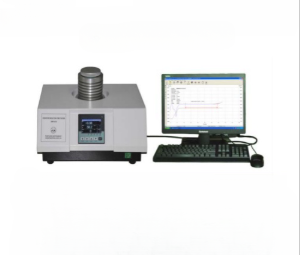
Qinsun Instruments Co., LTD is a professional laboratory testing instrument manufacturer in China,Have been focusing on laboratory instrument R&D more than 30 years and have rich industry experience,Based on international testing standards,We are also the instrument supplier for BV SGS laboratory,We provide one-stop solutions for lab instruments,Free Training and Turn-Key Service,Products exported all over the world,Offer 36 month warranty and are a trustworthy partner.

Company Phone
+86-21-6420 0566
Working hours
Monday to Friday
Mobile phone:
13816217984
Email:
info@qinsun-lab.com